The best and worst companion plants for tomatoes — what actually works, why it works, and how to design a garden layout that reduces pests, improves pollination, and boosts yields.

Most tomato gardeners think about what to plant. The best tomato gardeners think about what to plant next to their tomatoes.
Companion planting is one of the most underused strategies in the home vegetable garden. The right plants growing alongside your tomatoes can repel the pests that do the most damage, attract the pollinators that set your fruit, improve soil health, and even enhance tomato flavor. The wrong companions — and there are several — can stunt growth, invite disease, and compete for the exact nutrients tomatoes need most.
This is not folk wisdom or gardening mythology. The mechanisms behind companion planting are well understood — chemical signals plants release, root interactions in shared soil, habitat created for beneficial insects, and physical barriers against pests. Understanding why the combinations work makes you a better gardener and helps you design a planting layout that works harder for you every season.
Why Companion Planting Works for Tomatoes
Tomatoes are not passive members of a garden ecosystem. They communicate chemically with surrounding plants through compounds released by their roots and foliage. They attract specific insects and repel others. They have specific nutrient needs that can be complemented or competed with by neighboring plants.
A well-designed companion planting scheme around your tomatoes does several things simultaneously:
Pest disruption — Strongly scented companion plants confuse and repel pests that locate host plants by smell. A tomato plant surrounded by basil, marigolds, and garlic is significantly harder for aphids, whiteflies, and hornworm moths to locate than a tomato growing in isolation.
Beneficial insect attraction — Flowering companions draw pollinators that improve tomato fruit set and predatory insects that feed on common tomato pests. A garden with diverse flowering plants has natural pest control built in.
Soil improvement — Some companions fix nitrogen, improve soil structure, or suppress weeds, directly benefiting the tomatoes sharing their root zone.
Physical barriers — Tall or dense companions can block pest movement between plants or provide physical habitat that disrupts pest behavior.
None of these effects is magical. Each has a specific biological mechanism. And combined thoughtfully, they produce a measurably more productive and resilient garden than tomatoes grown in isolation.
The Best Companion Plants for Tomatoes
Basil — The Classic for Good Reason
Basil is the most famous tomato companion and one of the most effective. The volatile oils in basil foliage — linalool and eugenol primarily — repel aphids, whiteflies, tomato hornworm moths, and spider mites. These compounds are strongest when the plant is not flowering, which is why pinching basil flowers to keep the plant in vegetative mode extends its pest-repelling effectiveness.
Basil planted 12–18 inches from tomato stems provides a consistent aromatic barrier throughout the season. Plant it in clusters of 2–3 plants per tomato rather than a single specimen for maximum effect.
Beyond pest management, many experienced gardeners report that tomatoes grown alongside basil develop more complex flavor — a claim that is difficult to prove definitively but consistently reported across decades of home gardening experience.
How to use it: Plant basil transplants at the same time as tomatoes. Space every 18 inches along the tomato row. Pinch flowers weekly to keep plants bushy and maximally aromatic.
Marigolds — The Pest Barrier That Actually Works
French marigolds (Tagetes patula) are one of the few companion plants with genuine scientific backing. Their roots produce a compound called alpha-terthienyl that is toxic to root-knot nematodes — microscopic soil pests that damage tomato roots and significantly reduce yields in affected gardens. For this effect to work, marigolds need to be planted densely and allowed to grow through the season — a few scattered plants have limited impact.
Above ground, marigold flowers attract hoverflies and parasitic wasps — beneficial insects that prey on aphids and caterpillars including hornworm larvae. They also deter whiteflies and aphids through their strong scent.
Plant French marigolds as a border around your entire tomato bed rather than scattering them randomly. A dense perimeter planting 6–8 inches wide is more effective than individual specimens.
One important distinction: French marigolds (Tagetes patula) have the most research support. African marigolds (Tagetes erecta) are less effective at nematode suppression but still attract beneficial insects. Avoid pot marigolds (Calendula) for this purpose — they are a different plant entirely and do not share these properties.
Borage — The Pollinator Magnet
Borage is one of the best pollinator attractors available to home gardeners. Its blue star-shaped flowers produce nectar continuously and are extraordinarily attractive to bumblebees — the primary natural pollinators of tomatoes.
More bumblebees visiting your tomato flowers means better pollination, more complete fruit set, and fewer instances of blossom drop from poor pollination. In enclosed or sheltered gardens where bee activity is naturally low, borage plants positioned nearby can make a measurable difference in how many flowers actually set fruit.
Borage also self-seeds prolifically. Plant it once and it will return reliably in subsequent seasons, gradually establishing itself as a permanent feature of the garden ecosystem.
How to use it: Plant 1–2 borage plants per 4–6 tomato plants. Allow some plants to flower and set seed at the end of the season for natural reseeding.
Carrots — The Root Aerator
Carrots planted near tomatoes loosen compacted soil with their long taproots, creating channels that improve drainage and aeration in the tomato root zone. As carrot roots grow and eventually decompose, they add organic matter directly where tomato roots are active.
Carrots do compete with tomatoes for some nutrients, so do not plant them directly under tomato drip lines where heavy irrigation concentrates. Plant them at the edge of the tomato bed where their root-loosening benefits extend into the growing zone without heavy competition.
Carrot tops left to flower in their second year attract parasitic wasps and predatory insects that feed on tomato pests — an additional benefit for gardeners willing to let some carrots overwinter.
Garlic — The Fungal Fighter
Garlic produces sulfur compounds that have documented antifungal properties. Planted between tomatoes, garlic releases these compounds into the surrounding soil and air, creating an environment that is less hospitable to fungal pathogens including early blight and fusarium wilt.
Garlic also repels spider mites and aphids through its strong scent, adding pest management to its soil health benefits.
Plant garlic cloves 4–6 inches from tomato stems in fall for spring growth, or plant transplants in spring at the same time as tomatoes. The scent is most effective when the foliage is actively growing.
Nasturtiums — The Trap Crop
Nasturtiums serve a different function than most companions. Rather than repelling pests, they attract them — specifically aphids, which preferentially colonize nasturtiums over tomatoes when both are available. This makes nasturtiums an effective trap crop: aphids concentrate on the nasturtiums, leaving tomato plants relatively untreated.
Plant nasturtiums at the perimeter of the tomato garden rather than directly adjacent to plants. Monitor them regularly and remove heavily infested stems before aphid populations build to levels where they begin spreading to tomatoes despite the trap crop.
Nasturtiums also attract caterpillars, hoverflies, and predatory beetles. They are one of the most ecologically productive companion plants available for vegetable gardens.
Parsley — The Beneficial Insect Hotel
Parsley allowed to flower in its second year produces flat-topped flower clusters that are exceptionally attractive to parasitic wasps, hoverflies, and predatory insects. These beneficial insects feed heavily on aphids, caterpillars, and other common tomato pests.
Plant parsley near tomatoes and allow some plants to bolt and flower — the flowering stage is when parsley provides the most ecological benefit for pest management. First-year parsley provides some aromatic pest deterrence but the real payoff is the second-year flowering.
Asparagus — The Soil Team Player
Asparagus roots produce a compound called asparagine that is toxic to root-knot nematodes — the same soil pest that marigolds address. Tomatoes grown near asparagus beds benefit from this natural nematode suppression.
Reciprocally, tomatoes repel asparagus beetles — pests that damage asparagus crowns. The relationship between these two plants is genuinely mutually beneficial, which is relatively rare in companion planting where most relationships are one-directional.
The practical limitation is space — asparagus is a perennial that occupies permanent bed space and takes 2–3 years to establish a productive crown. Plan your garden layout to place tomatoes adjacent to established asparagus beds rather than planting them together from scratch.
What NOT to Plant Near Tomatoes
Companion planting works in both directions. Some plants actively harm tomato growth, increase disease pressure, or compete so aggressively for nutrients that tomato yields drop significantly.
Fennel
Fennel is one of the most broadly allelopathic plants in the vegetable garden — it produces chemical compounds that inhibit the growth of most nearby plants, and tomatoes are particularly sensitive. Keep fennel well away from tomatoes, at least 3 feet minimum and preferably in a completely separate bed.
Brassicas
Cabbage, broccoli, kale, cauliflower, and other brassicas are heavy nitrogen feeders that compete directly with tomatoes for the same primary nutrient. They also attract different pest populations — cabbage loopers, cabbage worms, and aphid species that will cross to tomatoes when brassica populations get large enough.
Corn
Corn and tomatoes share several of the same pests — most notably the corn earworm, which is the same insect as the tomato fruitworm. Planting them together concentrates pest pressure on both crops simultaneously and makes management significantly harder.
Peppers and Eggplant
Peppers and eggplant are in the same plant family as tomatoes (Solanaceae) and share the same disease vulnerabilities. Planting them together creates a concentrated target for solanaceous diseases including verticillium wilt, fusarium wilt, and bacterial canker. If one plant gets infected, the disease spreads rapidly through a mixed solanaceous bed.
Potatoes
The same family problem applies to potatoes. Tomatoes and potatoes share blight pathogens, and growing them together significantly increases the risk of rapid disease spread. Keep them in separate garden areas with as much physical distance as practical.
Designing Your Companion Planting Layout
Knowing which plants work well together is only useful if you can arrange them in a space that allows all of them to thrive. Here is a practical layout approach that works for most home tomato gardens.
The core bed: Tomatoes at center spacing appropriate for the variety — 18–24 inches for determinate types, 24–36 inches for indeterminate.
Inner companions: Basil planted 12–18 inches from each tomato stem. This is your primary pest deterrent and pollinates alongside your tomatoes throughout the season.
Border planting: A dense ring of French marigolds around the perimeter of the entire bed. Six to eight inches wide, planted 6 inches apart. This is your nematode barrier and beneficial insect station.
Near the bed: Borage plants positioned at the sunny corners or edges of the bed where their height does not shade tomatoes. One or two plants per 4–6 tomatoes.
Perimeter trap crop: Nasturtiums planted outside the marigold border as the outermost ring. Monitor weekly for aphid concentration and remove infested growth before populations move inward.
Garlic: Tuck garlic cloves between tomato plants within the bed, 4–6 inches from stems. In fall-planted garlic this is a set-it-and-forget-it addition that provides season-long fungal suppression.
This layout takes no more space than a standard tomato bed. It just uses every inch more intentionally.

Companion Planting and Pest Management Together
Companion planting reduces pest pressure — it does not eliminate it. Even a well-designed companion planting scheme will occasionally need intervention when a pest population builds beyond what the biological controls can handle.
The key is having the right tools ready and catching problems early. A weekly inspection of tomato plants — including the undersides of leaves, stems near the soil line, and new growth at the tips — takes two minutes per plant and catches infestations before they become damaging.
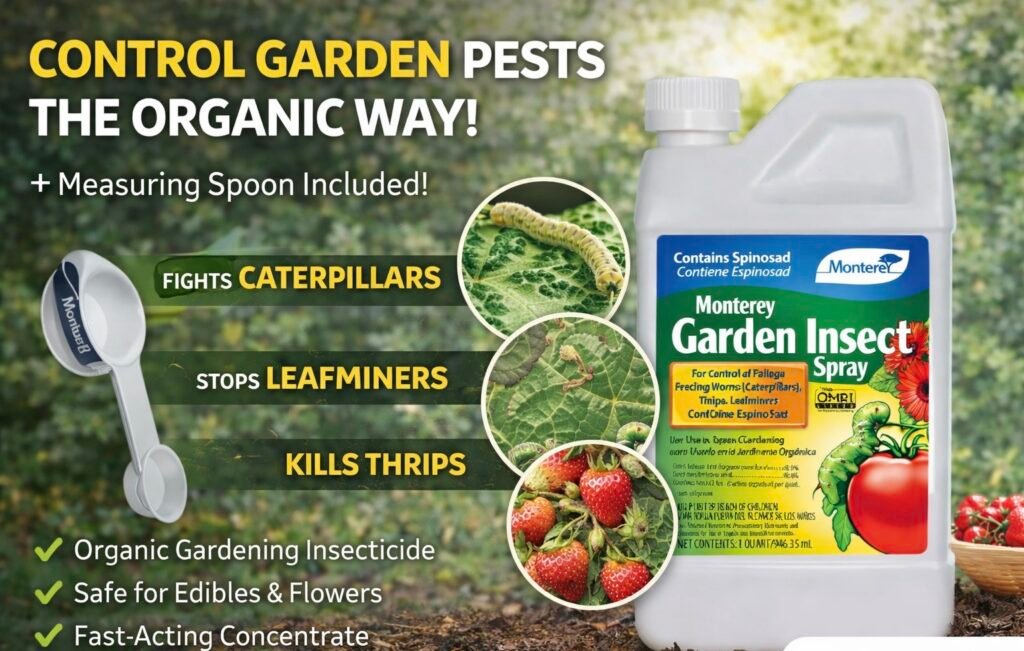
When intervention is needed, spinosad insecticide is the first choice for caterpillars, thrips, and most chewing insects. It is organic, highly effective, and does not harm the beneficial insects that your companion planting is working to attract and retain. Apply in the evening when bees are not active to further protect pollinators.
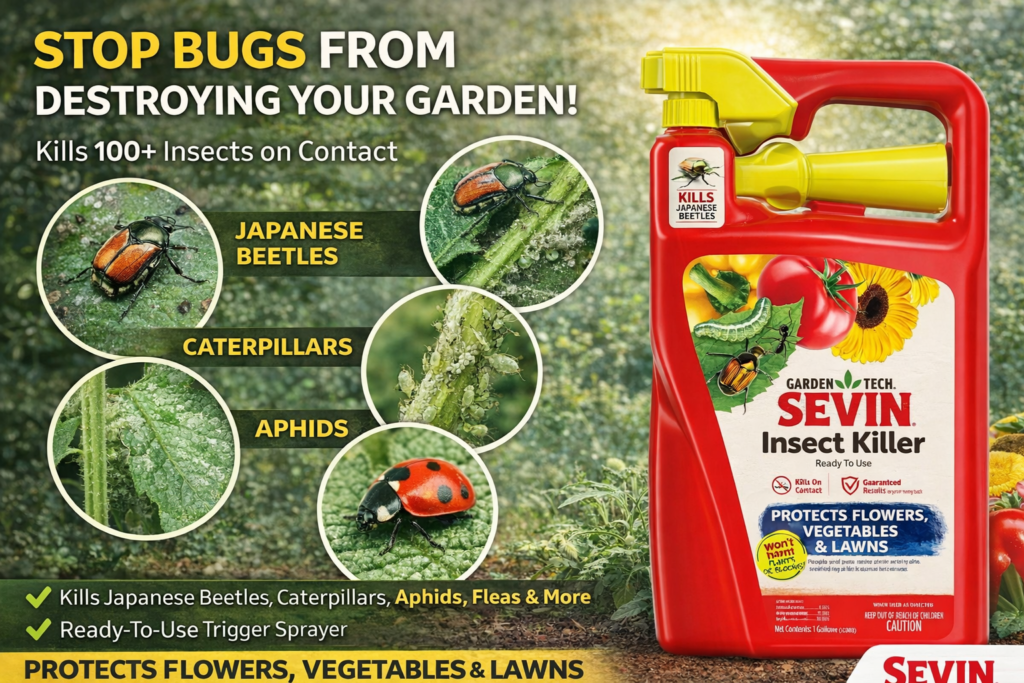
For aphid outbreaks that overwhelm the natural controls, Sevin insect killer provides fast knockdown. Use it as a targeted intervention on affected plants rather than a broadcast spray across the whole garden.
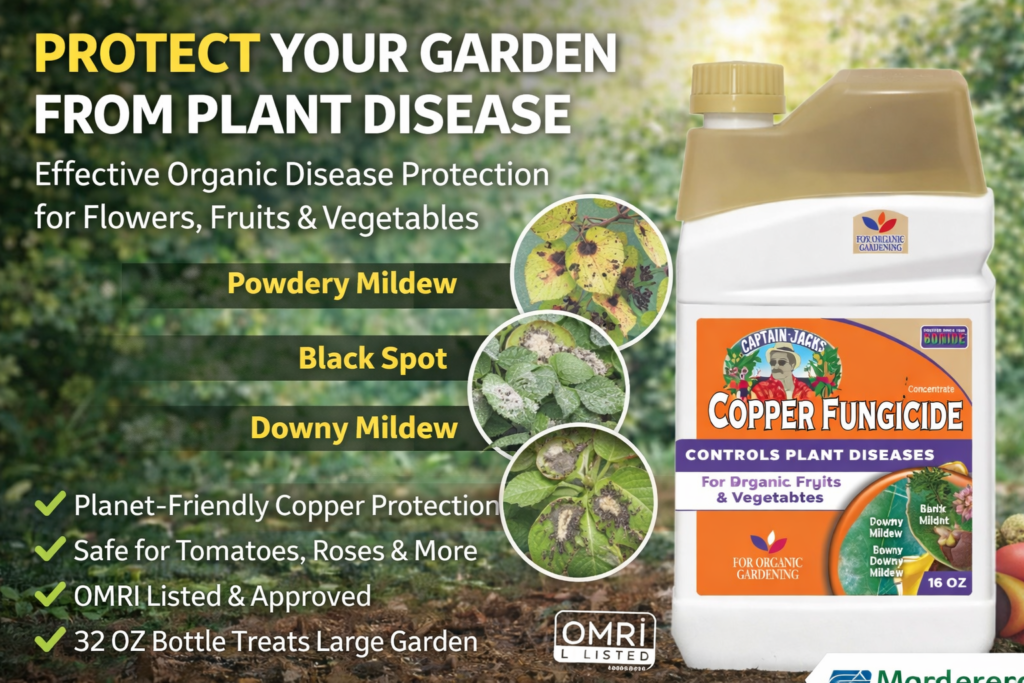
For fungal disease — which garlic and marigolds help suppress but cannot always prevent in wet seasons — copper fungicide applied preventively at the start of the season and after significant rain events is the most reliable protection available to home gardeners.
Soil Health Connects Everything
Companion planting works best in healthy, biologically active soil. Plants in poor soil cannot produce the chemical signals and volatile compounds that make companion relationships effective — they are too resource-stressed to invest in anything beyond basic survival.
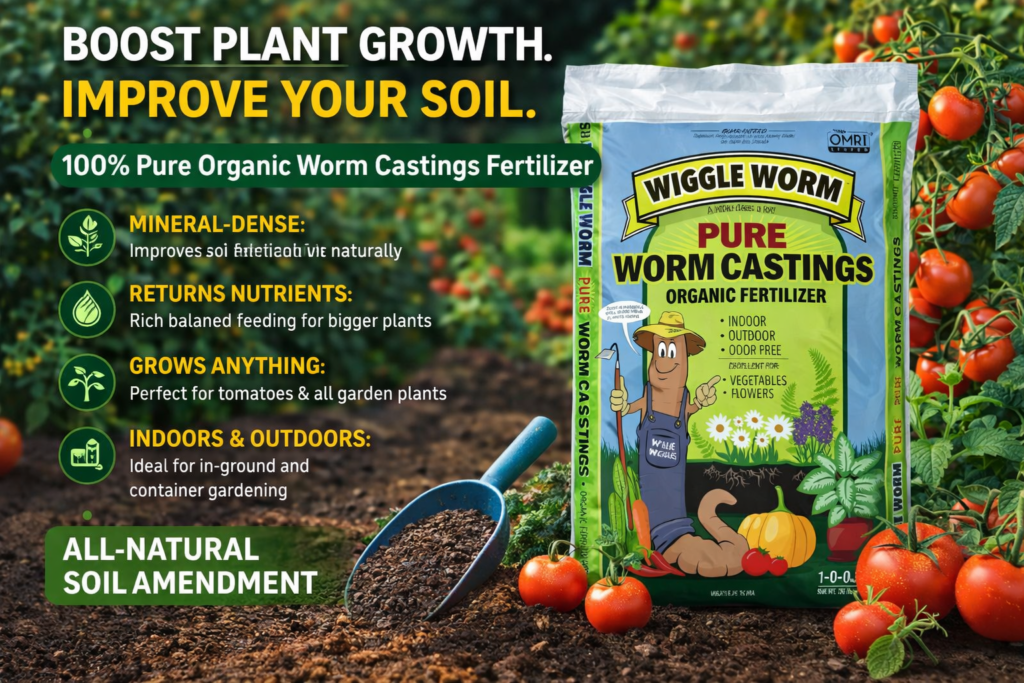
Building soil with worm castings before the season creates the microbial activity that supports both tomato roots and the root relationships that make companion planting work. A living soil connects the root systems of neighboring plants in ways that allow genuine chemical communication and resource sharing.
Combined with a solid fertilizer program — Espoma Tomato-Tone for in-ground beds, Dr. Earth liquid fertilizer for containers and quick feeding — healthy soil makes every other aspect of tomato growing more effective, companion planting included.
The full soil preparation approach that gives companion planting the best foundation is covered in how to prepare soil for tomatoes the right way.
Monitoring Your Garden With the Right Tools
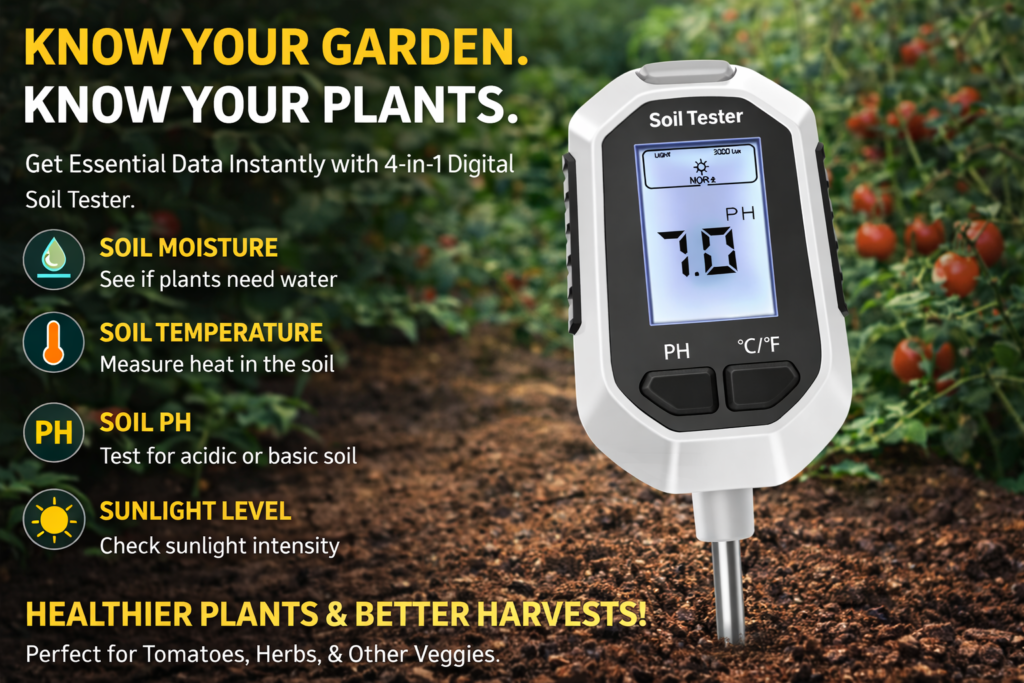
A companion-planted tomato garden is a more complex ecosystem than a monoculture bed. More plants, more interactions, more to observe. A 4-in-1 soil meter helps you keep track of soil conditions across the bed as companion plants affect moisture retention and pH over time. Some companions — particularly heavy-feeding ones — can shift local soil conditions noticeably across a season.
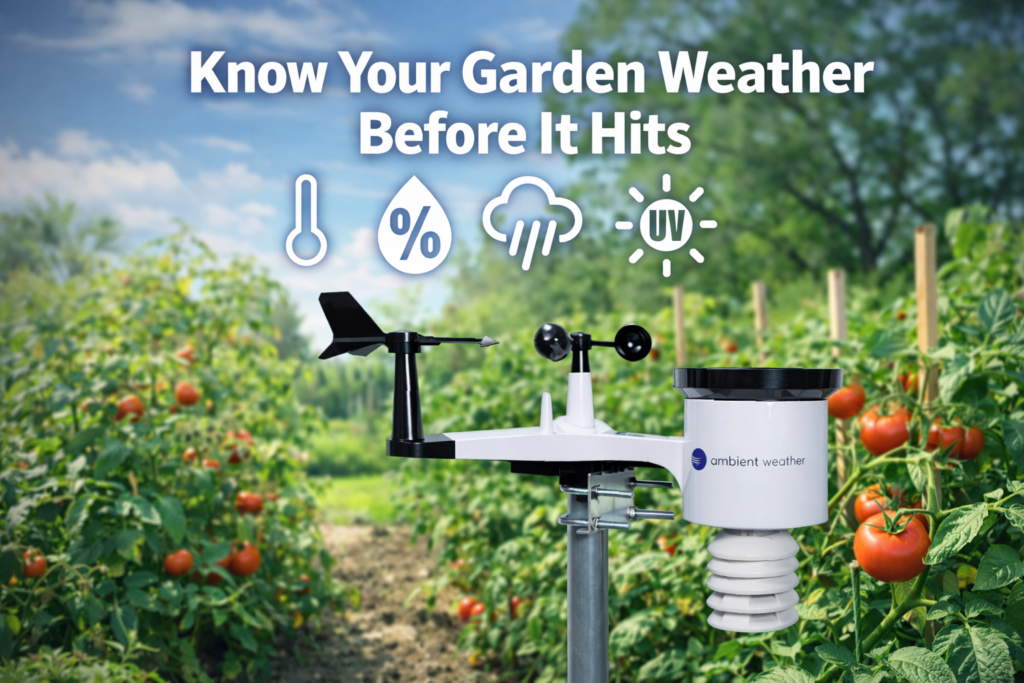
For gardeners who want to understand what is actually happening in their growing environment at a deeper level, an Ambient Weather WiFi station provides real-time data on temperature, humidity, and rainfall that helps explain why pest and disease pressure fluctuates through the season. High humidity periods are when fungal disease spreads fastest. Hot dry stretches increase spider mite pressure. Knowing what conditions you are dealing with helps you respond appropriately rather than reactively.
Frequently Asked Questions
Does companion planting actually work or is it just gardening folklore?
The evidence is mixed depending on the specific combination. Some companion relationships — marigolds and nematodes, basil and aphid repellence, borage and pollinator attraction — have genuine research support. Others are primarily experiential. The honest answer is that well-chosen companions demonstrably reduce pest pressure and improve ecological balance in the garden, even if the effects are not always quantifiable in controlled conditions.
How close do companions need to be to be effective?
For aromatic pest repellents like basil and garlic, within 18–24 inches is most effective. For pollinator attractors like borage and marigolds, within the same general garden area is sufficient — bees range widely. For root-based companions like marigolds and asparagus, direct soil contact or near-contact in the root zone is necessary for nematode effects.
Can I grow companion plants in containers near my tomato beds?
Yes — container-grown companions positioned near in-ground or raised bed tomatoes still provide aromatic deterrence and pollinator attraction. They are less effective for soil-based benefits like nematode suppression, but above-ground companion effects work regardless of whether the companion is in the ground or a pot.
How many companion plants do I need for it to make a difference?
More is better for most companions. A single basil plant near six tomatoes has less effect than three basil plants. A thin border of three marigolds has less nematode impact than a dense row of twenty. Think in terms of creating genuine plant communities rather than token individual plantings.
Related Articles
- Why are my tomato plants not producing fruit — 9 reasons and fixes
- Tomato blossom drop — why it happens and how to fix it fast
- The complete tomato garden setup guide
- How to prepare soil for tomatoes the right way
- Best insect control for tomatoes and edible gardens
- One tomato hornworm can do damage fast
- Try copper fungicide to help stop tomato diseases before they spread
- 9 tomato growing tips that actually work
- How to grow tomatoes faster — 10 proven tricks that work
About the Author
Laura Hendricks has been experimenting with companion planting in her Zone 6b tomato garden for over a decade — testing combinations, observing results, and gradually building a planting system that works with the garden ecosystem rather than against it. She writes practical guides for home gardeners who want more from their space without more inputs.