Most gardeners plant tomatoes too shallow and never know what they are missing. Here is the simple two-thirds rule that builds a stronger root system from day one — and why it works.
There is one planting tip that separates experienced tomato growers from beginners, and it has nothing to do with fertilizer, watering schedules, or variety selection. It is simply how deep you put the plant in the ground.
Most gardeners plant tomatoes the same way they plant everything else — dig a hole, drop the plant in at the same depth it was growing in the pot, fill in around it, water it in. This works fine for most vegetables. For tomatoes it leaves a significant amount of potential on the table.
Tomatoes have a unique biological ability that almost no other vegetable shares. They can grow roots from any part of their stem that is buried in soil. Plant a tomato deep — or sideways in a trench — and the buried stem develops an entirely new root system that dramatically increases the plant’s ability to absorb water and nutrients. The result is a stronger, more drought-tolerant, more productive plant from the very first week in the ground.
This guide covers exactly how deep to plant tomatoes, the methods that work best, and why this single step is one of the highest-return things you can do in your tomato garden.
Why Tomatoes Can Be Planted So Deep
The fuzzy hairs you see on a tomato stem are not just texture — they are undeveloped root initials called adventitious roots. Given the right conditions — darkness, moisture, and soil contact — these hairs will develop into fully functional roots within days of being buried.
This is not a trick or a technique someone invented. It is a fundamental biological characteristic of the tomato plant. Botanists classify tomatoes as facultative stem rooters, meaning they will form roots on their stems whenever conditions are right. No other common garden vegetable does this as readily or as effectively.
The practical result is that a tomato planted with 6 inches of stem buried underground has a dramatically larger root system than one planted at the same depth it grew in the pot. More roots means more surface area for water uptake, more access to soil nutrients, better anchoring against wind, and better drought resilience across the entire season.

How Deep Should You Plant Tomatoes?
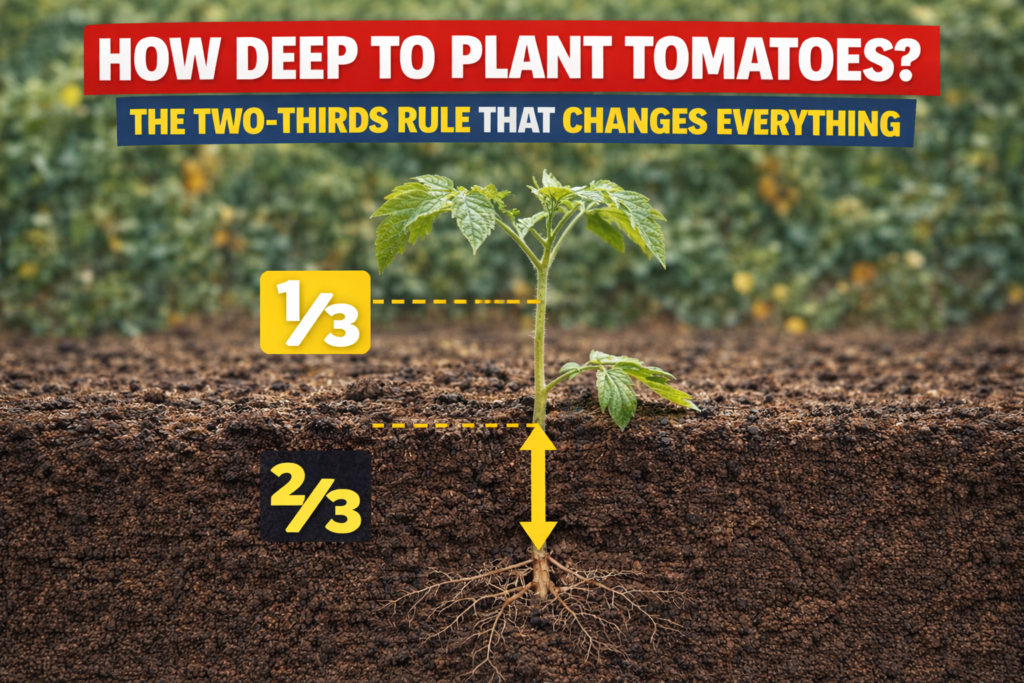
The general rule is to bury two-thirds of the plant.
If your transplant is 12 inches tall, plant it so that 8 inches are underground and 4 inches are above the soil surface. If it is 18 inches tall, bury 12 inches and leave 6 above ground.
This sounds extreme if you have never done it before. It is not. The plant adapts immediately. The buried leaves will die back within a day or two — this is normal and expected — and the buried stem will begin developing roots within the first week. Within two weeks, most deep-planted tomatoes show noticeably faster growth than shallowly planted ones because the expanded root system is delivering more resources to the plant above ground.
Practical minimums and maximums:
- Minimum: Bury at least the bottom third of the plant. Anything less than this and you are leaving most of the benefit on the table.
- Maximum: Leave at least 4–6 inches of stem and foliage above the soil surface. The plant needs leaves to photosynthesize and continue growing.
- Sweet spot for most transplants: Two-thirds underground, one-third above.
Remove Leaves Before Planting Deep
Before burying the lower two-thirds of the plant, strip off all the leaves and side shoots that will end up underground.
Buried leaves rot. Rotting plant material in the soil introduces disease and can attract pests. This is a simple step that prevents a problem before it starts. Run your hand down the lower portion of the stem and pinch off every leaf and branch that will be below the soil line. You do not need to remove the leaf completely — pinching the stem close to the main stalk is fine.
The small stubs left behind are not a problem. They will become part of the root-producing stem tissue within days.


Two Methods for Deep Planting
Method 1: The Deep Hole
Dig a hole deep enough to bury two-thirds of the plant. This is the most straightforward approach and works well for shorter transplants.
For a 12-inch transplant you are digging approximately 8 inches deep. For an 18-inch transplant you are going 12 inches deep. This puts the root ball at significant depth.
One consideration with deep holes: Soil temperature. The top few inches of garden soil warm up first in spring. Deeper soil stays cooler longer. In early season planting, placing roots at 10–12 inch depth can actually slow early growth because the roots are in colder soil.
The solution is simple — wait until soil has warmed through before deep planting in spring, or use the trench method described below which keeps roots closer to the warm surface while still burying the stem deeply.
A soil thermometer makes this easy to check. You want soil temperature at planting depth to be at or above 60°F before transplanting. Below that, roots sit dormant and do not develop, which eliminates most of the benefit of deep planting.
Method 2: The Trench Method
The trench method is preferred by many experienced gardeners because it solves the cold soil depth problem and works beautifully for tall or leggy transplants.
Instead of digging straight down, dig a shallow trench — usually 4 to 6 inches deep and as long as most of the plant’s stem. Lay the plant on its side in the trench with the root ball at one end and the top 4–6 inches of the plant angled upward at the other end. Fill in the trench, burying the entire length of stem except the top portion.
The plant will orient itself upright within 2–3 days as it grows toward light. Within a week, roots will be developing all along the buried stem in the warm upper soil layer.
The trench method is especially useful for:
- Leggy transplants that have gotten too tall or stretched under insufficient light
- Early season planting when deeper soil is still cold
- Transplants with established root balls that would sit very deep if planted straight down
- Any situation where you want maximum stem burial with minimal depth


What About Leggy Transplants?
Leggy transplants — tall, stretched plants with long bare stems and sparse foliage — are actually ideal candidates for deep planting or trench planting. What looks like a problem becomes an advantage.
A transplant that grew too tall under insufficient light, or that has been in its starting container too long and developed a long bare stem, has more stem surface area to develop roots from than a compact, well-grown transplant. Bury that long stem and you end up with a root system that would take weeks of normal growth to develop otherwise.
If your seedlings got leggy this season, do not throw them out. Plant them deep or use the trench method and watch them take off faster than you expect.
The reason leggy seedlings happen in the first place is usually inadequate light during the indoor growing phase. A dedicated grow light kept 2–4 inches above seedling tops produces compact, sturdy transplants that still benefit from deep planting — they just do not need it as urgently.
Planting Depth for Container Tomatoes
Deep planting works just as well in containers as it does in the ground, with one adjustment — container depth limits how far you can go.
For a standard 5-gallon container, a transplant more than about 10 inches tall will need to be planted using the trench approach — coiling the root ball at the bottom of the pot and laying the stem along the inside wall of the container before filling with soil. This sounds awkward but works extremely well.
For larger containers — 10 gallon and up — you have more depth to work with and can often plant straight down. Still aim to bury two-thirds of the plant.
Container soil warms faster than garden soil in spring, which is one reason container-grown tomatoes often show earlier growth than in-ground plants. This also means the soil temperature concern with deep planting is less significant in containers than in cold ground.
For the best results in containers, the guide on best soil mixture for growing tomatoes in containers covers the ideal mix that supports root development throughout the season. And if you are still deciding on containers, best containers for tomatoes that actually help them thrive covers size, material, and drainage in detail.
Planting Depth for Raised Beds
Raised beds are ideal for deep tomato planting because they typically have loose, well-amended soil throughout — no compaction, good drainage, and faster warming in spring.
In a standard 12-inch deep raised bed, you have enough depth for most transplants using the straight-down method. For taller transplants, angle them slightly or use the trench method along the length of the bed.
Raised bed soil temperature is worth checking before planting, especially in early spring. A 4-in-1 soil meter gives you instant readings at any depth so you know exactly when conditions are right.
The soil composition in raised beds matters as much as depth. Compacted or heavy soil at the planting zone limits root expansion regardless of how deep you plant. The guide on how to prepare soil for tomatoes the right way covers what amendments to add before planting to create the loose, nutrient-rich environment that makes deep planting work at its full potential.


What to Do Right After Deep Planting
Water in thoroughly. Give the plant a deep, slow watering immediately after planting. This settles the soil around the stem and root ball and eliminates air pockets that dry out newly developing roots.
Do not fertilize for 10–14 days. The plant is in establishment mode. Adding fertilizer before roots have settled in stresses the plant and can cause burn. Hold off and let it settle first. Once new growth is visible — usually 10–14 days after transplanting — that is your signal to begin a regular feeding schedule.
Mulch around the base. A 2–3 inch layer of straw or shredded wood mulch applied after planting conserves moisture, regulates soil temperature, and reduces disease splash from soil onto lower stems. Leave a small gap directly around the stem itself — mulch piled against the stem can cause rot.
Expect some initial drooping. A deep-planted tomato sometimes looks a little sad for 3–5 days after transplanting as it adjusts. This is normal. The buried leaves will yellow and die. The stem will begin orienting itself upright. New growth from the top of the plant is the signal that establishment is complete.
Provide shade for the first few days if planting in intense sun. A transplanted tomato does not yet have the root system to keep up with high water demand in full summer sun. A piece of shade cloth, a floating row cover propped above the plant, or even an upturned bucket over the plant during the hottest part of the first few days reduces stress significantly.
Planting Depth and Soil pH
All of the benefit of deep planting comes from the roots that develop on the buried stem. Those roots need to be able to function — and root function depends heavily on soil pH.
Tomatoes absorb nutrients most efficiently when soil pH sits between 6.2 and 6.8. Outside that range, nutrients become locked in the soil and unavailable to roots regardless of how extensive the root system is. A plant with a massive deep root system in soil with a pH of 5.5 or 7.5 will still underperform.
Before investing effort in deep planting, test and correct your soil pH. For acidic soil below 6.2, the guide on need to raise soil pH — this lime works wonders for tomatoes covers the fix. For alkaline soil above 6.8, how to lower soil pH fast with this sulfur fix for tomatoes walks through the correction process.


How Deep Planting Connects to the Rest of Your Season
Deep planting gives you a head start. The larger root system it creates pays dividends all season long — better drought resilience, more efficient fertilizer uptake, stronger anchoring, and generally more vigorous growth.
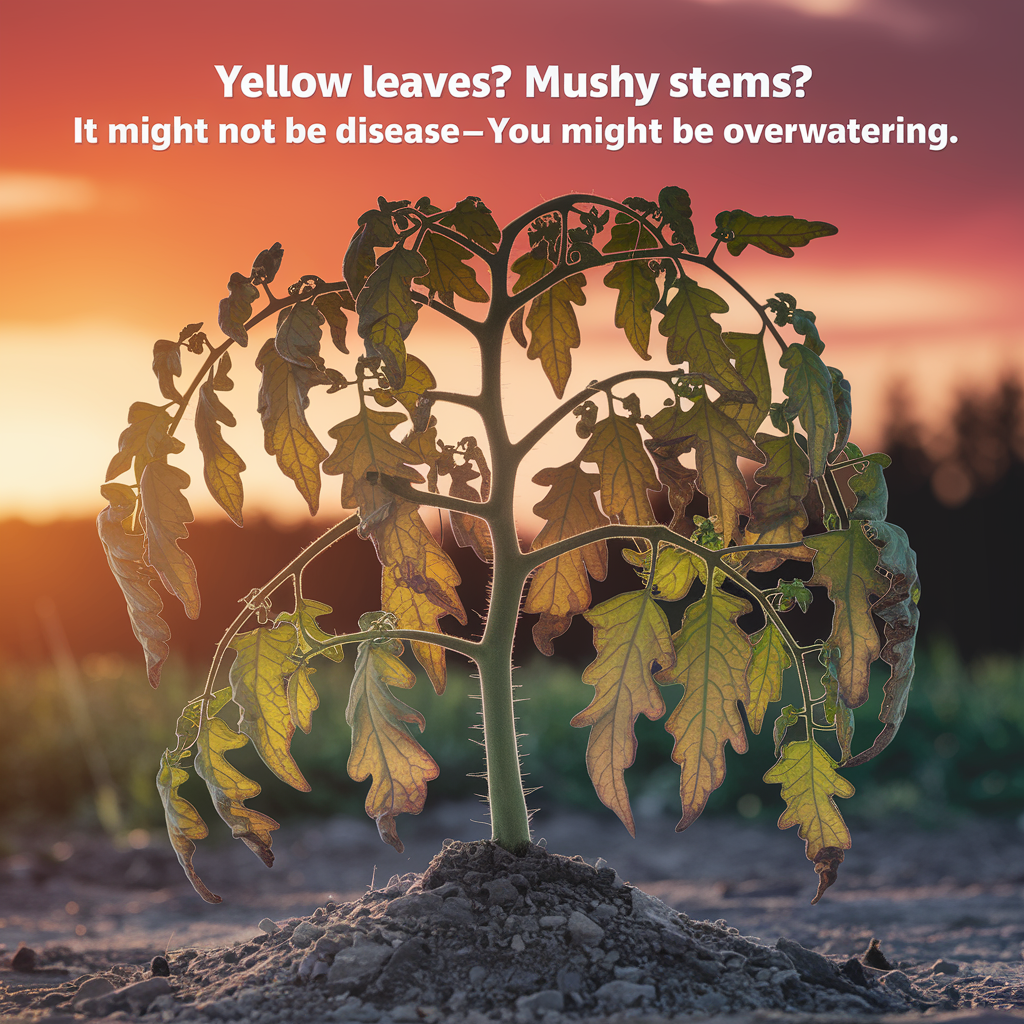
But it is a starting point, not a complete solution. A deep-planted tomato on compacted, poor-quality soil will still underperform. A deep-planted tomato that is overwatered will still develop root rot. The benefits of deep planting are multiplied when combined with the other fundamentals — good soil preparation, consistent watering, appropriate fertilizing, and regular pruning for indeterminate varieties.
If you are working through the basics of tomato growing this season, the complete week-by-week breakdown in tomato plant stages — what to expect and what to do shows how deep planting fits into the full picture from germination through harvest.
Common Questions About Planting Depth
Can I plant tomatoes too deep?
Yes, though it is difficult to do accidentally. If you bury the growing tip underground or leave less than 4 inches of foliage above the soil, the plant will struggle to photosynthesize enough to sustain itself. As long as you are leaving a reasonable amount of the plant above ground, you are unlikely to go too deep.
Does deep planting work for all tomato varieties?
Yes — both determinate and indeterminate varieties develop adventitious roots from buried stem tissue. The benefit is the same regardless of variety type.
Should I remove the lower leaves before or after planting?
Before. Strip the leaves that will be buried before you put the plant in the ground. This is cleaner, easier, and prevents buried leaves from starting to rot before you have even finished planting.
How long before I see growth after deep planting?
Most transplants show visible new growth from the above-ground portion within 10–14 days. The buried stem is developing roots during this period but you will not see that activity. Once new top growth resumes, the plant is established and feeding can begin.
Does the trench method produce the same results as deep hole planting?
Yes — in many cases better, because the buried stem is in warmer, more oxygenated soil near the surface. The root system that develops from a trench-planted stem is often more extensive than one from a straight deep-hole plant because more stem surface area is in optimal soil conditions.
What if my transplant is already very root-bound?
Loosen the root ball gently before planting — pulling apart tightly circling roots and spreading them outward gives the plant a better start. Then proceed with deep planting normally. A root-bound plant benefits especially from deep planting because the new stem roots it develops compensate for the compressed, limited original root ball.


Quick Reference: Deep Planting Summary
Standard transplant depth: Bury two-thirds of the plant, leave one-third above ground.
Remove before planting: All leaves and shoots that will be underground.
Best method for short transplants: Straight deep hole.
Best method for tall or leggy transplants: Trench method along the soil surface.
Soil temperature requirement: At least 60°F at planting depth before transplanting.
After planting: Water in deeply, hold fertilizer for 10–14 days, mulch around base.
Expected establishment time: New top growth visible within 10–14 days.
Related Articles
- How to prepare soil for tomatoes the right way
- When to plant tomatoes for the best results in every zone
- Tomato plant stages week by week — what to expect and what to do
- Best soil mixture for growing tomatoes in containers
- How to grow tomatoes faster — 10 proven tricks that work
- Things I wish I knew before growing tomato plants
- 9 tomato growing tips that actually work
About the Author
Mike Callahan has been planting tomatoes deep for over a decade after stumbling onto the technique during his third season of growing. He writes practical no-fluff guides for home gardeners who want to get more out of their garden without adding more work to their season.
As an Amazon Associate we earn from qualifying purchases through some links in our articles.