Curling tomato leaves have at least six different causes and treating the wrong one makes things worse. Here is how to tell them apart and what to actually do.
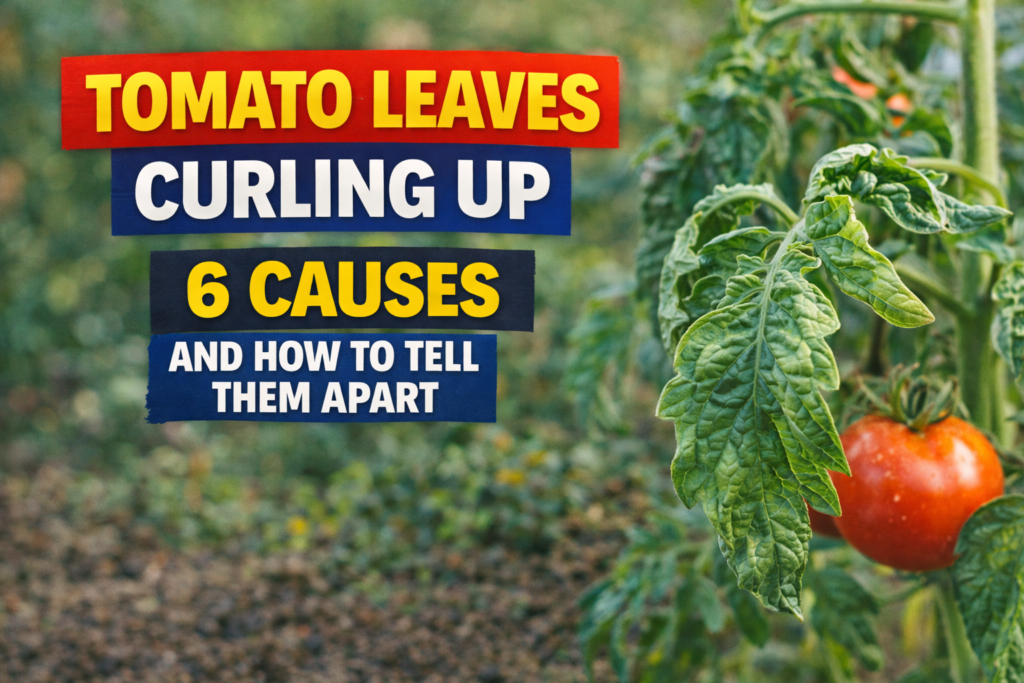
Tomato leaves that curl upward are one of the most misread symptoms in the garden. Most gardeners see curling leaves and immediately reach for the hose or the fertilizer. Sometimes that is exactly the right move. Other times it makes the problem significantly worse.
The reason tomato leaf curl is so confusing is that at least six completely different causes produce the same visual symptom. Heat stress curls leaves. Overwatering curls leaves. Underwatering curls leaves. Herbicide drift curls leaves. Viral disease curls leaves. And physiological leaf roll — a completely harmless response the plant makes on its own — also curls leaves.
Treating the wrong cause does nothing at best and damages the plant at worst. This guide walks through every reason tomato leaves curl upward, how to tell each one apart, and exactly what to do for each.


First: Understand the Difference Between Upward and Downward Curl
Before diagnosing the problem, confirm which direction the leaves are curling.
Upward curl — leaf edges roll upward toward the top surface of the leaf, like the sides of a taco shell folding up. This is what this article covers.
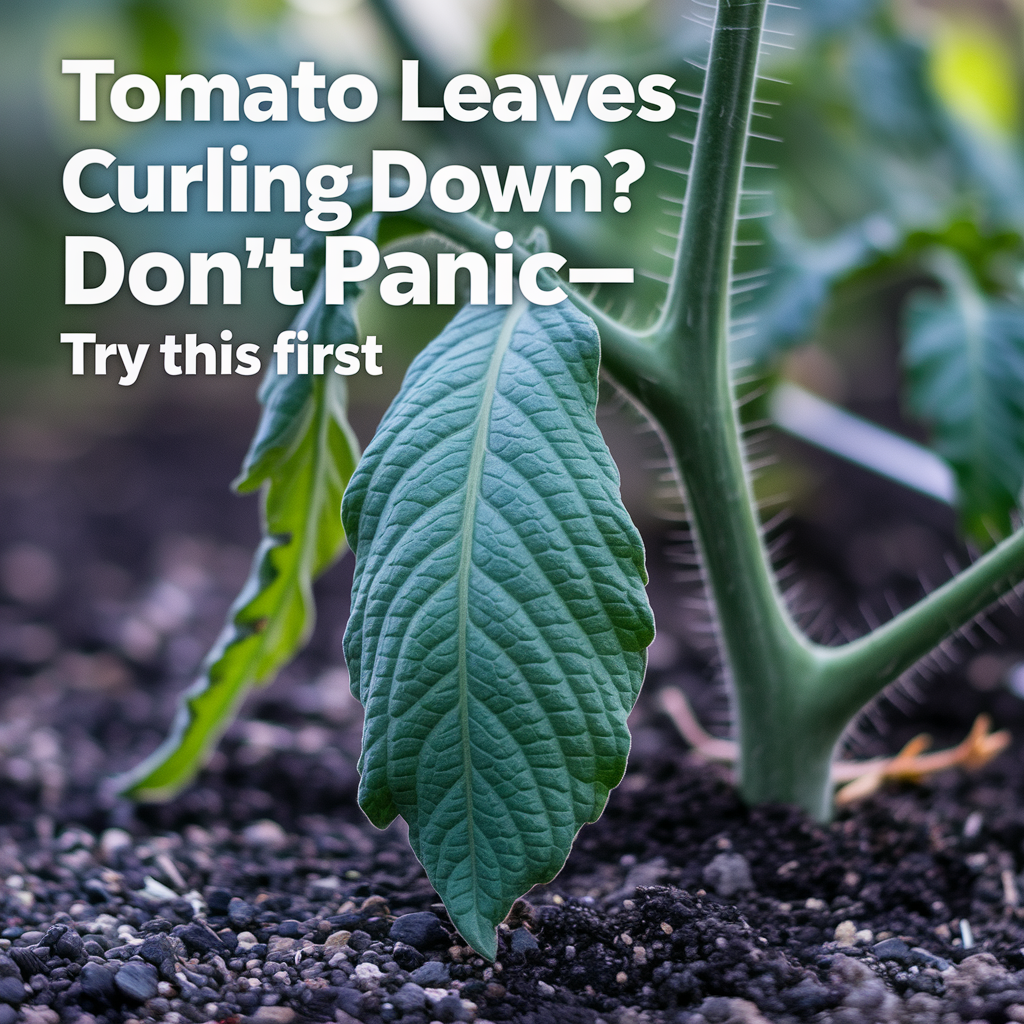
Downward curl — leaf edges curl toward the underside of the leaf, drooping and cupping downward. This is a different set of causes and is covered in the article on tomato leaves curling down — don’t panic, try this first.
Both types of curl can appear on the same plant at different times and for different reasons. Getting the direction right is step one.

Cause 1: Physiological Leaf Roll — The Harmless One
This is the most common cause of upward leaf curl in tomatoes, and it is completely normal.
Physiological leaf roll is a self-protective response the tomato plant makes when it is under mild environmental stress — usually heat, low humidity, or dry soil. The leaves roll inward to reduce their surface area exposed to sun and wind, which reduces water loss through transpiration. It is the plant’s built-in shade structure.
How to identify it:
- Affects the lower and middle leaves first, usually leaving upper leaves and growing tip looking normal
- Leaf color remains healthy green — no yellowing, spotting, or distortion
- Leaves feel firm and normal, not limp or crispy
- Happens on hot afternoons and may partially relax in the evening or on cooler days
- Most common on large-leafed indeterminate varieties, especially during hot weather or after transplanting
What to do:
Nothing — in most cases. Physiological leaf roll does not harm the plant and does not affect production. If it bothers you, consistent deep watering and mulching around the base of the plant reduces the moisture stress that triggers it. But if the plant is otherwise healthy and growing well, curled lower leaves are not a problem worth treating.
This is by far the most common reason new gardeners panic about curling leaves. If your plants are growing vigorously, producing flowers and fruit normally, and the curl is limited to lower and middle leaves with no discoloration — relax. The plant is fine.
Cause 2: Heat Stress
When temperatures push above 85–90°F, tomato plants begin showing visible stress responses. Upward leaf curl during heat waves is extremely common and often appears alongside wilting during the hottest part of the day.
Heat stress curl looks similar to physiological leaf roll but tends to be more dramatic — leaves curl tightly and the plant may look significantly wilted by early afternoon even when soil moisture is adequate.
How to identify it:
- Appears during sustained hot weather, especially when daytime temps are above 90°F
- Most pronounced in early to mid afternoon
- Plant may partially recover by evening as temperatures drop
- Fruit set often slows or stops during the same period — a related symptom
- Soil moisture levels may be adequate — the problem is temperature, not water
What to do:
- Provide afternoon shade using shade cloth rated at 30–40% light reduction. This is especially valuable for plants in full western sun exposure where afternoon heat is most intense
- Water deeply in the early morning so soil moisture is at its maximum during peak heat
- Mulch heavily around plant bases — 3 inches of straw or wood chip mulch significantly reduces soil temperature and slows moisture loss
- Avoid fertilizing during a heat wave — stressed roots cannot process nutrients effectively and fertilizer salts add stress
- Choose heat-tolerant varieties for consistently hot climates — varieties like Heatmaster, Solar Fire, and Arkansas Traveler are specifically bred to continue setting fruit and maintain normal leaf function at higher temperatures
Heat stress that causes leaf curl alone — without yellowing, spotting, or distortion — rarely causes lasting damage. Once temperatures moderate, plants typically resume normal growth without any lasting effects.


Cause 3: Inconsistent or Insufficient Watering
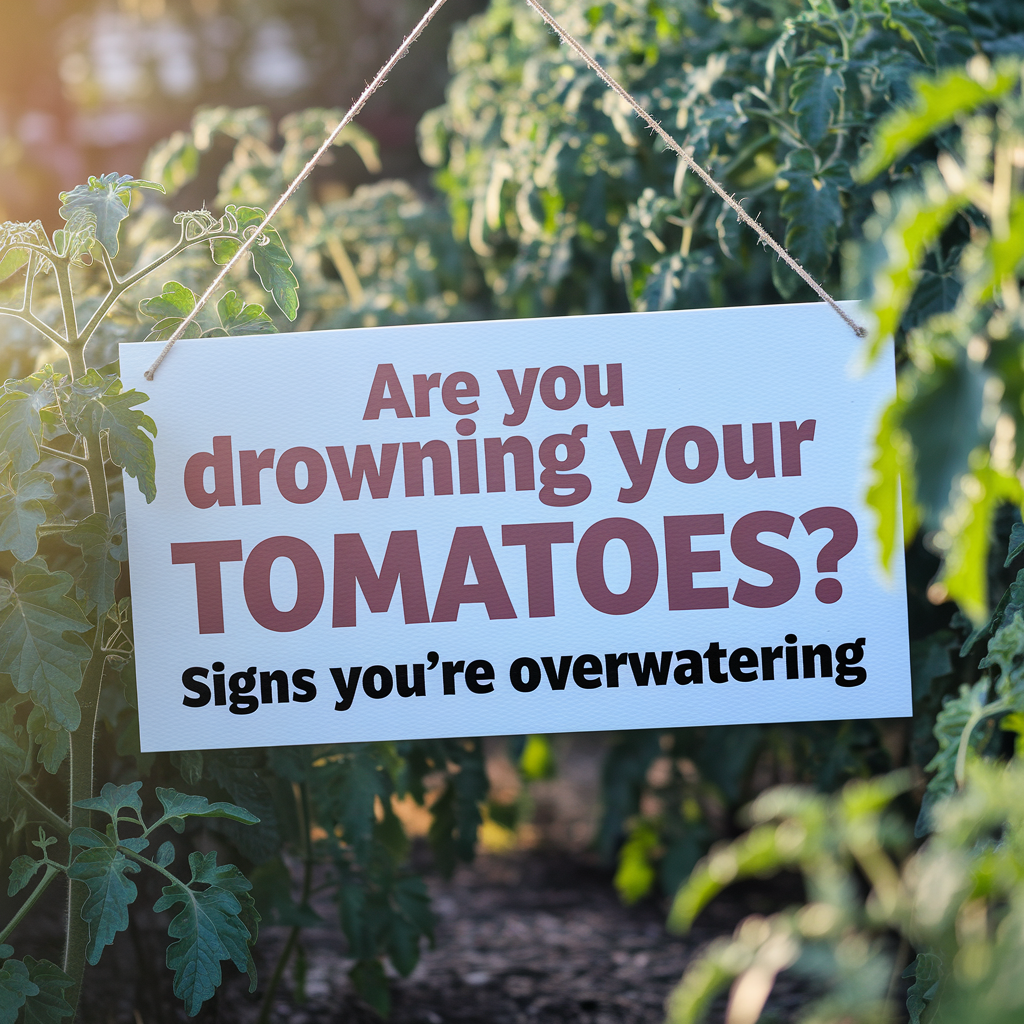
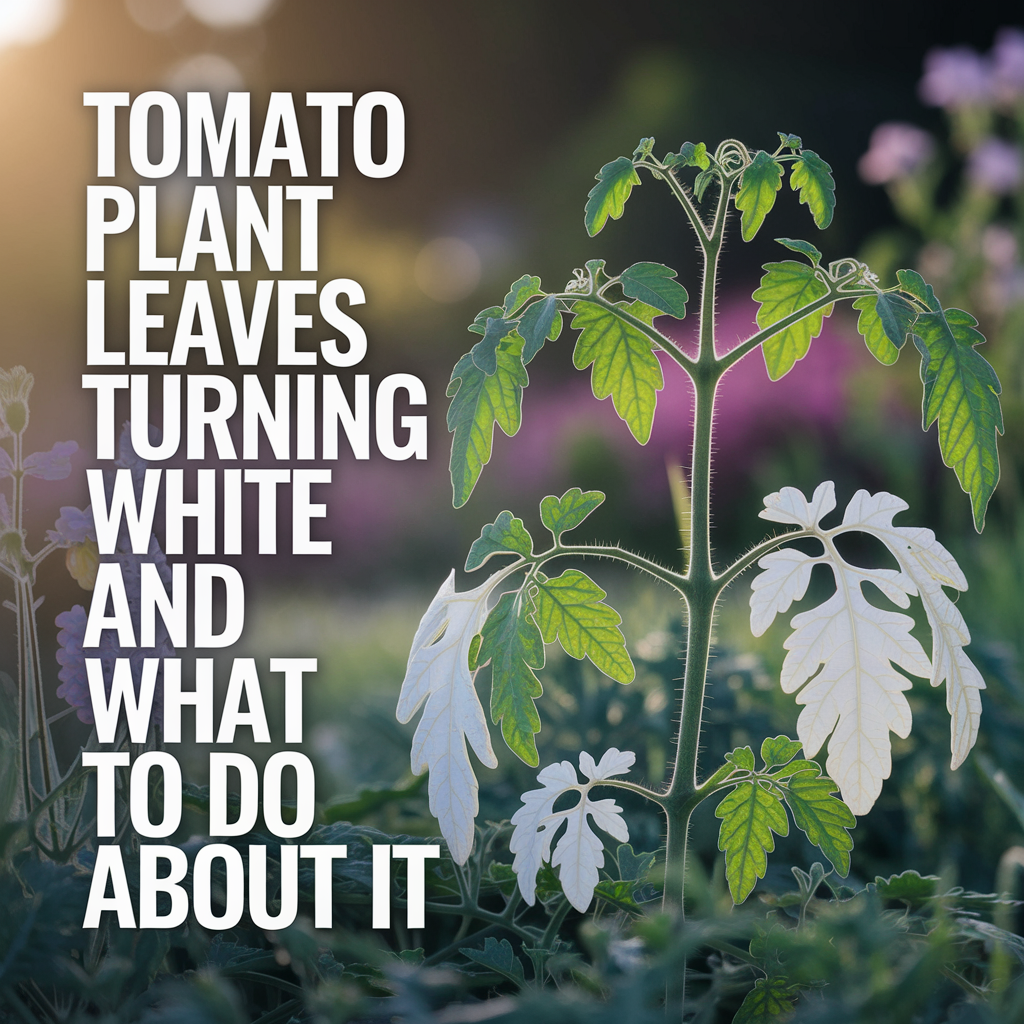
Both overwatering and underwatering can cause upward leaf curl, which is why checking soil moisture before doing anything else is always the right first move.
Underwatering curl:
When soil dries out significantly, tomato plants draw water back from leaf tissue into the stem and root system to protect core functions. Leaves lose turgor and curl upward as a result.
Signs: Soil is dry two or more inches down. Leaves feel slightly dry or papery. Plant may be wilting overall. Curl is often accompanied by slight yellowing or browning at leaf edges in more severe cases.
Fix: Water deeply right now. Soak the soil thoroughly, not just the surface. A deep, slow watering that saturates the entire root zone is far more effective than a quick daily splash. After recovery, adjust your watering schedule to water less frequently but much more deeply.
Overwatering curl:
Roots sitting in waterlogged soil cannot deliver water or nutrients to the rest of the plant, even though water is abundant. The resulting stress manifests as wilting and leaf curl that looks identical to drought stress — but the soil is wet.
Signs: Soil is wet or soggy days after watering. Leaves feel soft and slightly swollen rather than dry. Lower leaves may be yellowing. There may be a musty or sour smell from the soil.
Fix: Stop watering immediately. Improve drainage if needed. For containers, check that drainage holes are clear. For in-ground plants, loosen soil around the base to allow air back to the root zone. Do not add fertilizer while the plant is waterlogged.
The full side-by-side comparison of overwatering and underwatering symptoms is in the guide on overwatered vs underwatered tomato plants — it is the fastest way to confirm which problem you are actually dealing with.
Cause 4: Herbicide Drift or Contamination
This one is less common but important to know about because it is frequently misdiagnosed as a disease — and the treatment for disease does nothing for herbicide damage.
Herbicide drift happens when broadleaf weed killers — most commonly products containing 2,4-D or dicamba — drift on the wind from nearby lawns, fields, or neighboring properties and land on tomato foliage. Tomatoes are extremely sensitive to these chemicals, even at very low concentrations.
The curl pattern from herbicide exposure is distinctive and different from all other causes. Rather than rolling uniformly along the length of the leaf, herbicide-affected leaves show a twisting, downward and upward curl simultaneously — sometimes described as a corkscrew or epinasty pattern. New growth at the growing tip is most severely affected and may show severe twisting and distortion.
How to identify it:
- Curl is irregular, twisting, or corkscrewed rather than uniform rolling
- Newest growth at the growing tip is most severely distorted — this is the key distinguishing feature
- Multiple plants affected simultaneously rather than individual plants here and there
- Symptoms appeared suddenly, possibly following nearby lawn treatment, agricultural spraying, or a windy day
- Curl affects the whole plant rather than just lower or middle leaves
- Leaf surfaces may look puckered, cupped, or fern-like in severe cases
What to do:
- There is no chemical treatment that reverses herbicide damage
- Remove the most severely distorted leaves and stems if they are visually overwhelming
- Water and feed the plant normally — healthy, unstressed plants recover more completely and more quickly
- Mild herbicide exposure often resolves on its own over 4–6 weeks as the plant grows new, unaffected foliage above the damaged areas
- Severe or repeated exposure may kill the plant — in these cases, there is little to be done
- For future prevention, row covers and physical barriers can reduce drift exposure during known spraying seasons
If you suspect herbicide contamination and your garden soil has been treated with grass clippings, compost, or manure from herbicide-treated areas, the soil itself may be the source. This is a documented issue with persistent herbicides like aminopyralid that can remain active in composted materials for an extended period.
Cause 5: Broad Mite or Russet Mite Infestation
Unlike spider mites — which cause stippling and webbing that are easy to see — broad mites and russet mites are microscopic and invisible to the naked eye. Their damage, however, is very visible and frequently misidentified as a viral disease or nutrient deficiency.
Broad mites and russet mites feed on new growth at the tips of the plant. As they feed, they inject a toxin that causes dramatic distortion of new leaves — upward curl, twisting, bronzing, and a hardened or brittle texture to affected tissue. The growing tip looks stunted and malformed. In severe infestations, the plant can look like it is dying from the top down.
How to identify it:
- Curl and distortion is concentrated at the growing tip and newest leaves — not lower leaves
- Affected tissue looks bronzed, hardened, or abnormally shiny
- New leaves emerge already distorted rather than appearing normal and then curling
- Overall plant growth slows or stops
- No webbing visible (rules out spider mites)
- A 10x hand lens may reveal tiny mites on the undersides of distorted leaves — they are just barely visible at this magnification
What to do:
- Broad mites and russet mites require a specific miticide — spinosad is one of the more effective organic options. The guide on this spinosad insecticide stops tomato pests without wrecking your garden covers application approach and timing
- Remove and bag the most severely affected new growth before treating to reduce the mite population immediately
- Apply treatment to the growing tip and newest leaves specifically — this is where the population is concentrated
- Repeat applications every 5–7 days for at least 2–3 treatments, as eggs are resistant to most treatments and hatch between applications
- Affected leaves will not recover their normal appearance, but new growth following successful treatment should emerge normally


Cause 6: Viral Disease
Several tomato viruses cause upward leaf curl as a primary symptom. The most significant is Tomato Yellow Leaf Curl Virus (TYLCV), transmitted by whiteflies. Others include Tomato Mosaic Virus and various cucumber mosaic virus strains.
Viral curl is different from environmental curl in several important ways. It is progressive — it gets worse over time rather than improving when conditions moderate. It is accompanied by other symptoms — color changes, mosaic patterns, or stunted growth. And it typically cannot be reversed or treated.
How to identify viral leaf curl:
- Curl is persistent and worsens over time regardless of watering or temperature
- Leaves show additional symptoms — yellowing at the edges, mosaic or mottled coloring, unusual dark green and light green patterning
- New leaves emerge already curled and distorted
- Overall plant growth is stunted
- Fruit production is significantly reduced or stops entirely
- Other plants nearby may show similar progressive symptoms
What to do:
- There is no treatment for viral disease in tomatoes — infected plants cannot be cured
- Remove and dispose of severely infected plants to prevent spread to healthy plants. Do not compost them
- Control whitefly populations aggressively on remaining plants — whiteflies are the primary vector for TYLCV. Insecticidal soap applied to the undersides of leaves where whiteflies congregate is effective at reducing populations
- In future seasons, choose virus-resistant varieties — many modern hybrids carry TYLCV resistance, noted as “TYLCV” or “TY” in the variety description
- Use reflective mulch around plants to disorient and deter whiteflies before they establish


The Diagnostic Process: How to Figure Out Which Cause You Have
Work through these questions in order:
Step 1: Check the growing tip.
Is the growing tip and newest growth the most distorted? If yes, suspect herbicide drift or mite infestation — both primarily affect new growth. Environmental causes typically spare the growing tip and affect lower and middle leaves more.
Step 2: Check soil moisture.
Push your finger two inches into the soil. Wet? Suspect overwatering. Bone dry? Suspect underwatering. Neither extreme? Move on.
Step 3: Check the temperature.
Is it a heat wave? Are temperatures above 85–90°F? Heat stress and physiological leaf roll are the most likely explanation if conditions are hot and the growing tip looks normal.
Step 4: Check for additional symptoms.
Are there yellowing, spots, mottling, or mosaic patterns alongside the curl? Additional symptoms point toward viral disease. Pure curl with no other symptoms is almost always environmental or physiological.
Step 5: Check the timing.
Did symptoms appear suddenly after nearby spraying? Suspect herbicide. Did they develop gradually over several weeks with progressive worsening? Suspect viral disease or mites.
Step 6: Check for pests.
Look at the undersides of affected leaves with a magnifying glass if possible. Tiny moving dots, bronzing of leaf surfaces, or distorted texture at the growing tip suggest mite infestation.
Most cases of tomato leaf curl are resolved at step 2 or step 3.
Prevention: Reducing the Conditions That Cause Leaf Curl
Many causes of leaf curl are preventable with good basic growing practices.
Consistent watering eliminates the most common environmental causes. A drip irrigation system delivers consistent moisture to the root zone automatically and removes the variability that causes moisture-stress curl.
Mulching reduces both soil temperature and moisture fluctuation — addressing two of the most common triggers simultaneously. Apply 2–3 inches of straw or wood chip mulch around the base of each plant after transplanting and replenish as it breaks down.
Healthy soil supports root function that buffers the plant against environmental stress. The guide on how to prepare soil for tomatoes the right way covers the amendments that build the kind of soil where tomato roots thrive even under difficult conditions.
Regular pest monitoring catches mite infestations before they reach damaging levels. A quick weekly inspection of new growth and leaf undersides takes two minutes and catches problems when they are still easy to treat.
Virus-resistant varieties eliminate the risk of TYLCV and related viral diseases entirely — especially worth considering in areas where whitefly pressure is consistently high.

When Leaf Curl Is Not Worth Worrying About
Given everything above, it is worth saying clearly: most tomato leaf curl is harmless.
If your plants are growing vigorously, flowering, setting fruit, and the curl is limited to lower and middle leaves with normal color and no distortion — you are almost certainly looking at physiological leaf roll. It is the plant doing exactly what it is designed to do in warm conditions.
The gardeners who get into trouble are the ones who see curling leaves and immediately flood the plant with water, or dump on fertilizer, or apply pesticides to a plant that did not need any of it. The curl gets worse because the intervention caused a new problem on top of the original harmless one.
If the plant is producing and looking generally healthy, watch and wait before doing anything. In most cases, the curl resolves on its own as conditions moderate.

Related Articles
- Tomato leaves curling down — don’t panic, try this first
- The real reason your tomato plants are turning yellow
- Signs of overwatering tomato plants and what to do next
- Overwatered vs underwatered tomato plants
- Why are my tomato plants not producing fruit — 9 reasons and fixes
- 9 reasons your tomato plant is sad
- How much sun do tomato plants need
About the Author
Laura Hendricks has grown tomatoes in her Zone 6b backyard for over 15 years and spent the first three of those seasons misdiagnosing leaf curl and making it worse. She now writes practical diagnosis-first guides so home gardeners can identify problems correctly before reaching for a solution.
As an Amazon Associate we earn from qualifying purchases through some links in our articles.