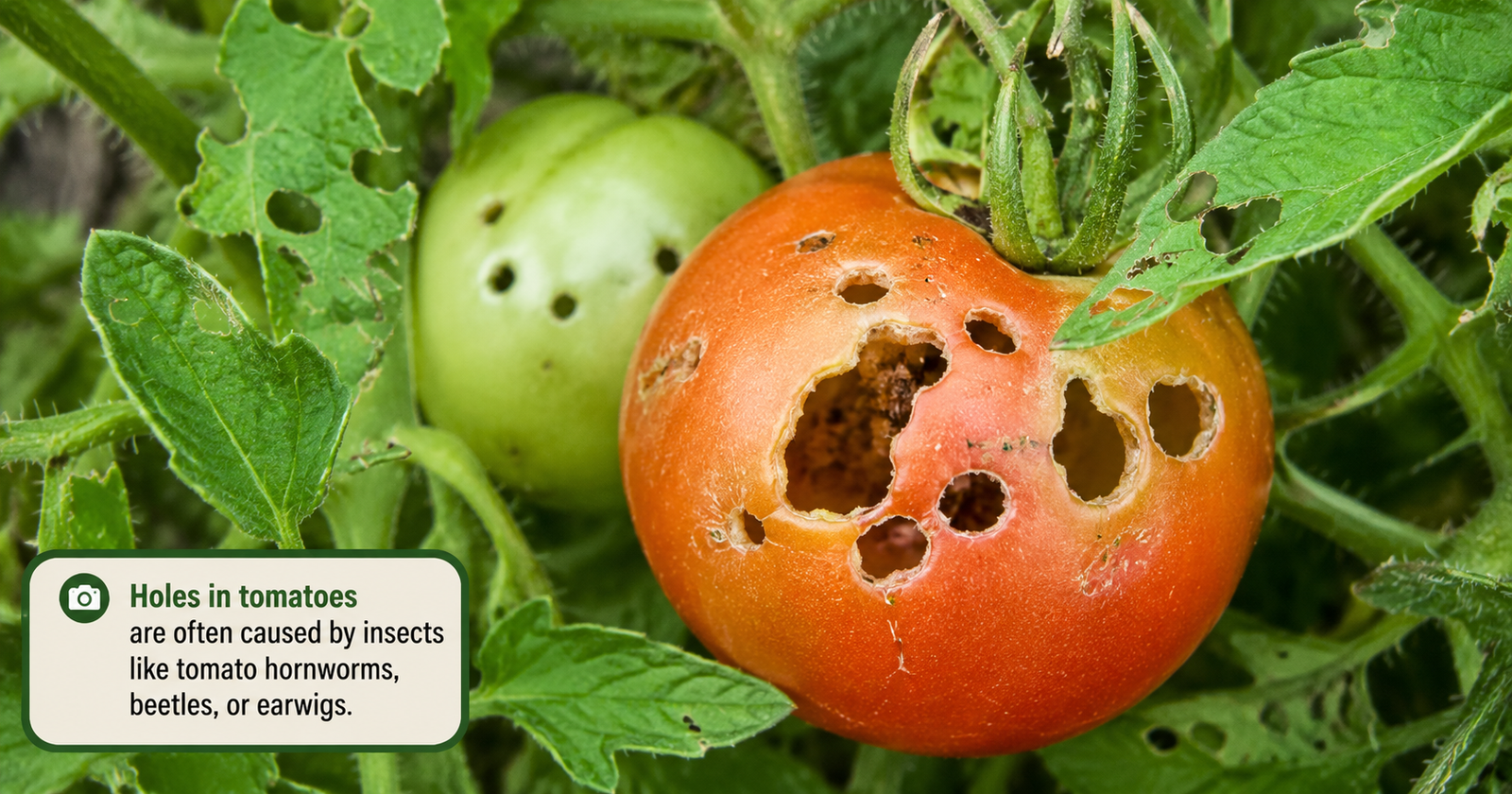
Walking into the garden and finding a perfect tomato with a fresh hole in it is enough to make any gardener mad. The culprit is rarely standing nearby waiting to be identified. All that remains is a bite, peck, hollowed section, or half-eaten fruit.
When someone asks me what is eating holes in their tomatoes, I look at the shape of the damage, the height of the fruit, nearby tracks or droppings, and whether the feeding occurred during the day or overnight.
Birds often leave sharp pecks. Squirrels and rodents take larger bites. Hornworms chew irregular holes and strip nearby leaves. Slugs usually attack low fruit and leave slime. Tomato fruitworms make small entry holes and feed inside the tomato.
Finding the right culprit matters because the solution for a bird is very different from the solution for a caterpillar, slug, or mouse.
What Is Eating Holes in My Tomatoes?
Birds, squirrels, mice, rats, chipmunks, tomato hornworms, fruitworms, slugs, snails, deer, rabbits, raccoons, and other garden visitors can all make holes in tomatoes.
The damage itself provides the first clue:
- Small, sharp pecks usually suggest birds.
- Large bites from exposed fruit may come from squirrels or chipmunks.
- Low fruit with irregular cavities and slime may be attacked by slugs or snails.
- Small entry holes with droppings inside can indicate tomato fruitworms.
- Chewed fruit beside stripped stems often points to hornworms.
- Fruit that disappears or is torn from the vine may be taken by deer, raccoons, or other larger animals.
- Small tooth marks and nighttime feeding may indicate mice, rats, or voles.
- Tiny punctures with cloudy spots are more likely caused by stink bugs than a chewing animal.
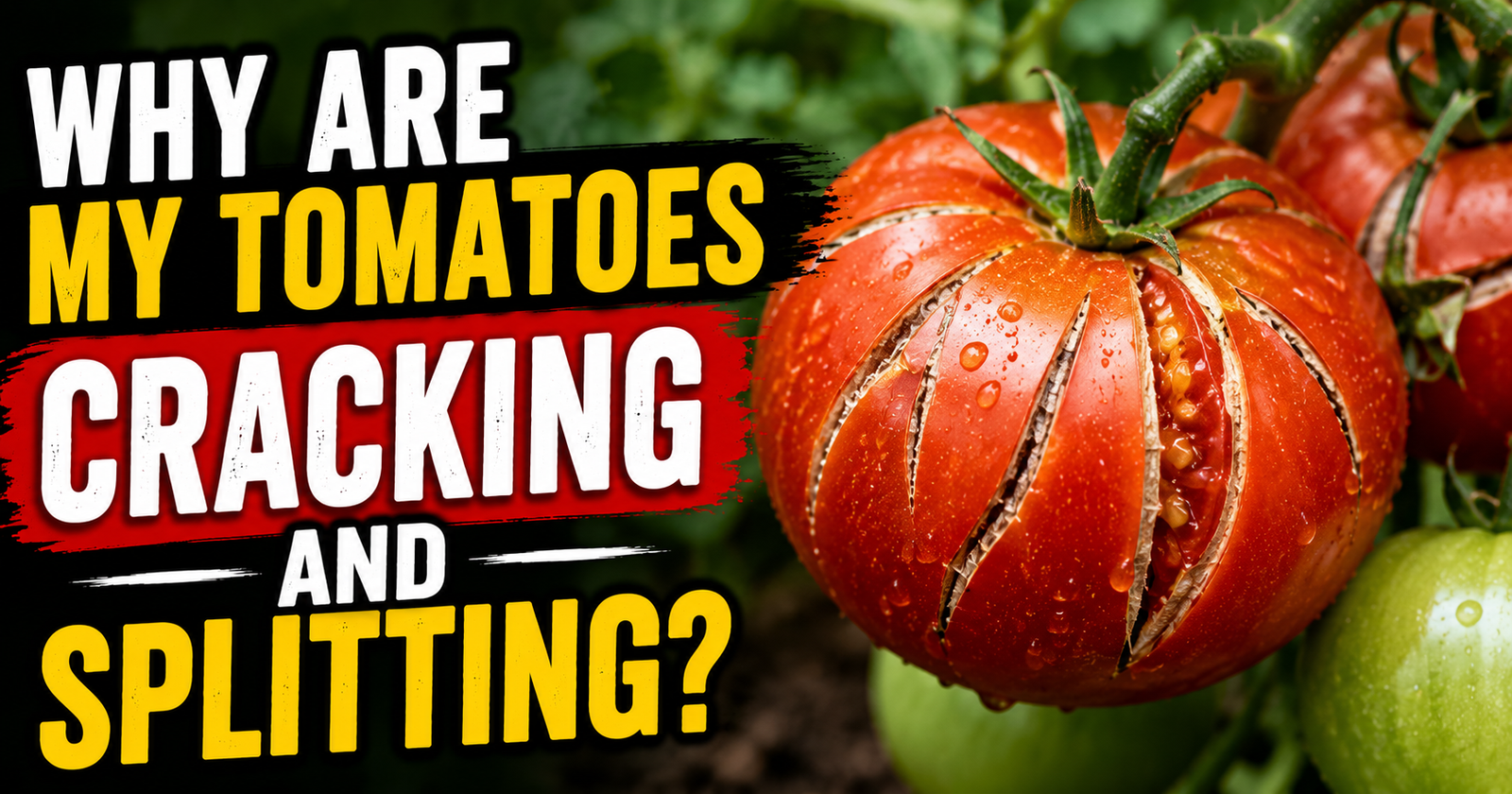
Tomatoes can also split naturally after a rapid change in moisture. Before blaming an animal, make sure you are not looking at tomatoes that cracked or split after rain.
Start With the Shape of the Hole
I begin by examining the edge of the damaged area.
A clean, narrow puncture suggests a peck or a caterpillar entry point. A rough, scooped-out cavity suggests chewing by an animal, slug, or larger insect.
Paired tooth marks can indicate a rodent. Ragged leaf damage around the same fruit points toward a caterpillar.
I also check whether the damaged tissue is fresh and moist or dry and old. Fresh damage helps me determine when the feeding happened, which narrows the list of suspects.

Birds Pecking Holes in Tomatoes
Birds are one of the most common causes of small holes in ripening tomatoes.
Their damage often looks like a narrow triangular peck, a round puncture, or a small area of exposed flesh. A bird may take one bite from several tomatoes instead of finishing a single fruit.
This behavior can be especially frustrating because the damage may appear just as tomatoes reach peak ripeness.
Why Birds Peck Tomatoes
Birds may be looking for moisture rather than food. During hot and dry weather, a juicy tomato provides an easy water source.
They can also be attracted to the fruit’s bright red, orange, or yellow color. Once one bird discovers the tomatoes, it may return repeatedly.
Bird feeding is often worse on exposed fruit near the top or outside of the plant. Tomatoes hidden beneath foliage may escape notice longer.
How to Confirm Bird Damage
Look for narrow pecks, bird droppings, feathers, and feeding that occurs during daylight.
You may see birds perched on tomato cages, fences, nearby branches, or garden posts. Damage may appear on fruit at several different heights.
A trail camera can help when you are not sure. Position it far enough away to capture the entire plant instead of pointing it directly at one tomato.
How I Stop Birds From Pecking Tomatoes
A properly installed physical barrier is the most dependable answer. Bird netting must be stretched tightly over a frame rather than draped loosely across the plants.
Loose netting can entangle birds, snakes, and other wildlife. It can also rest against the fruit, allowing birds to peck through it.
I prefer a framed enclosure with the netting secured at the bottom. Every opening must be small enough to prevent birds from slipping underneath.
Providing a clean water source away from the tomatoes may reduce moisture-seeking pecks, but it is not guaranteed to stop feeding. I still use a physical barrier when damage continues.
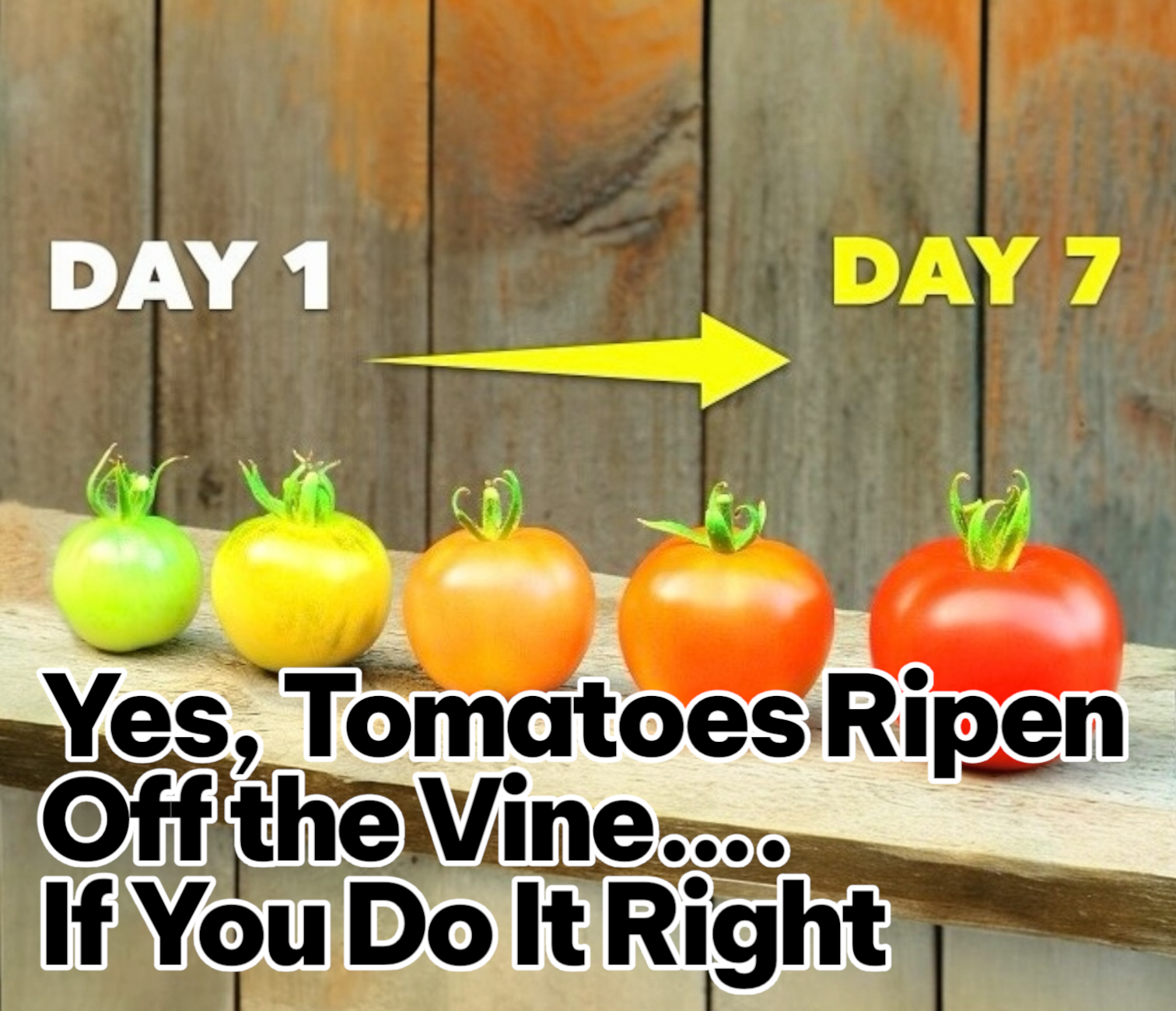
Harvesting at the breaker stage also reduces how long brightly colored fruit remains exposed. Once a mature tomato begins changing color, it can finish ripening safely indoors. The focus article explains how to recognize that stage and manage tomatoes can ripen off the vine after harvest.
Squirrels Eating Tomatoes
Squirrels commonly take large bites from tomatoes or carry entire fruit away.
Their damage is usually larger than a bird peck. A squirrel may chew into one side, remove a wide section, or leave part of the tomato hanging from the vine.
Sometimes a tomato disappears completely, leaving only the stem or a broken fruit cluster behind.
Signs That Squirrels Are the Culprit
Squirrel damage usually occurs during daylight, especially in the morning or late afternoon.
Look for:
- Large rough-edged bites
- Tomatoes pulled from the vine
- Partly eaten fruit found away from the plant
- Broken branches or disturbed cages
- Squirrels watching the garden from fences and trees
- Damage to fruit at different heights
Squirrels are excellent climbers, so raising tomatoes off the ground will not stop them.
How I Protect Tomatoes From Squirrels
A fully enclosed garden cage is more reliable than repellents. The top must be covered because squirrels can climb over an open fence.
Lightweight bird netting may not withstand determined chewing. Hardware cloth, welded wire, or another sturdy garden barrier is better where squirrel pressure is severe.
Motion-activated sprinklers can help discourage visits, although squirrels may eventually learn the pattern.
I also remove ripe fruit promptly. Leaving soft tomatoes on the vine gives squirrels more opportunities to discover the crop.


Chipmunks Eating Low Tomatoes
Chipmunks can leave small to medium bites, often on fruit growing close to the ground.
They may climb, but damage is frequently concentrated on low-hanging tomatoes. A chipmunk may carry smaller tomatoes away or eat part of a larger one.
Look for small burrow openings near foundations, wood piles, rocks, garden borders, or dense vegetation.
The most dependable protection is a barrier with openings small enough to exclude them. The bottom must meet the ground securely because chipmunks can squeeze through surprisingly small spaces.
Mice and Rats Eating Tomatoes at Night
Rodents are strong suspects when tomatoes are damaged overnight and the holes show small tooth marks.
Mice may nibble several areas, while rats can remove larger portions. Both can climb cages and supports to reach fruit above the ground.
Rodent damage deserves special attention because mice and rats can contaminate fruit with saliva, urine, droppings, and dirty feet.
Clues That Point to Rodents
I look for:
- Small paired tooth marks
- Droppings near the plants
- Narrow travel paths through grass or mulch
- Gnawing on stems or nearby materials
- Damage that appears overnight
- Fruit eaten in sheltered locations
- Burrows near sheds, compost, feed, or stacked materials
A trail camera is useful because nighttime rodent activity can go unnoticed for weeks.
How I Reduce Rodent Activity
I remove nearby hiding places and food sources. Tall weeds, boards, empty pots, thick debris, spilled birdseed, livestock feed, and open compost can support rodent activity.
A sturdy enclosure with small openings can protect the crop, but mice may enter through gaps that look insignificant.
Traps can be useful when rodents have become established around buildings or gardens. They must be positioned where children, pets, poultry, and wildlife cannot reach them.
I do not use damaged tomatoes as bait while leaving other ripe fruit outside. Prompt harvesting remains an important part of the solution.

Tomato Hornworms Chewing Fruit
Tomato hornworms are famous for stripping leaves, but they can also chew tomatoes.
Their fruit damage appears as rough, irregular holes or missing sections. The same plant usually has obvious foliage damage.
Hornworms blend into tomato stems and leaves remarkably well. A large caterpillar can remain hidden in plain sight while consuming a surprising amount of the plant.
Signs of Tomato Hornworms
The strongest clues are:
- Entire leaves missing from a stem
- Bare leaf stalks
- Large dark green or black droppings
- Ragged holes in green tomatoes
- Damage near the upper part of the plant
- A thick green caterpillar with pale diagonal markings
I search directly above fresh droppings because the caterpillar is often feeding on the branch above them.
If leaves are disappearing along with the fruit damage, follow my method for finding and removing tomato hornwormsbefore the plant loses its protective canopy.
How I Remove Hornworms
Hand-picking is effective in a smaller garden. I inspect the plant carefully, remove the caterpillars, and continue checking for several days.
Hornworms are easier to spot early in the morning, after rain, or with a ultraviolet flashlight at night because their bodies may glow against the foliage.
Some hornworms carry small white cocoons on their backs. These have been parasitized by beneficial braconid wasps. When practical, leaving a parasitized hornworm in place allows those helpful wasps to complete their development.
For larger infestations, an insecticide labeled for caterpillars on tomatoes may be appropriate. Every label direction and preharvest interval must be followed exactly.
Tomato Fruitworms Making Holes

Tomato fruitworms, also called corn earworms, can make a small hole near the stem and tunnel into the tomato. Planting choices may also affect pest pressure, as these tomato companion planting strategies explains.
The outside damage may look minor, but the inside can contain chewed tissue, droppings, rot, and the caterpillar itself.
Fruitworms often move between fruit. One caterpillar can damage several tomatoes before completing its development.
What Tomato Fruitworm Damage Looks Like
Look for:
- A small round entry hole
- Damage close to the stem
- Brown granular droppings near the opening
- Hollowed or chewed flesh inside
- Secondary rot around the tunnel
- A green, brown, pinkish, or striped caterpillar
The caterpillar’s color varies, so identification should not depend on color alone.
How I Manage Tomato Fruitworms
Regular inspection is important because the caterpillar becomes harder to reach after entering the fruit.
I remove infested tomatoes and dispose of them rather than allowing the caterpillar to finish feeding and return to the soil.
Treatments aimed at young caterpillars work best before they burrow into fruit. Any insecticide must be specifically labeled for use on tomatoes and the target pest.
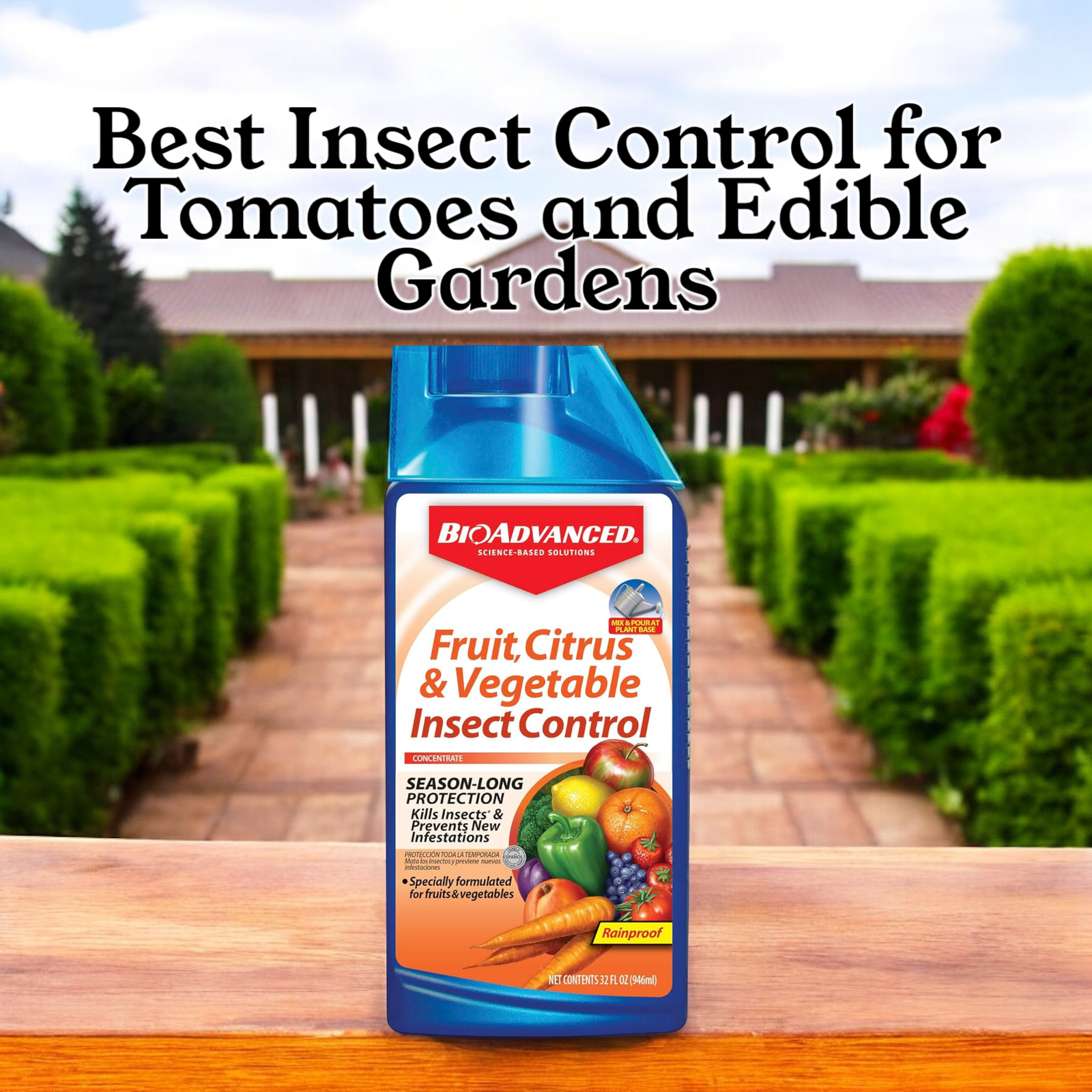
My guide to choosing insect control for tomatoes explains how I match a treatment to the pest rather than spraying every insect I see.
Slugs and Snails Eating Tomatoes
Slugs and snails usually attack tomatoes near the ground or fruit touching damp mulch.
Their damage often appears as a wide, shallow cavity with uneven edges. They may eat the skin first and continue hollowing out the flesh.
The clearest clue is a shiny slime trail on the tomato, stem, mulch, pot, or soil.
When Slugs Feed
Slugs are most active at night, during rain, and on cloudy humid days. They hide beneath boards, dense mulch, pots, weeds, and debris during hot daylight hours.
Watering late in the evening can create ideal overnight feeding conditions. I prefer watering early enough for the surface to begin drying before night.
How I Keep Slugs Away From Tomatoes
I support vines so fruit does not touch the soil or wet mulch. I also remove boards, dense weeds, and other hiding places close to the plants.
Hand-picking after dark can reduce a small population. A flashlight makes them easier to find.
Iron phosphate slug bait labeled for use around edible gardens can be another option. I follow the product label and keep all pesticides and baits away from children and animals as directed.
Earwigs Feeding on Damaged Tomatoes
Earwigs may feed on ripe tomatoes, particularly fruit that is already cracked, split, or touching the ground.
They often take advantage of an existing opening rather than creating a large hole in perfect skin. Finding an earwig inside a tomato does not always mean it caused the original damage.
Look for earwigs hiding beneath pots, boards, mulch, and other damp material during the day. They become active at night.
Correcting cracks, lifting fruit off the ground, and removing decaying tomatoes often reduces the opportunity for earwig feeding.
Stink Bugs Leave Punctures Rather Than Open Holes
Stink bugs feed with piercing mouthparts. They usually do not chew open cavities like caterpillars or rodents.
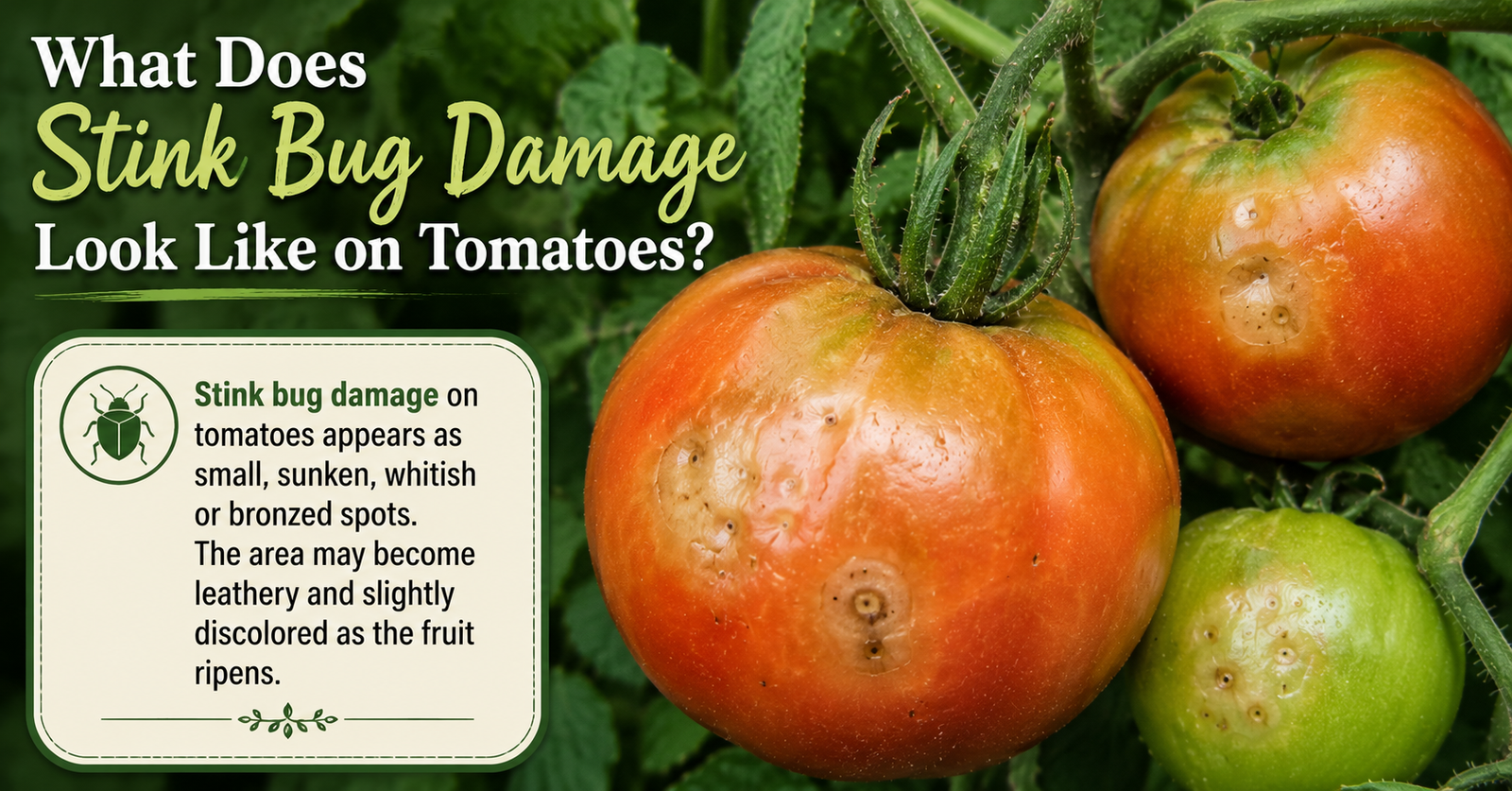
Their damage commonly appears as cloudy white or yellow spots, tiny pinpricks, or hard pale tissue beneath the skin. Those clues are explained in more detail in stink bug damage symptoms, including how to distinguish them from chewing damage.
A tomato may look as if it has several small faded circles rather than one obvious bite.
Minor feeding damage is often cosmetic, but a puncture can provide an entry point for decay. Stink bugs deserve a separate identification approach from chewing pests.
Deer Eating Tomatoes and Plants
Deer may eat fruit, leaves, stems, and entire growing tips. Their damage usually looks torn rather than neatly cut.
A deer lacks upper front incisors, so it pulls and tears plant material. This can leave ragged stems and crushed branches.
Hoofprints, droppings, and widespread plant damage are strong clues. Deer may browse during the evening, overnight, or early morning.

A tall physical fence is the most dependable protection where deer pressure is serious. Repellents may help temporarily, but rain, new growth, and repeated exposure can reduce their effectiveness. For a practical repellent option, see deer repellent options.
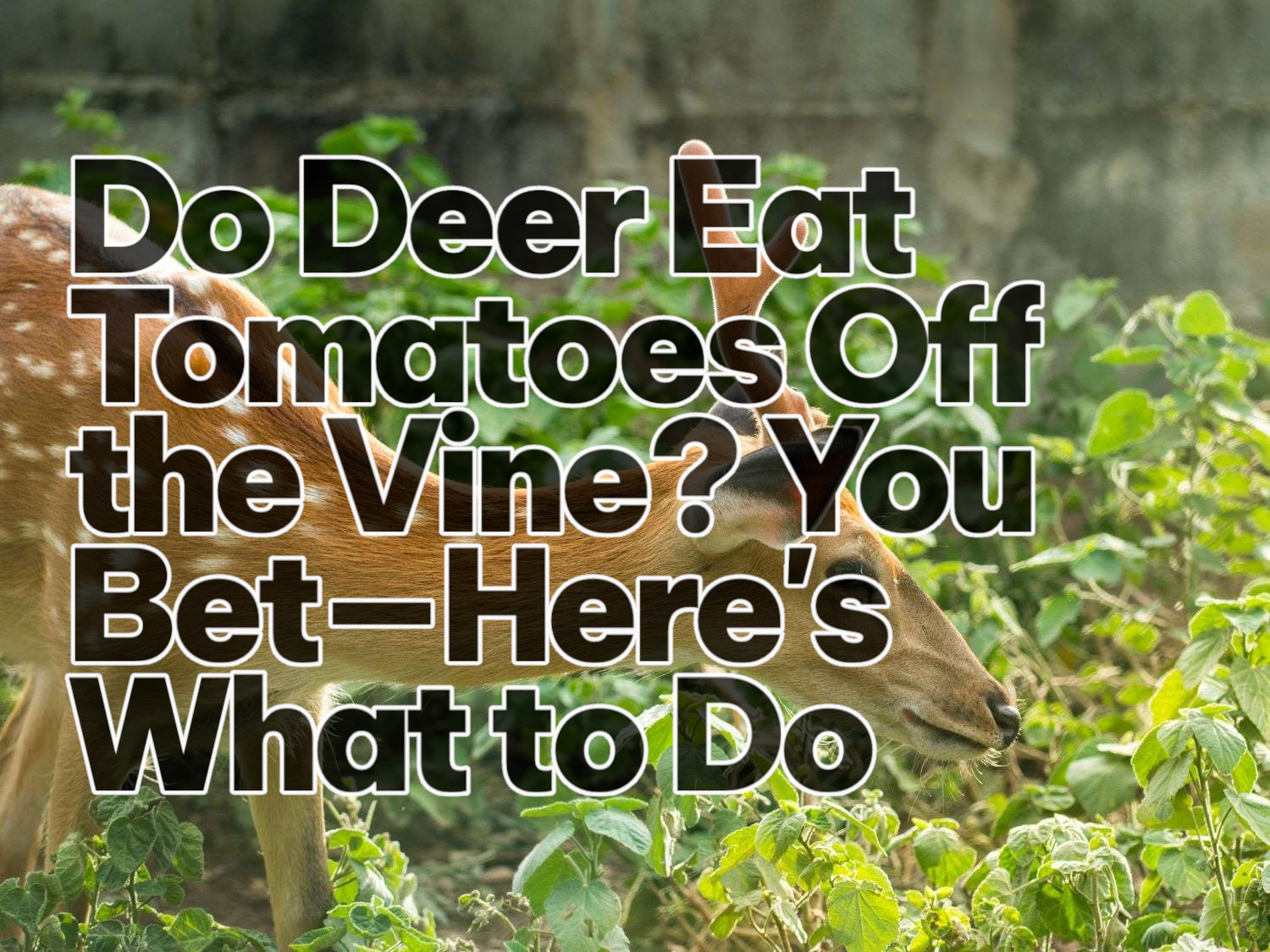
If the whole plant is being browsed rather than just one tomato, my experience with keeping deer from tomato plantscovers the practical options in more detail.
Rabbits Eating Low Tomato Growth
Rabbits are less likely than some animals to target ripe tomatoes regularly, but they may eat low fruit, tender leaves, and young plants.
Their damage usually occurs near the ground. Stems may show clean angled cuts, and round droppings may be scattered nearby.
A short fence with small openings can exclude rabbits. Secure the bottom so they cannot push underneath it.

If low plants are disappearing along with vegetables throughout the garden, use these methods for stopping rabbits from eating tomato plants rather than relying on scent repellents alone.
Raccoons and Opossums Visiting at Night
Raccoons can break branches, pull fruit from vines, and leave large irregular bites. They are strong, clever, and capable climbers.
Opossums may eat ripe or fallen tomatoes, although they are often blamed for damage caused by another nighttime visitor.
Both animals can leave tracks and droppings. Raccoon tracks resemble small hands with five long toes.
A trail camera is the fastest way to separate these visitors from rodents, deer, and other nighttime animals.
A weak or loosely covered enclosure may not stop a determined raccoon. The barrier needs a secure top, sturdy sides, and a bottom that cannot be lifted easily.
Box Turtles Can Eat Low Tomatoes
Box turtles occasionally eat ripe tomatoes close to the ground.
Their damage may look like a large scooped section along the lowest side of the fruit. Because turtles move slowly and leave few obvious signs, they are easy to overlook.
If damage occurs only on tomatoes nearly touching the ground and no tracks, slime, or droppings are present, a turtle is worth considering.
Supporting the fruit higher may solve the problem without excluding the turtle from the rest of the property.
Is the Hole Actually a Natural Crack?
A tomato can split open without being bitten. Heavy rain after dry weather causes the flesh to expand faster than the skin can stretch.
Natural cracks commonly begin near the stem and travel down the side or form rings around the top.
A feeding hole usually removes tissue. A crack separates the skin while leaving both edges visible.
Insects may enter a naturally cracked tomato afterward. Finding them inside does not prove that they created the opening.
Is It a Growth Scar Instead of Pest Damage?
Some tomatoes develop dry corky lines, scars, folds, and zipper-like marks as they grow.
These imperfections are closed and dry rather than freshly chewed. They do not contain missing flesh, wet edges, or tooth marks.
Catfacing can produce deep folds and cavities near the blossom end. It may look like animal damage even though it began when the tomato flower developed.
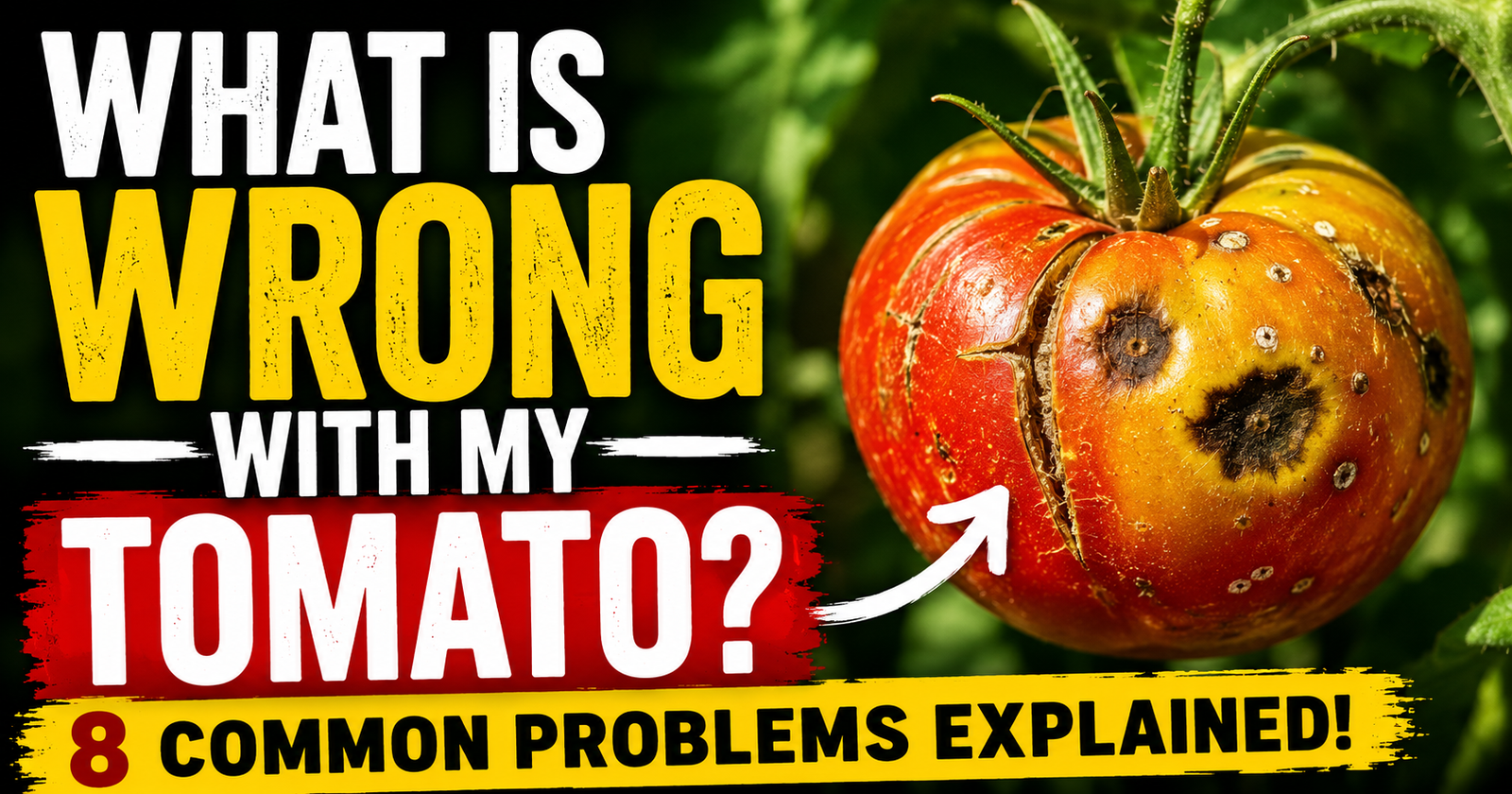
The broad guide to common strange-looking tomato problems can help separate harmless growth scars from active feeding.
How to Catch the Tomato Thief
When the damage is not obvious, I investigate systematically.
Check the Plants Early in the Morning
Fresh overnight damage will still look wet. Slime trails, droppings, and tracks may also be easier to see before the day becomes hot.
Inspect Again Before Dark
Birds and squirrels may feed late in the day. Watching quietly from a distance can reveal daytime visitors.
Search the Undersides of Leaves
Hornworms and smaller caterpillars often hide beneath foliage or along stems.
Look Beneath Pots and Boards
Slugs, snails, and earwigs hide in cool damp spaces during daylight.
Examine the Ground
Tracks, droppings, burrows, broken branches, and travel paths can identify larger pests.
Install a Trail Camera
Point it toward the entire plant and surrounding ground. Both daytime and nighttime footage can be valuable.
Mark New Damage
Remove or mark tomatoes that are already damaged. That makes it easier to tell whether new feeding occurred the following night.
Can You Eat a Tomato With a Hole in It?
I do not eat tomatoes with obvious bird, rodent, raccoon, deer, squirrel, or other animal bites.
Wild animals can contaminate fruit through saliva, droppings, urine, feet, and contact with the open flesh. Cutting around the visible bite does not guarantee that contamination stayed in that exact area.
I also discard tomatoes containing caterpillars, extensive tunneling, maggots, slime, mold, or secondary rot.
A tiny superficial insect blemish on an otherwise sound tomato is different from an open cavity, but every damaged fruit needs careful inspection.
When I cannot identify the cause or determine how long the hole has been open, I choose the safer option and throw the tomato away.
Should Damaged Tomatoes Be Left on the Plant?
I remove tomatoes with open holes. They will not repair themselves, and exposed flesh attracts additional insects and decay.
Leaving damaged fruit on the plant may give a caterpillar time to move deeper inside or complete its development.
I also pick up fallen tomatoes. Rotten fruit on the ground attracts slugs, rodents, flies, beetles, and larger animals that may begin feeding on healthy tomatoes afterward.
Can Damaged Tomatoes Go in the Compost?
Tomatoes with simple animal or insect feeding damage can usually be composted, but there are practical concerns.
Fruitworms and other caterpillars may survive if they are placed in a cool pile. Rodent-damaged fruit can also encourage animals to dig through an open compost area.
I crush or securely contain pest-infested fruit only when I know the composting setup will handle it. Otherwise, I dispose of it away from the garden.
Fruit showing signs of a serious plant disease may require a different approach, especially when the compost pile does not reach temperatures high enough to destroy pathogens.
Why Pests Keep Choosing Ripe Tomatoes
Ripe tomatoes are softer, more fragrant, easier to see, and contain abundant moisture.
During hot, dry weather, animals that normally ignore tomatoes may begin sampling them for water. A single peck or bite can teach a visitor that the garden contains an easy food source.
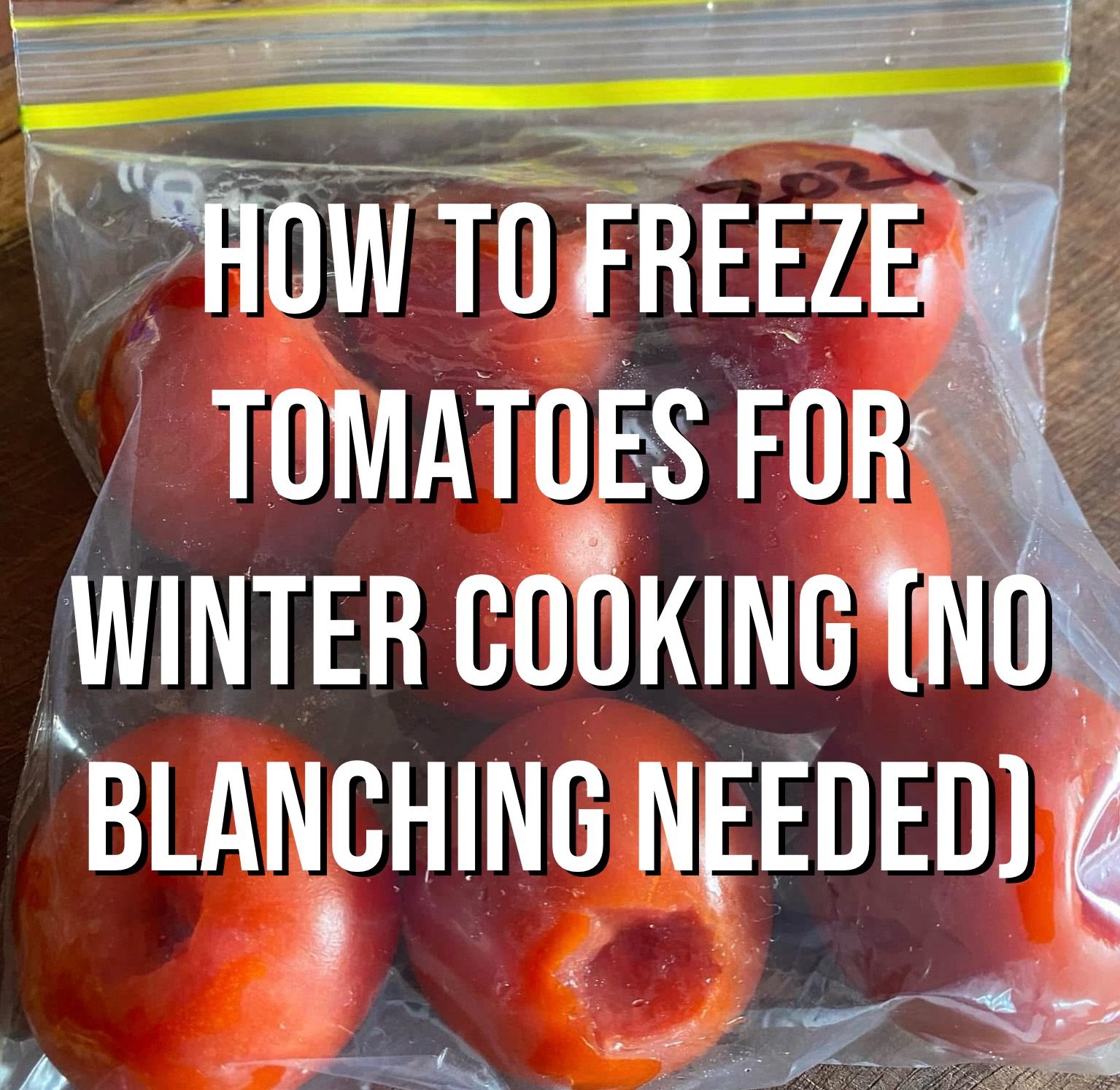
Overripe and cracked tomatoes are even more attractive because their scent is stronger and their flesh is already exposed. Tomatoes picked before they become unusable can be redirected into frozen tomato packs for winter cooking instead of left to spoil.
Regular harvesting reduces this attraction. I do not wait for every tomato to become soft and fully colored outside.
Harvesting Early Can Prevent Animal Damage
Once a tomato reaches full size and begins showing its mature color, I often harvest it.
The fruit can finish ripening indoors where birds, squirrels, slugs, and rodents cannot reach it.
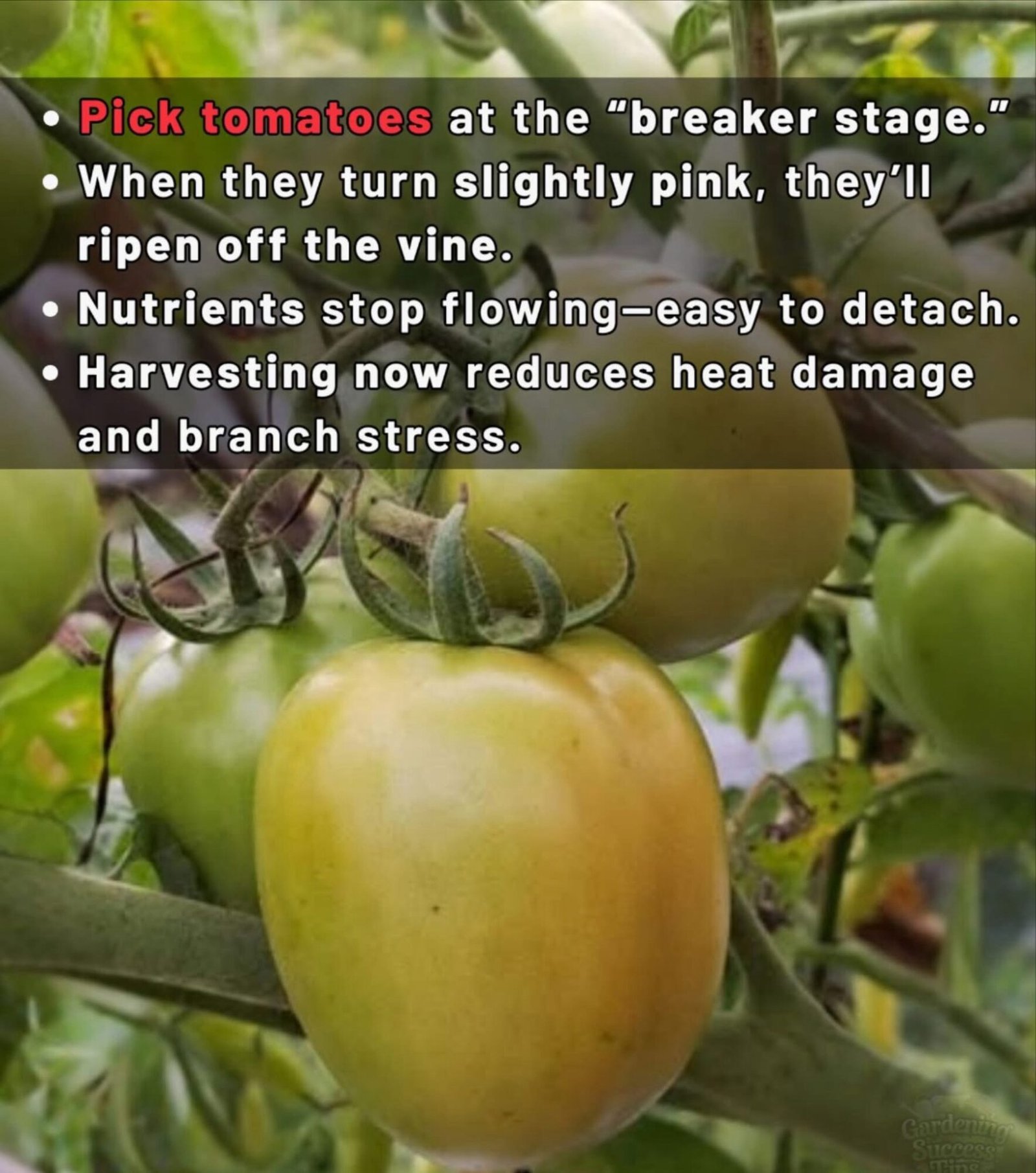
Picking at the tomato breaker stage is especially helpful when pests repeatedly find fruit just before I do.

This does not mean picking every hard green tomato. Immature fruit may not develop good color or flavor after removal. I wait until the first definite color change appears. The focus article explains how to tell immature green fruit from tomatoes ready for picking every hard green tomato.
Physical Barriers Work Better Than Most Repellents
Smell and taste repellents may provide temporary help, but their effectiveness varies. Rain can wash them away, new growth remains untreated, and hungry animals may ignore them.
A well-built physical barrier removes access instead of trying to make the tomato less appealing.
The best barrier depends on the culprit:
- Tight framed netting helps exclude birds.
- A covered wire enclosure is stronger against squirrels.
- Small wire openings help block mice and chipmunks.
- A tall fence is needed for deer.
- A low secured fence can exclude rabbits and turtles.
- Proper plant support keeps tomatoes away from slugs.
Before building anything, identify the animal. An uncovered fence will not stop a squirrel, and bird netting will not stop a determined rodent.
My Quick Plan for Stopping More Tomato Damage
When holes begin appearing, I take these steps:
- Remove every badly damaged or rotten tomato.
- Photograph the freshest damage before disposing of it.
- Examine the hole for pecks, tooth marks, slime, tunnels, or droppings.
- Inspect leaves and stems for caterpillars.
- Check the soil for tracks, burrows, and travel paths.
- Watch the garden at dawn and before dark.
- Install a trail camera when the culprit remains uncertain.
- Harvest tomatoes that have started changing color.
- Remove nearby hiding places and spilled food.
- Install a barrier designed for the identified pest.
I avoid reaching for a pesticide unless the evidence points toward an insect that the product is labeled to control. Spraying will not stop birds, squirrels, mice, slugs, or deer.
Frequently Asked Questions
What is eating holes in my tomatoes at night?
Slugs, snails, mice, rats, tomato fruitworms, hornworms, raccoons, and other nighttime animals are possibilities. Look for slime, tooth marks, droppings, caterpillar tunnels, tracks, and broken branches.
What makes a small round hole in a tomato?
A tomato fruitworm can make a small entry hole and feed inside. Birds may also leave round pecks, while stink bugs leave tiny punctures without removing a large amount of flesh.
What is taking one bite out of every tomato?
Birds and squirrels often sample several tomatoes rather than finishing one. A trail camera can quickly confirm which visitor is responsible.
Why are my tomatoes hollowed out?
Rodents, slugs, caterpillars, squirrels, and other feeders may enlarge an opening and consume the interior. Inspect the hole for slime, droppings, tooth marks, or tunneling.
Do tomato hornworms eat the actual tomatoes?
Yes. Hornworms primarily eat foliage, but they can chew irregular holes in green and ripening tomatoes.
Do birds eat tomatoes for water?
Birds may peck tomatoes for moisture, especially during hot and dry weather. Providing water may help, but a physical barrier is more dependable.
Can squirrels reach tomatoes inside cages?
Yes. Standard tomato cages support plants but do not exclude squirrels. A protective enclosure needs sturdy sides and a covered top.
What animal eats tomatoes from the bottom?
Slugs, snails, turtles, chipmunks, rodents, and rabbits may damage low fruit. The exact culprit depends on the hole, tracks, droppings, and time of feeding.
Can I eat around a bird peck?
I do not recommend eating a tomato opened by a wild bird or animal. The fruit may have been contaminated beyond the visible peck.
Should I spray tomatoes when I find holes?
Only when the damage has been traced to an insect and the treatment is labeled for that pest and tomatoes. Sprays will not solve wildlife or rodent feeding.
How do I know if a tomato split naturally?
Natural cracks usually separate the skin without removing a chunk of flesh. They commonly run down from the stem or circle the tomato’s shoulders.
What is the best way to protect ripening tomatoes?
Identify the pest, harvest mature fruit promptly, remove damaged tomatoes, eliminate nearby hiding places, and install a physical barrier designed for the culprit.
Written by Caleb Warren, a lifelong gardener who shares practical growing advice, honest troubleshooting, and lessons learned from real plants through Tomato Growing Tips.