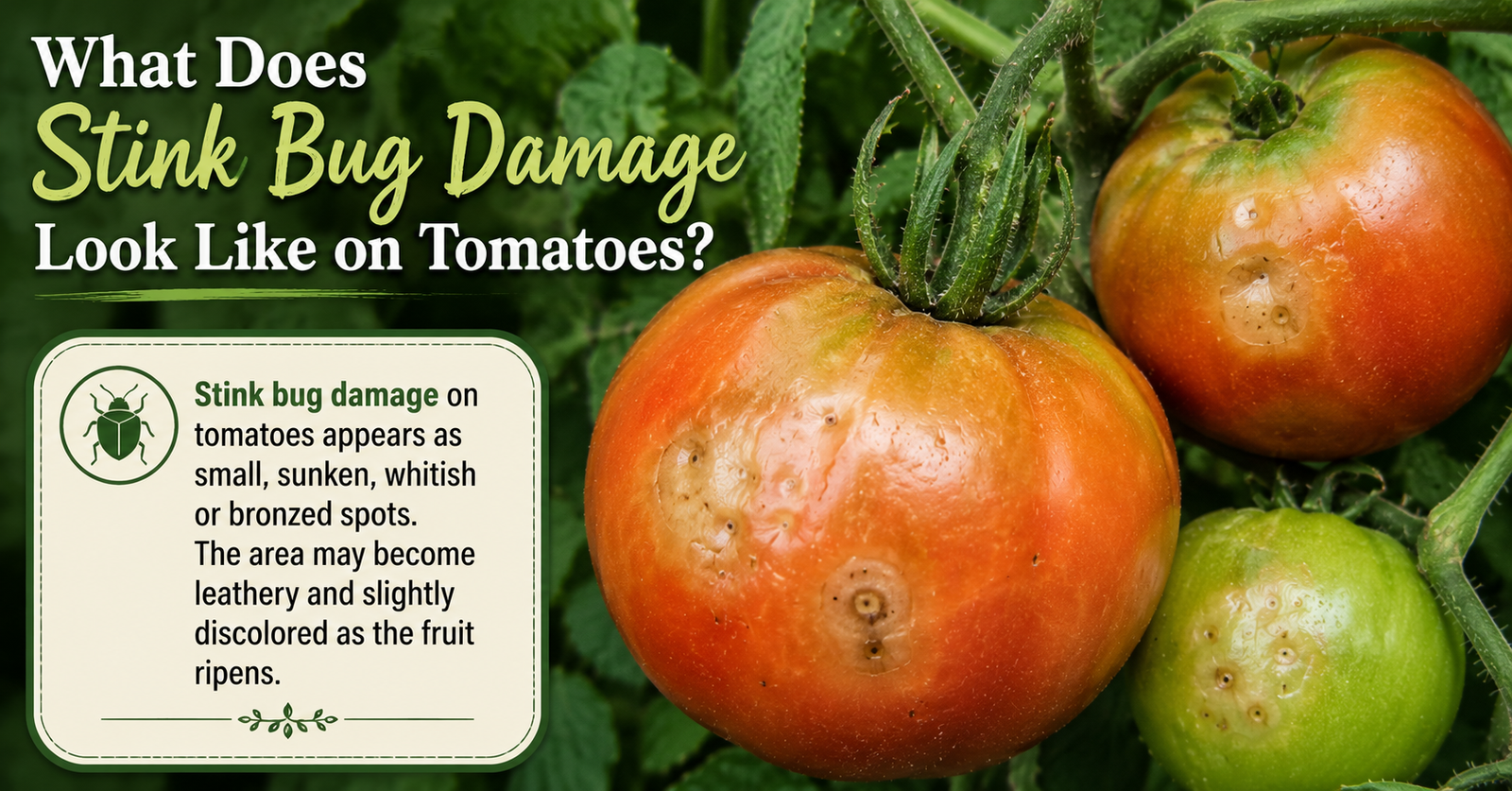
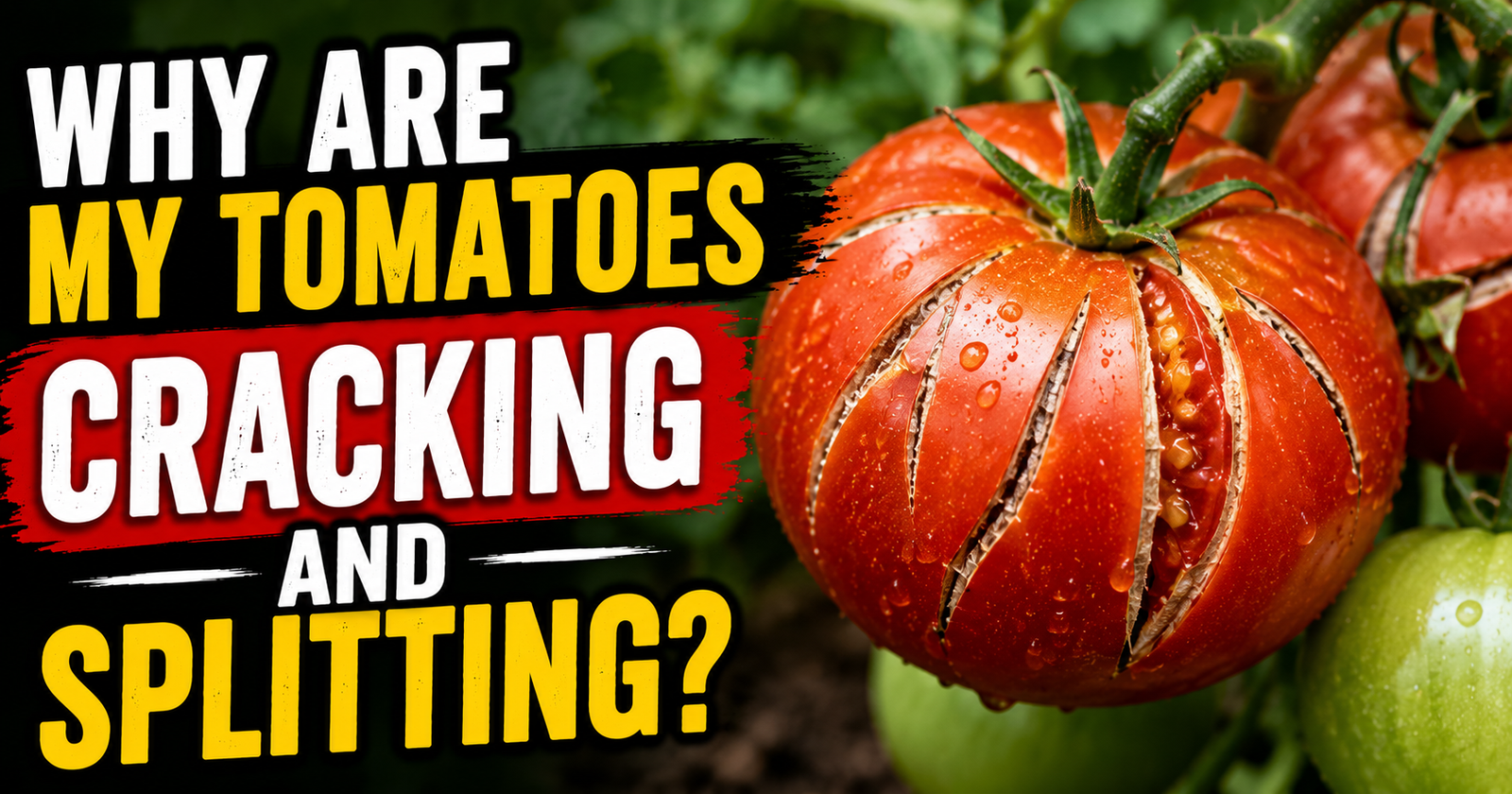
Stink bug damage can be confusing because the tomato may not have a large bite, tunnel, or obvious insect sitting beside it. Instead, you may find pale cloudy spots, tiny punctures, yellow patches, or hard white tissue beneath the skin. These symptoms fit several possibilities, so compare them with strange-looking tomato problems before deciding whether the fruit is usable.
I have seen gardeners mistake this damage for sunscald, uneven ripening, disease, or a nutrient problem. The outside of the tomato may look only slightly blemished, but slicing it open reveals firm white areas that do not have the normal juicy texture. A visual cloudy spot guide can help compare these signs with other common tomato problems.
Stink bugs damage tomatoes by piercing the skin and feeding on the tissue beneath it. The puncture itself can be difficult to see. The discoloration and hardened flesh that develop afterward are often the clearest clues.
What Does Stink Bug Damage Look Like on Tomatoes?
Stink bug damage on tomatoes usually appears as pale yellow, white, greenish, or cloudy spots beneath the skin. Each spot may have a tiny dark puncture in its center.
The affected areas are often irregularly shaped and grouped together. A tomato may have several cloudy circles rather than one large damaged patch.
When the tomato is sliced, the flesh beneath each feeding site may be white, dry, firm, corky, or spongy. The damaged tissue does not have the normal color and juicy texture of the surrounding fruit.
Common signs include:
- Cloudy white or yellow spots
- Small pinpricks in the skin
- Green patches that do not ripen normally
- Hard white tissue beneath the surface
- Several small blemishes grouped together
- Tiny dark points in the center of pale spots
- Shallow depressions on the fruit
- Secondary rot beginning around a puncture
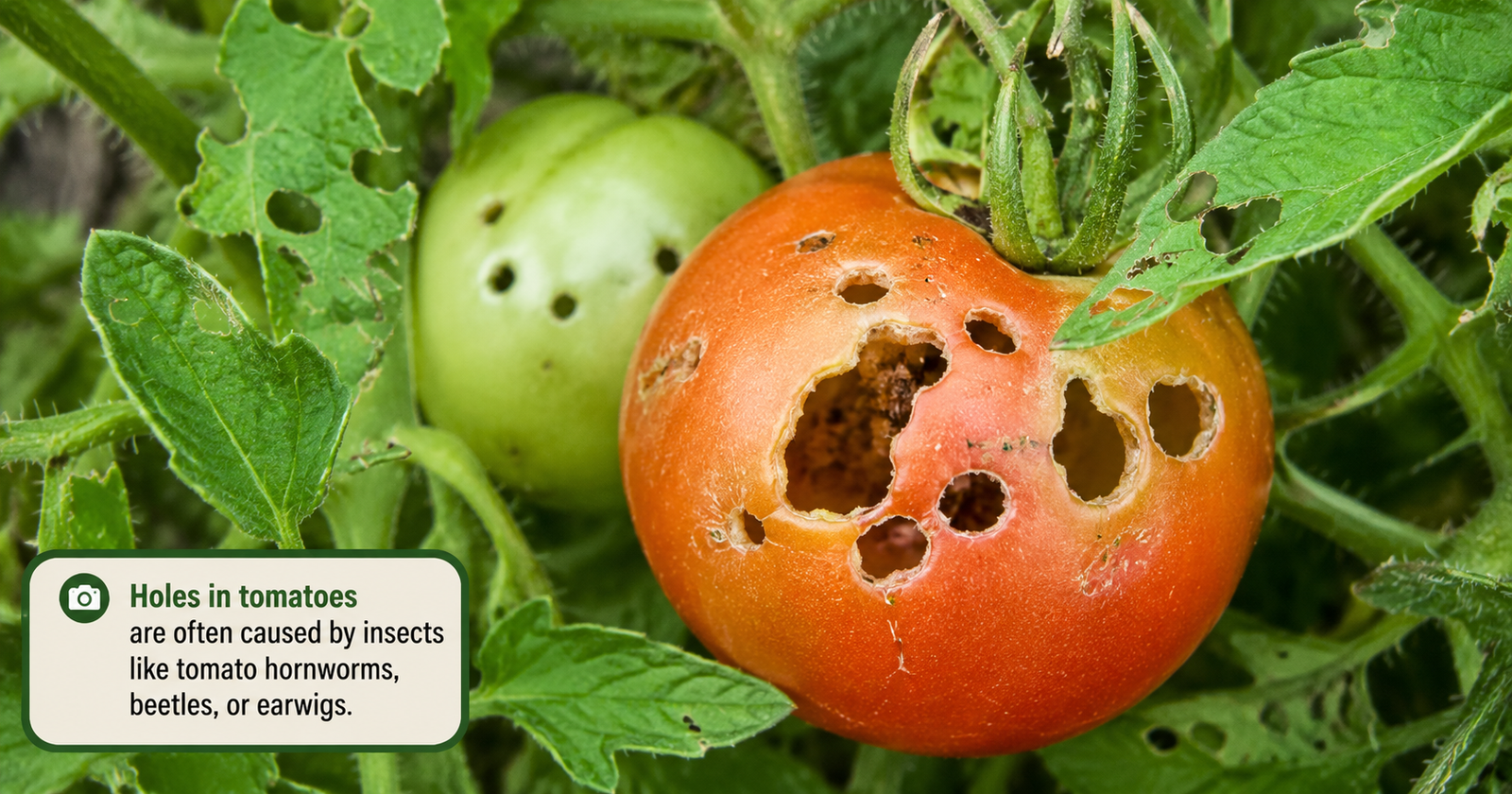
Stink bugs do not normally remove large chunks of flesh. If your tomato has a wide open cavity, use the clues in my guide to what is eating holes in tomatoes instead.
What Stink Bug Damage Looks Like Inside a Tomato
The damage often becomes more obvious after cutting the tomato.
Healthy flesh should have the normal color and texture expected for the variety. Tissue beneath a stink bug feeding site may appear white or pale yellow and feel noticeably firmer.
Some damaged areas extend only a short distance beneath the skin. Heavy feeding can produce several white corky sections throughout the outer flesh.
The internal damage may resemble a small cone pointing inward from the puncture. In other cases, it appears as an irregular patch of pale tissue.
A tomato with only one or two shallow areas may still have plenty of usable flesh. A heavily attacked tomato can become tough and unpleasant throughout.

Why Stink Bug Spots Look Cloudy
Stink bugs insert piercing mouthparts through the tomato skin and feed on plant cells.
The damaged cells lose their normal structure. As the tomato continues growing and ripening, the injured area develops a pale or cloudy appearance.
The spot may remain green while the surrounding tomato turns red because feeding interrupted normal ripening in that area.
The skin often remains mostly intact. That is why the damage can look like discoloration rather than an insect bite.
What the Actual Puncture Looks Like
A stink bug puncture may be extremely small. It can resemble a pinprick, tiny dark dot, or shallow depression.
Not every cloudy spot has an obvious hole. The skin may close around the feeding site while the damaged cells remain visible underneath.
Using a magnifying glass can help. I inspect the center of each pale patch for a tiny point where the mouthparts entered.
Several punctures close together create a larger cloudy area that can be mistaken for a single disease lesion.


Do Stink Bugs Eat Green Tomatoes?
Yes. Stink bugs feed on green, ripening, and mature tomatoes.
Damage to small green tomatoes can become more noticeable as the fruit enlarges. A puncture that looked insignificant early may develop into a pale depression or misshapen area later.
Feeding on mature tomatoes can leave cloudy spots and damaged tissue without greatly changing the fruit’s shape.
Stink bugs also feed on stems, leaves, flowers, and many other garden crops. They do not depend solely on ripe tomatoes.
Do Stink Bugs Attack Ripe Tomatoes?
Stink bugs can pierce ripe tomatoes, especially when populations are high.
Ripe fruit is softer, so punctures may lead to leaking, cracking, and secondary decay more quickly. Feeding sites can become entry points for microorganisms that spoil the tomato.
I harvest ripe fruit promptly rather than leaving it outside for several extra days. The longer a mature tomato remains on the plant, the more opportunities insects have to find it.

My guide to the best time to pick tomatoes explains how I balance good flavor with the risk of pests and weather damage.
What Do Stink Bugs Look Like?
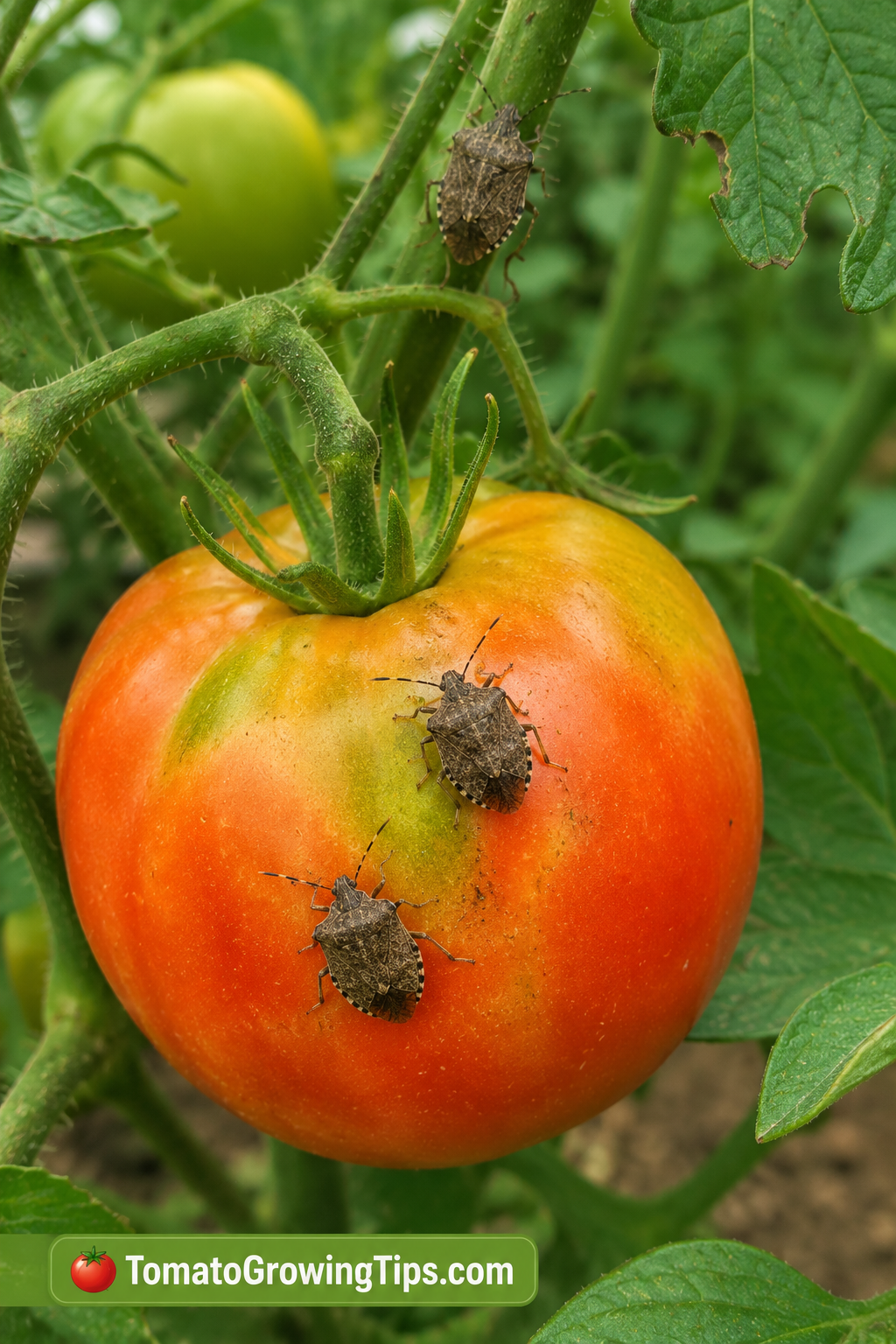
Adult stink bugs have broad, shield-shaped bodies. Their backs form a triangular or shield-like outline when viewed from above.
Color depends on the species. They may be green, brown, gray, mottled, or marked with contrasting bands.
Nymphs look different from adults. They are smaller, rounder, and lack fully developed wings. Depending on their age and species, they may be black, red, orange, green, brown, or patterned.
This variation can make identification difficult. A gardener may find several very different-looking bugs that are actually different life stages of closely related insects.
The name comes from the strong odor they release when disturbed or crushed.
Green Stink Bugs on Tomato Plants
Green stink bugs are among the easiest to recognize. Adults are bright green and shield-shaped.
They blend well with tomato foliage and unripe fruit. I often spot them only when they move across a leaf or stem.
Their eggs are commonly barrel-shaped and arranged in organized clusters on the undersides of leaves.
Young nymphs may look more rounded and display black, orange, red, or green markings before becoming uniformly green adults.

Brown Marmorated Stink Bugs
Brown marmorated stink bugs have mottled brown bodies and light bands on their antennae.
They feed on a wide range of vegetables, fruits, ornamental plants, and field crops. They also enter homes and buildings in fall to spend the winter in protected spaces.
On tomatoes, their feeding produces the same general pattern of cloudy spots and pale firm tissue.
Because several brown stink bug species look similar, exact identification may require close examination.
Leaf-Footed Bugs Cause Similar Tomato Damage
Leaf-footed bugs are close relatives of stink bugs and feed in a similar way.
Adults usually have longer, narrower bodies than stink bugs. Many have flattened, leaf-like sections on their hind legs.
Leaf-footed bug nymphs can be bright orange or red with dark legs. Gardeners sometimes mistake them for assassin bug nymphs, which are beneficial predators.
Leaf-footed bugs pierce tomato fruit and can create cloudy spots, yellow areas, punctures, and hard white flesh. In many gardens, damage blamed on stink bugs may actually come from leaf-footed bugs.
The management methods are similar, but accurate identification helps prevent beneficial insects from being killed unnecessarily.



Stink Bugs Versus Tomato Fruitworms
Tomato fruitworms chew an entry hole and feed inside the tomato. Their damage usually includes missing flesh, tunnels, and granular droppings.
Stink bugs pierce the skin without creating a large open hole. Their damage appears as spots and firm tissue rather than a hollow tunnel.
A fruitworm may still be inside the tomato. A stink bug normally feeds from outside and moves away.
If the fruit contains a caterpillar, large tunnel, or pile of droppings, stink bugs are probably not responsible.
Stink Bug Damage Versus Sunscald
Both conditions can create pale tomato patches, but their patterns differ.
Sunscald usually forms one larger bleached area on the side exposed to intense sunlight. The patch may become papery, leathery, wrinkled, or sunken.
Stink bug damage commonly produces multiple smaller cloudy spots. Tiny punctures may be visible, and the tissue beneath the skin becomes hard and white.
Sunscald often follows heavy pruning, broken branches, or foliage loss. Stink bug damage appears where insects have been feeding, including shaded portions of the fruit.
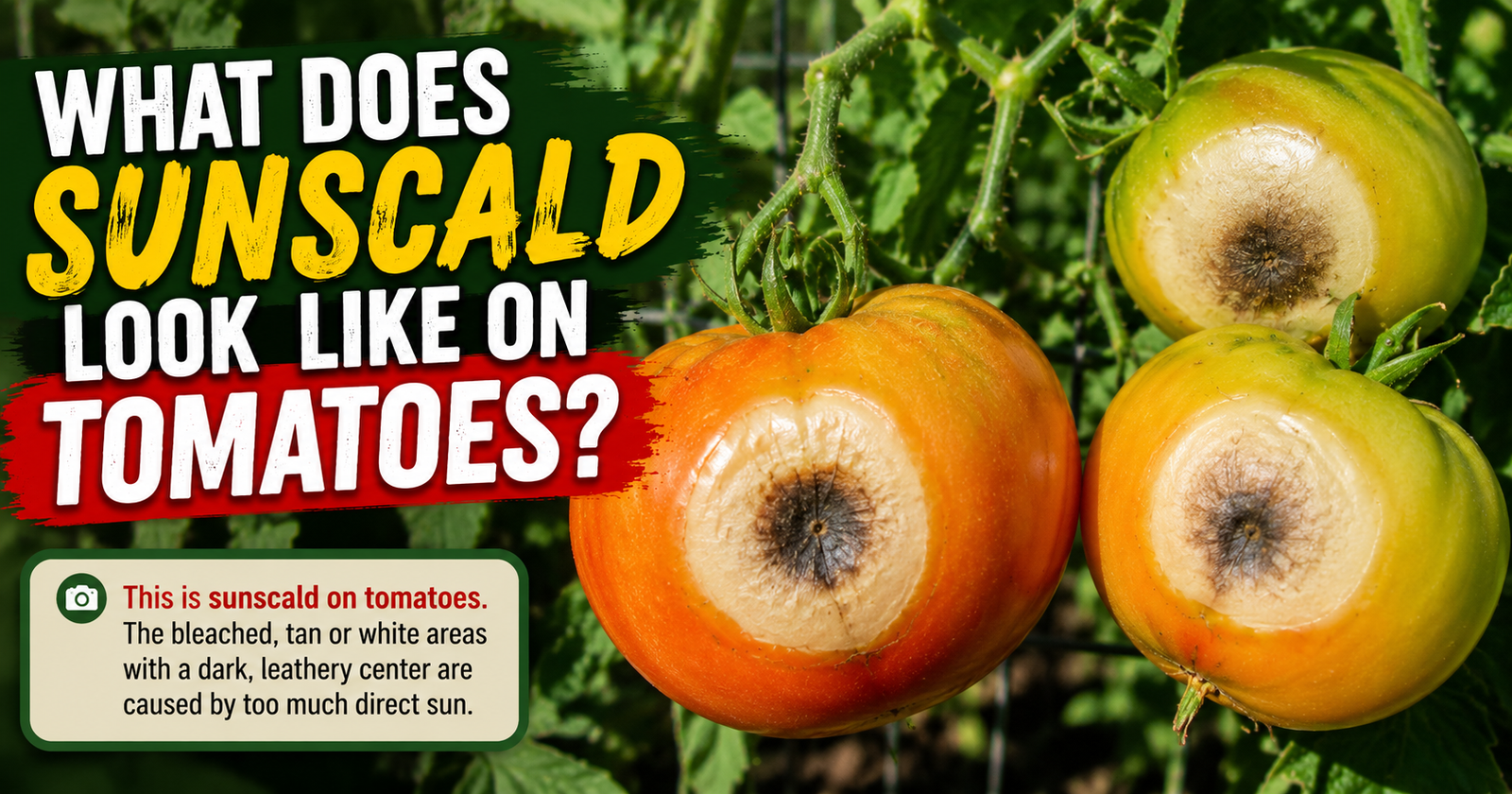
Use the full guide to what tomato sunscald looks like if the damage covers one exposed side rather than appearing as scattered punctures.
Stink Bug Damage Versus Uneven Ripening
Uneven ripening can leave broad green, yellow, orange, or pale areas on a tomato without visible punctures.
Heat, variety, root stress, nutrient availability, and other conditions can interfere with normal color development.
Stink bug spots are usually smaller and more clearly defined. The tissue immediately beneath them may be noticeably firm or white.
A tomato can have both problems. Hot weather may cause blotchy ripening while stink bugs add separate cloudy punctures.
Stink Bug Damage Versus Tomato Disease
Fruit diseases commonly produce dark lesions, water-soaked spots, concentric rings, fuzzy growth, or sunken decay.
Stink bug damage begins as pale discoloration and firm tissue. It does not spread across the tomato like an active infection.
However, the punctures can allow fungi or bacteria to enter. A feeding site may later become soft, wet, dark, or moldy.
Once secondary decay develops, the original puncture can be difficult to recognize.
Stink Bug Damage Versus Blossom End Rot
Blossom end rot develops at the bottom of the tomato opposite the stem. It produces a tan, brown, or black area that often becomes sunken and leathery.
Stink bug spots can appear anywhere on the fruit. They are usually pale, cloudy, and scattered rather than concentrated on the blossom end.
Blossom end rot is related to calcium delivery within the developing fruit, often because of inconsistent moisture or root stress.
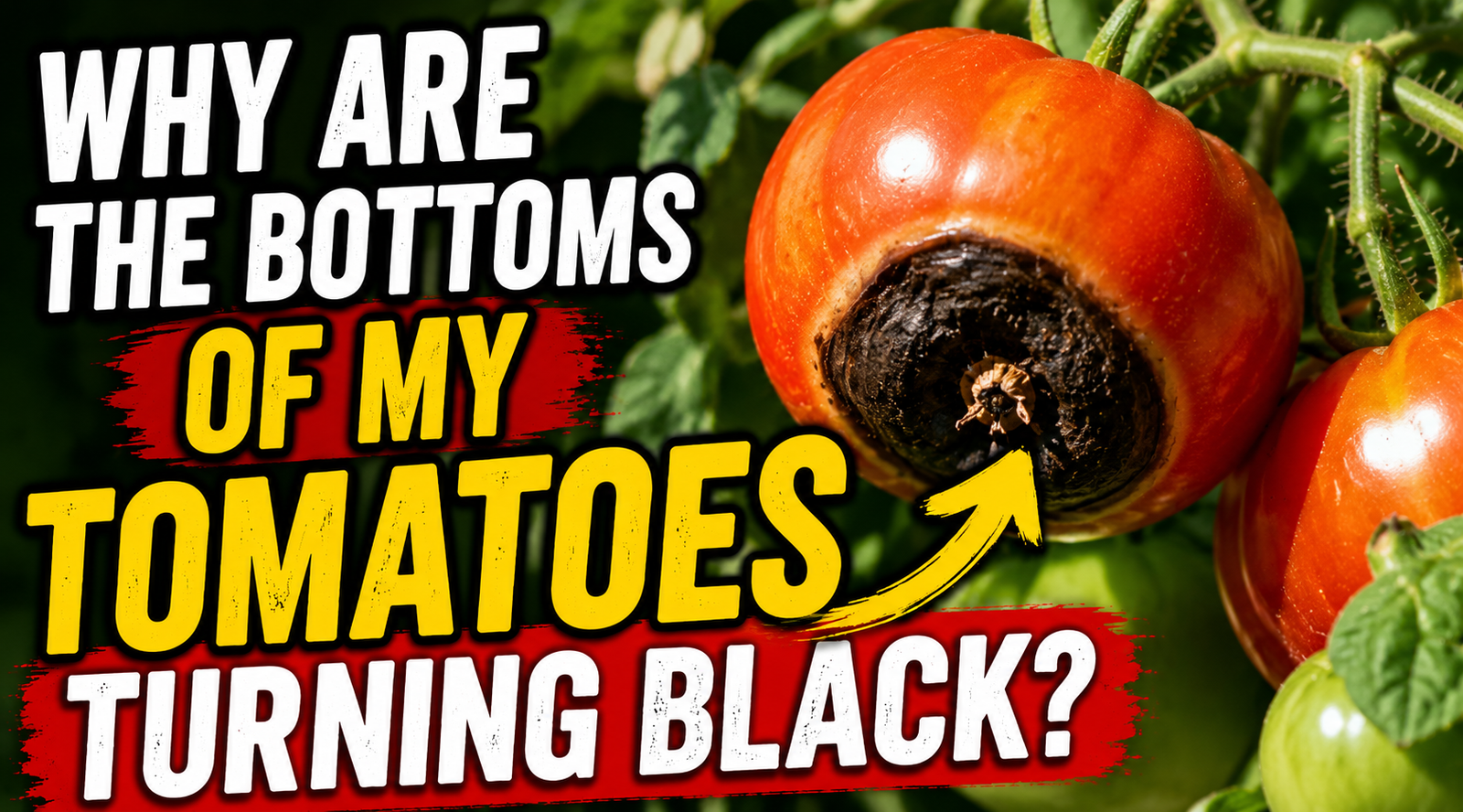
If the tomato has a large black patch on its bottom, read why the bottoms of tomatoes turn black before treating for insects.
Stink Bug Damage Versus Catfacing
Catfacing causes deep folds, lobes, puckering, and scars near the blossom end. It begins while the flower is developing.
Stink bugs create punctures and cloudy spots after the fruit forms.
Heavy feeding on very young fruit can contribute to misshapen growth, but classic catfacing looks much more folded and scarred.
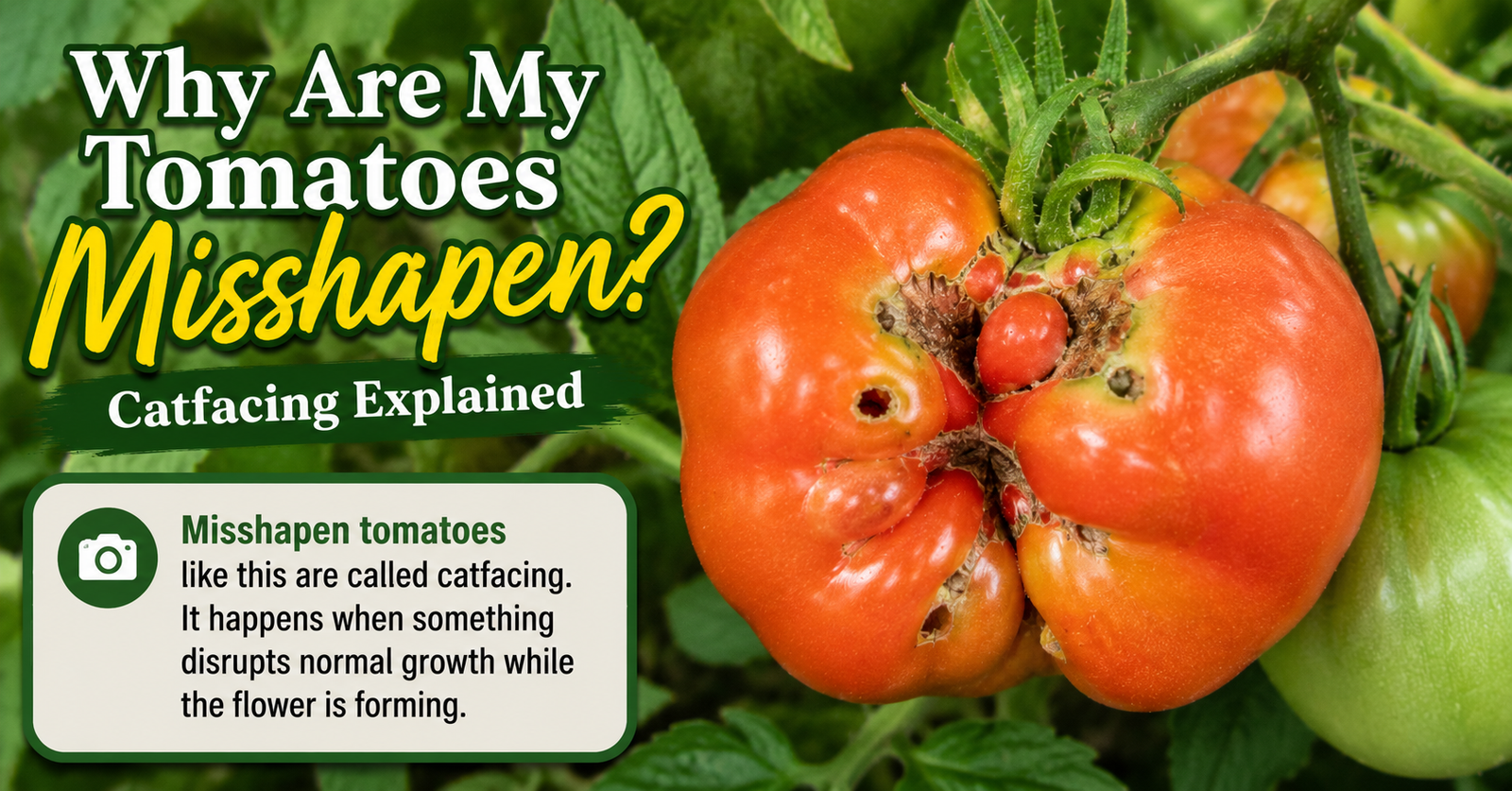
My guide explaining why tomatoes become misshapen can help separate flower-development problems from insect feeding.
When Stink Bugs Are Most Active
Stink bug activity usually increases as the weather becomes warm and garden crops begin developing fruit.
Adults may move into gardens from weeds, crop fields, fruit trees, ornamental plants, and other vegetation.
Populations often seem worse later in summer when both adults and nymphs are present. As other plants dry down or are harvested, bugs may move toward tomatoes that remain green and productive. Heavy pest pressure can affect more than the fruit already on the plant; see how pest problems that reduce tomato fruit set can also interfere with flowering and production.
Weather, location, nearby crops, and species all affect timing.
I begin checking before damage becomes obvious because small nymphs are easier to manage than large mobile adults.
Where Stink Bugs Hide on Tomato Plants
Stink bugs can be found on fruit, stems, and both sides of leaves.
Egg clusters are usually attached to the undersides of leaves. They look like groups of tiny barrels arranged neatly together.
Nymphs may stay close to the egg mass briefly after hatching before spreading throughout the plant.
Adults often move to the opposite side of a stem or fruit when disturbed. I use one hand to hold a container beneath the bug and the other to encourage it to drop.
Inspecting only the top surface of the plant misses many of them.
How to Check Tomato Plants for Stink Bugs
I inspect plants early in the morning when insects are less active.
First, I examine developing fruit for new cloudy spots. Then I check the stems and undersides of leaves.
I look carefully for:
- Shield-shaped adults
- Round colorful nymphs
- Barrel-shaped egg clusters
- Tiny punctures on green tomatoes
- Cloudy spots on ripening fruit
- Leaf-footed bugs and their nymphs
- Weedy growth touching the tomato plants
- Groups of insects hiding around fruit stems
A white sheet or tray placed beneath the plant can help. Gently shaking a branch may cause stink bugs and nymphs to drop onto the light surface.
Why Stink Bugs Keep Coming Back
Stink bugs feed on many different plants. Removing them from tomatoes does not eliminate populations living in nearby weeds, trees, crops, or ornamental beds.
Adults can fly into the garden from surrounding areas. They may return after hand-picking or treatment.
Gardens near soybean fields, corn, fruit trees, or weedy borders may experience repeated pressure as nearby plants mature or dry down.
This does not mean control is impossible. It means regular inspection is more effective than one treatment followed by weeks of ignoring the plants.
Are Stink Bugs Bad for Tomato Plants?
A few stink bugs may cause only scattered cosmetic damage. A large population can reduce fruit quality significantly.
Heavy feeding can create:
- Numerous cloudy spots
- Tough or corky flesh
- Misshapen young fruit
- Delayed or uneven ripening
- Dropped blossoms or small fruit
- Punctures that develop secondary rot
- Tomatoes with little usable flesh
The leaves may remain healthy enough that the problem seems limited to the fruit.
Can You Eat Tomatoes With Stink Bug Damage?
A tomato with minor stink bug damage is generally usable if it remains firm, fresh, and free from decay.
I wash the fruit thoroughly, cut through the affected spots, and inspect the tissue. The pale corky sections may be unpleasant to eat, so I remove them.
If the remaining flesh has normal color, texture, and smell, I use it promptly.
The feeding damage itself does not make the entire tomato poisonous. The more important concern is whether microorganisms entered through the punctures and caused spoilage.
When I Throw Away a Stink Bug-Damaged Tomato
I discard the tomato when the punctures are surrounded by active decay.
Warning signs include:
- Soft or collapsing spots
- Fuzzy mold
- Leaking or slimy tissue
- A sour or fermented odor
- Deep black or brown decay
- Insects or larvae living inside the fruit
- Damage covering most of the tomato
- Interior tissue that appears extensively abnormal
A heavily damaged tomato may technically contain some sound flesh, but trimming dozens of hard spots is rarely worthwhile.
Will Stink Bug-Damaged Tomatoes Ripen?
Tomatoes with minor damage may continue ripening, although areas around the punctures can remain pale, green, yellow, or firm.
Heavily damaged fruit may ripen unevenly. The tomato can turn red around spots that remain greenish or white.

If a damaged tomato has reached a mature stage and begun changing color, I usually harvest it. Indoor ripening prevents more feeding and allows me to monitor the punctures for decay. For help judging whether green fruit is mature enough to pick, see harvest it.
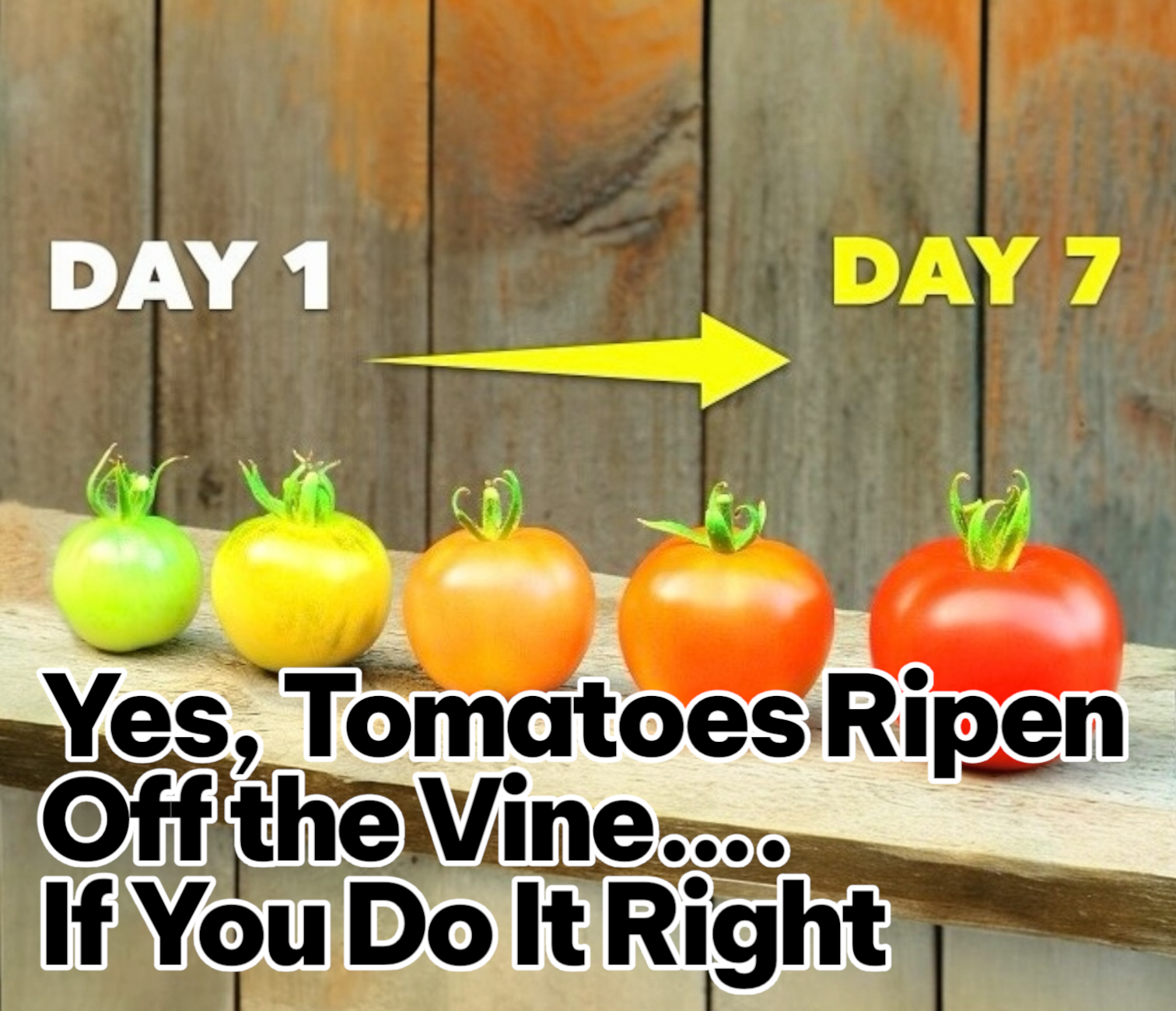
Tomatoes picked at the proper stage can ripen off the vine without being left outside for additional insect damage.
Should I Remove Damaged Tomatoes?
I remove severely damaged, soft, moldy, or heavily punctured tomatoes.
A fruit with only a few superficial spots can remain temporarily if it is still immature. I watch it for changes and harvest as soon as it begins ripening.
Removing unusable fruit reduces rotting material and makes it easier to identify new damage.
I do not leave spoiled tomatoes beneath the plant. Their odor can attract flies, beetles, rodents, slugs, and other garden visitors.
How I Get Rid of Stink Bugs on Tomato Plants
I use several methods together instead of depending on one spray.
Hand-Pick Adults and Nymphs
I hold a container of soapy water beneath the bug and tap or brush it into the liquid.
Stink bugs often drop when disturbed, which makes this method more effective than trying to grab them directly.
Remove Egg Clusters
I inspect the undersides of leaves and crush or remove egg clusters before they hatch.
A piece of tape can lift the eggs from the leaf without removing much plant tissue.
Inspect Plants Regularly
I check every few days during active periods. One early inspection is not enough because adults can fly in later.
Remove Heavily Damaged Fruit
Spoiled tomatoes should not remain on the plant or ground.
Control Weeds Carefully
I reduce unnecessary weedy hosts around the garden, especially those touching tomato plants.
I avoid mowing or cutting a large weedy border all at once when it is full of stink bugs because displaced insects may move directly into the tomatoes.
Protect Young Plants
Fine insect netting can exclude stink bugs before they reach the crop, but it must be sealed at the edges.
Covers can interfere with access by pollinators and may trap excessive heat. Tomatoes are largely self-pollinating, but movement from wind and insects helps release pollen. Covers must be managed carefully once flowering begins.
Does Insecticidal Soap Kill Stink Bugs?

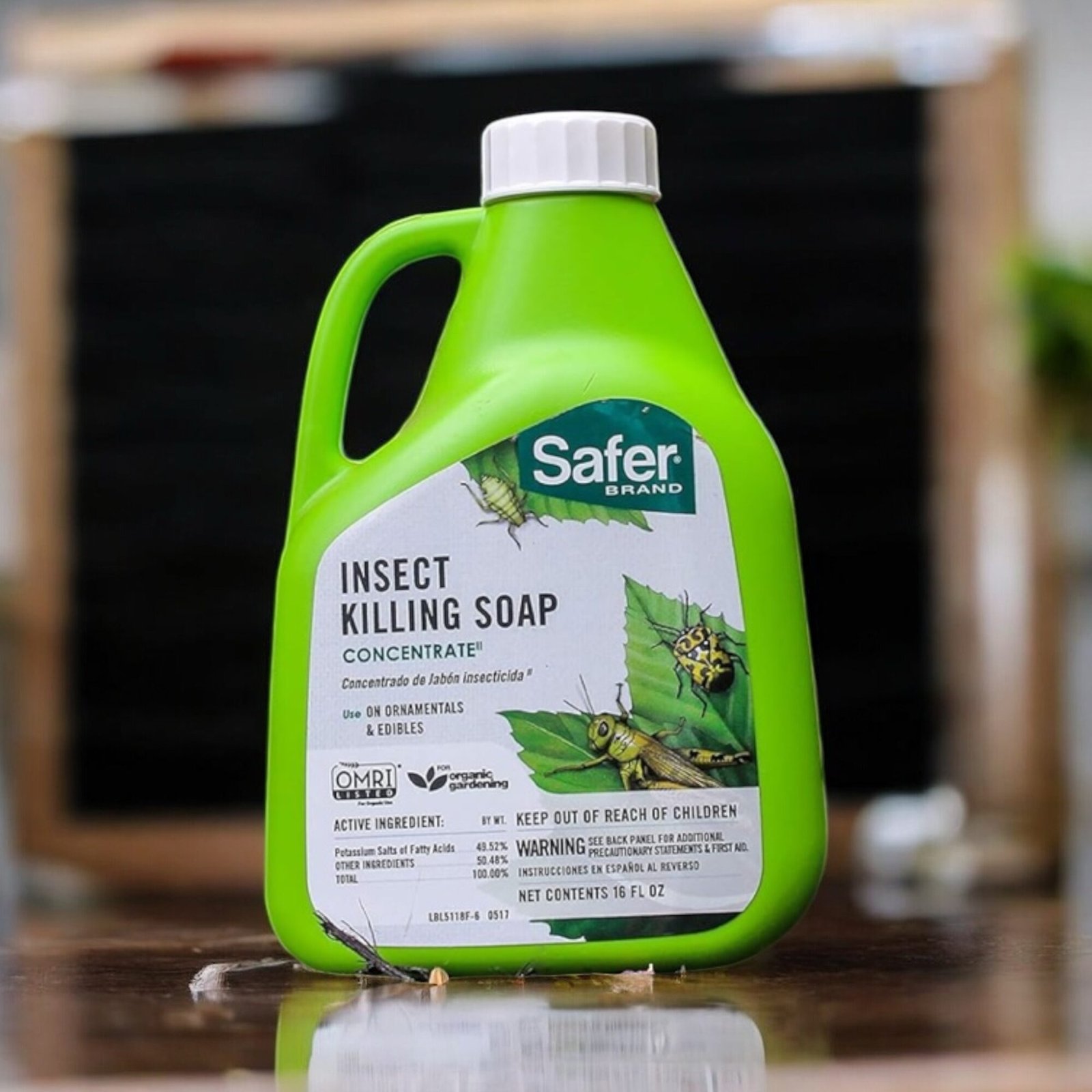
Insecticidal soap works best through direct contact and may be more effective against young nymphs than large adults. For gardeners considering this contact-based approach, an organic insecticidal soap may fit the tomato-pest management step described here.
It has little lasting effect after it dries. A bug that arrives later may not be controlled.
Coverage is important, including the undersides of leaves. Even products considered gentle can damage plants when applied during high heat, intense sunlight, drought stress, or under conditions prohibited by the label.
I test a small part of the plant first and follow every label direction. For gardeners considering a labeled treatment, edible-garden insect control may fit this careful approach to protecting tomato plants.
Does Neem Oil Stop Stink Bugs?
Neem products may have some effect on young insects or feeding behavior, but they are not always dependable against mobile adult stink bugs.
Direct coverage and repeated label-approved applications may be necessary. Results vary by product formulation, insect stage, and infestation level.
Neem can harm plants when misused and may affect beneficial insects contacted by the spray.
I do not assume that a natural product is automatically safe under every condition.
Will Spinosad Kill Stink Bugs?
Spinosad is especially useful against certain caterpillars, thrips, leafminers, and other labeled pests. It is not my first choice for stink bugs unless the specific product label lists them.
Stink bugs are true bugs with piercing mouthparts, not chewing caterpillars. A product that works extremely well on hornworms may perform poorly against stink bug adults.
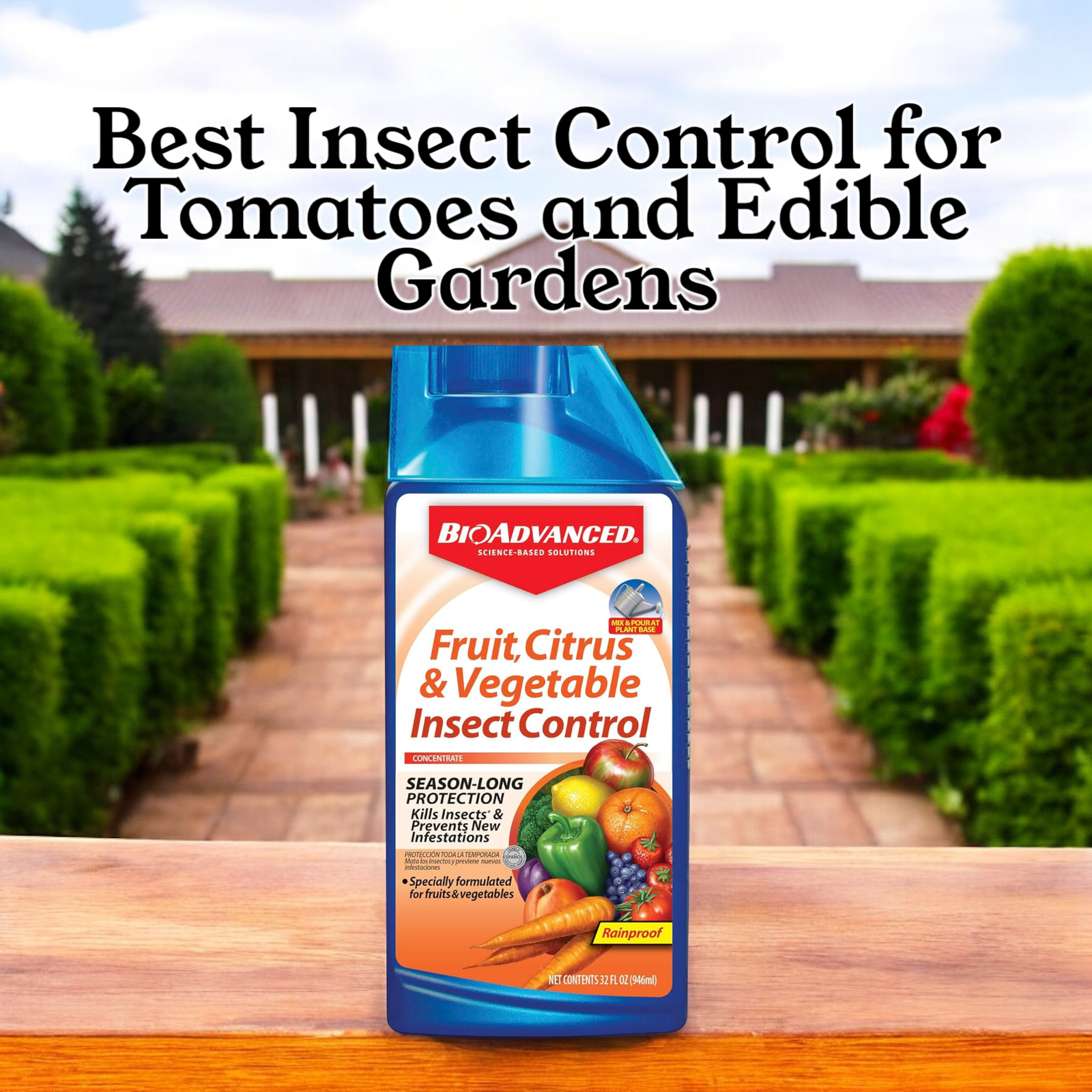
I match the treatment to the identified pest. The guide to tomato insect-control options explains why the active ingredient, label, and target insect all matter.
Does Sevin Kill Stink Bugs?
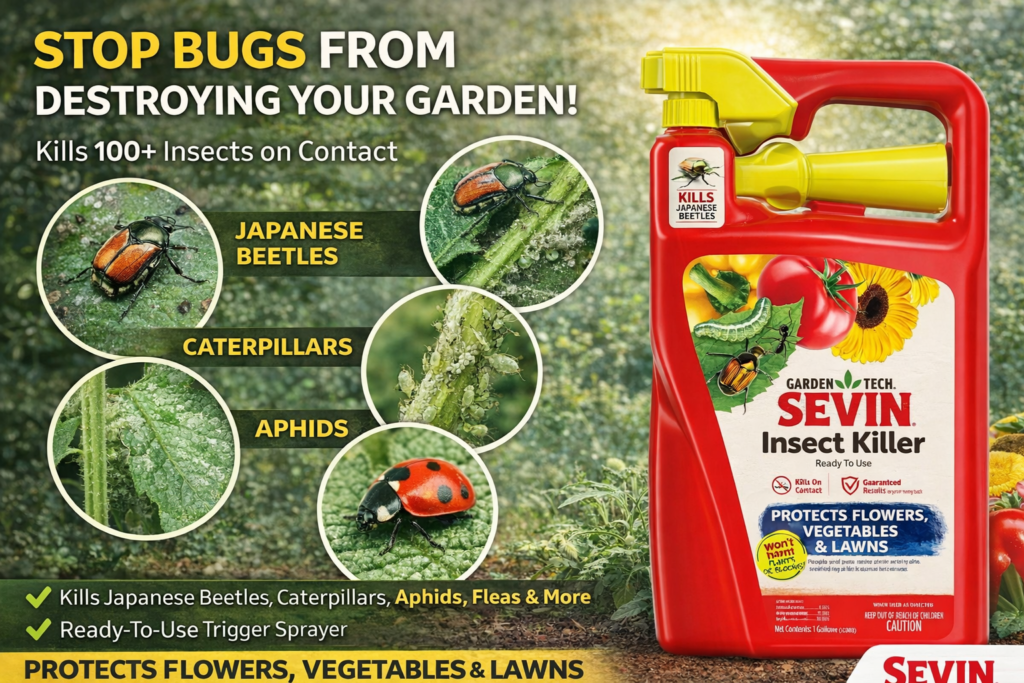
Some Sevin-branded products may list stink bugs, depending on the active ingredient and current formulation.
Brand names can remain the same while ingredients change, so I never rely on the product name alone. I read the label on the exact container.
A labeled conventional insecticide may reduce a serious infestation, but it can also affect bees, predators, parasitic wasps, and other beneficial insects.
I avoid spraying open flowers or applying products when pollinators are active. I also follow the stated preharvest interval before picking tomatoes.
Why Spraying Stink Bugs Can Be Difficult
Adult stink bugs are mobile and relatively tough. They may fly away during treatment and return later.
The plant canopy creates protected areas that spray may not reach. Egg clusters and nymphs can hide beneath leaves.
Broad-spectrum products may kill beneficial predators without providing lasting protection from adults arriving from outside the garden.
That is why I combine hand removal, egg inspection, weed management, timely harvesting, and targeted treatment only when needed.
Beneficial Insects That Attack Stink Bugs
Several predators and parasitoids feed on stink bug eggs, nymphs, or adults.

Parasitic wasps can attack egg masses. Assassin bugs, spiders, predatory beetles, and other natural enemies may feed on young stink bugs. You can encourage more of these natural enemies by adding companion plants for beneficial insects around the tomato garden.
Broad-spectrum insecticides can kill these helpers along with the pest.
I do not expect beneficial insects to prevent every damaged tomato, but preserving them can help keep populations from increasing as quickly.
Correct identification is essential. Leaf-footed bug nymphs and assassin bug nymphs can look similar, so I avoid crushing every red or orange insect without examining it.
Can Companion Plants Repel Stink Bugs?
Strong-smelling herbs and flowers are sometimes promoted as stink bug repellents, but I do not rely on companion planting as the primary defense.
A diverse garden can support beneficial insects, but no herb creates an invisible barrier that hungry stink bugs will never cross.
Trap crops may draw some pests away from tomatoes, but they must be monitored. An unmanaged trap crop can become a breeding area that produces even more stink bugs.
Physical exclusion, regular inspection, egg removal, and prompt harvesting are more predictable.
Will Diatomaceous Earth Stop Stink Bugs?
Diatomaceous earth works by damaging the protective outer layer of certain crawling insects when it remains dry.
Its effectiveness drops after rain, irrigation, or heavy dew. Stink bugs can fly and may not spend enough time crossing treated surfaces.
Dust can also affect beneficial insects that contact it. It should never be inhaled, and only a product labeled for the intended garden use should be considered.
I do not depend on it as the main solution for stink bugs feeding directly on fruit.
How I Prevent Stink Bug Damage Next Season
Prevention starts before tomatoes begin ripening.
I remove old fruit and plant debris after the season, manage weedy hosts, and inspect nearby vegetation. I do not leave piles of spoiled tomatoes around the garden.
During the growing season, I begin checking the undersides of leaves before damage becomes widespread.
I support plants so fruit remains visible enough to inspect. Dense tangled growth gives insects more protected hiding places.
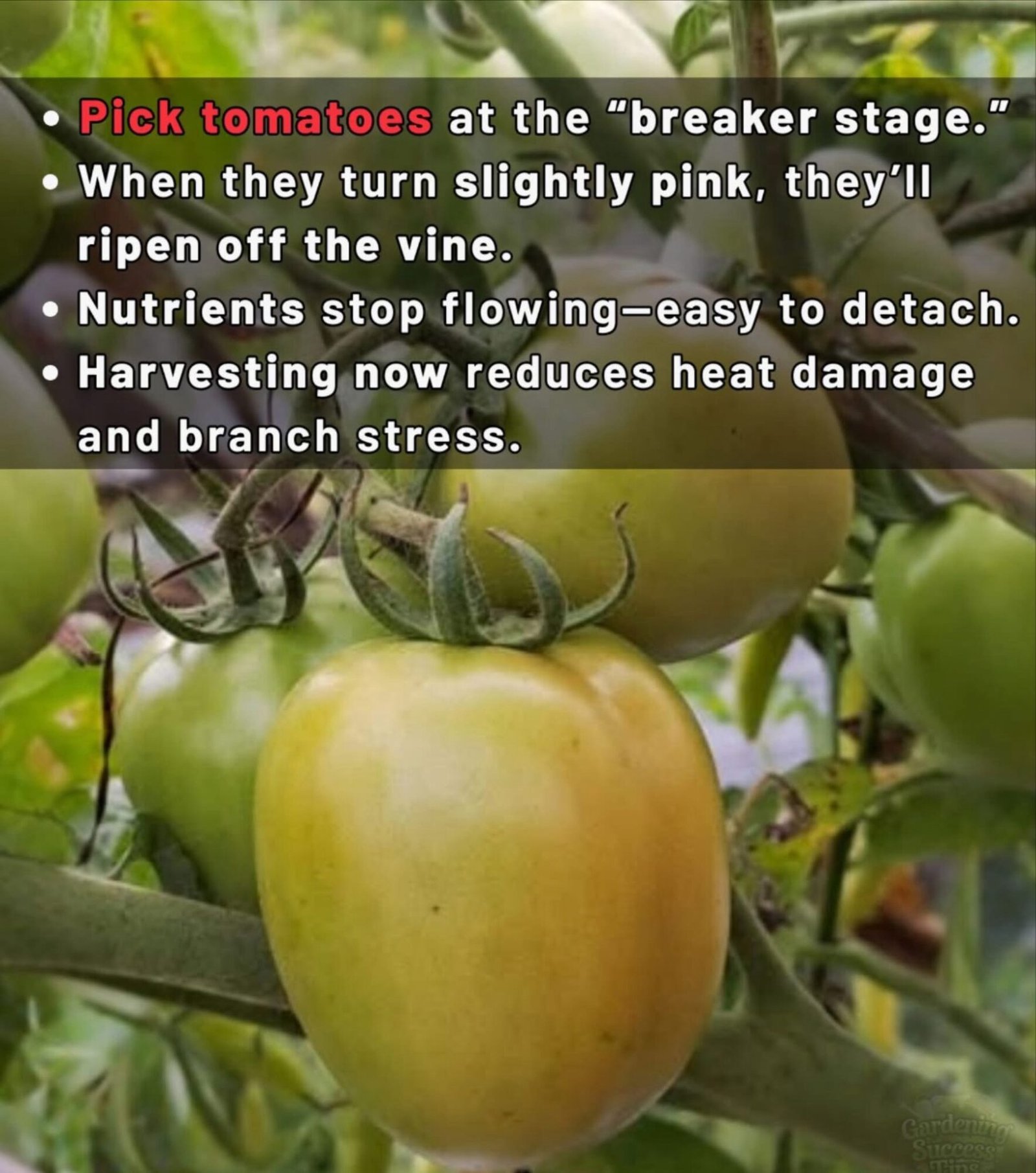
Once tomatoes begin changing color, I harvest promptly. Picking at the breaker stage reduces the amount of time mature fruit remains available to stink bugs.
My Quick Stink Bug Control Plan
When cloudy spots begin appearing, I take these steps:
- Slice one damaged tomato to inspect the tissue beneath the spots.
- Search the fruit and stems for shield-shaped adults.
- Check leaf undersides for nymphs and egg clusters.
- Look for leaf-footed bugs that cause similar damage.
- Drop adults and nymphs into soapy water.
- Remove egg masses before they hatch.
- Harvest tomatoes that have begun changing color.
- Remove severely damaged and rotting fruit.
- Reduce weedy hiding and feeding areas gradually.
- Use an insecticide only when the exact product label lists tomatoes and the identified pest.
- Follow the required preharvest interval.
- Continue inspecting because new adults can fly into the garden.
The white tissue already inside a tomato will not return to normal, but younger fruit can still be protected.
Frequently Asked Questions
What do stink bug bites look like on tomatoes?
They usually look like tiny punctures surrounded by cloudy white, yellow, or greenish spots. The tissue under the skin may become firm and pale.
Why are there hard white spots inside my tomatoes?
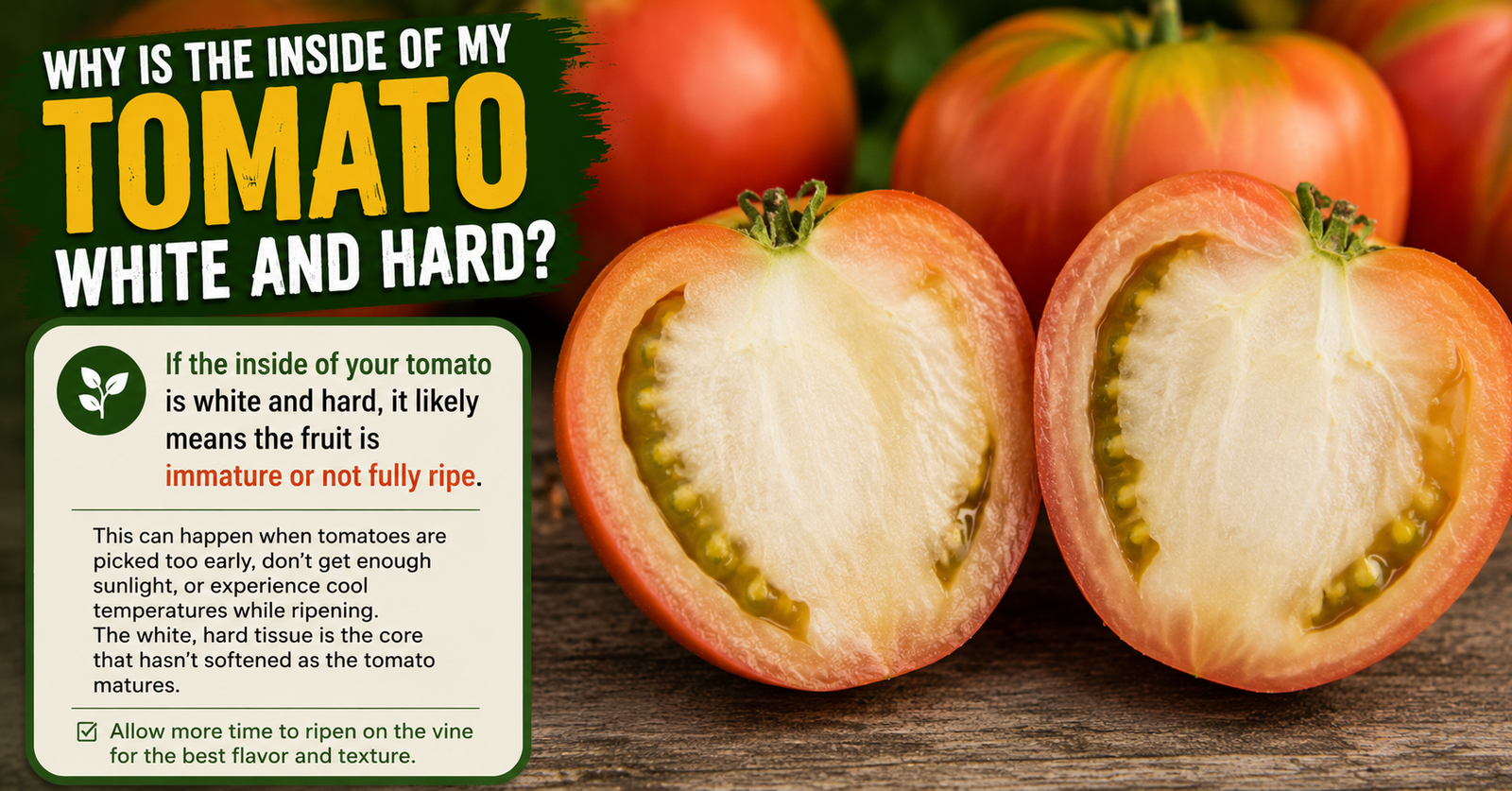
Stink bug or leaf-footed bug feeding is a common cause. Heat, uneven ripening, and nutrient-related disorders can also produce white internal tissue.
Can you see stink bug holes in tomatoes?
Sometimes. The puncture may appear as a tiny dark pinprick or shallow depression, but it can be difficult to see without close inspection.
Do stink bugs make tomatoes unsafe to eat?
Minor damage does not automatically ruin the fruit. Remove affected tissue and use only firm, fresh tomatoes without mold, softness, or decay.
Do stink bugs lay eggs inside tomatoes?
Stink bugs usually lay barrel-shaped egg clusters on plant surfaces, particularly the undersides of leaves. They do not normally lay eggs inside tomato fruit.
Will stink bug-damaged tomatoes taste bad?
The pale damaged areas can be tough, dry, or unpleasant. Removing those spots may leave usable tomato flesh when damage is light.
What time of day should I look for stink bugs?
Early morning is useful because the insects are often less active. Check fruit, stems, and the undersides of leaves.
What kills stink bug eggs?
Egg clusters can be crushed or removed with tape. Natural parasitoids also attack them. Any pesticide must specifically list the target and intended use.
Are leaf-footed bugs the same as stink bugs?
They are related true bugs and cause similar feeding damage, but they belong to different families. Leaf-footed bugs usually have longer bodies and may have widened hind legs.
Do stink bugs cause tomatoes to stay green?
Feeding can interfere with ripening around punctures, leaving green, yellow, or pale patches while the surrounding fruit changes color.
Will one stink bug ruin a whole tomato?
One feeding spot may cause only a small blemish. Repeated punctures from several bugs can create widespread tough tissue and make the tomato unusable.
Why do stink bugs return after spraying?
Adults can fly in from surrounding weeds, crops, trees, and gardens. A single treatment may not affect bugs that arrive later.
Written by Caleb Warren, a lifelong gardener who shares practical growing advice, honest troubleshooting, and lessons learned from real plants through Tomato Growing Tips.