Tomato plants flowering but no fruit? Here are the 9 most common reasons tomato plants stop producing — and exactly what to do about each one.
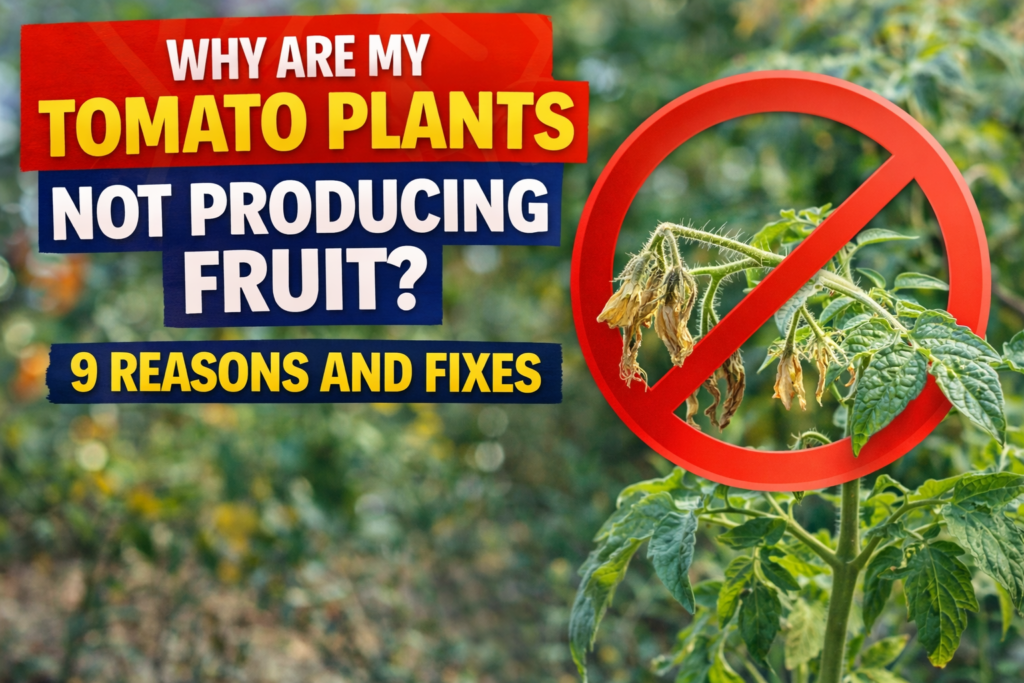
You did everything right. You planted on time, watered consistently, fertilized regularly, and your tomato plants look incredible — tall, green, loaded with flowers. But no tomatoes. Just flowers that open and drop, or worse, plants that are not even flowering at all.
This is one of the most frustrating problems in the vegetable garden, and it is also one of the most fixable. In almost every case, tomato plants that are not producing fruit are reacting to a specific, identifiable stress. Find the stress, remove it, and the fruit follows.
This guide walks through every reason tomato plants fail to produce — and exactly what to do about each one.

How Tomato Pollination Actually Works
Before diagnosing the problem, it helps to understand what needs to happen for a tomato to form.
Tomato flowers are self-fertile, meaning each flower carries both male and female parts. Pollen from the anther needs to reach the stigma in the same flower — or a nearby flower — to complete pollination. When it does, the flower base swells and a fruit begins developing. When it does not, the flower simply drops.
The trigger that moves pollen is vibration. In nature, bumblebees are the most effective tomato pollinators because they grip the flower and vibrate their flight muscles at a specific frequency — a behavior called buzz pollination. Wind also helps. In still or enclosed environments with few pollinators, flowers open and drop without ever being pollinated.
This is why tomatoes grown in greenhouses, on covered patios, or in areas with low bee activity often struggle to set fruit even when everything else is perfect.
Reason 1: Temperatures Are Too High or Too Low
Temperature is the single most common reason healthy tomato plants fail to produce fruit, and it is the one most gardeners never think to check.
Tomato pollen becomes non-viable — essentially sterile — when daytime temperatures push above 85–90°F or when nighttime temperatures drop below 55°F or climb above 75°F. The plant flowers normally. The flowers open normally. But pollination fails and the flower drops.
Signs this is your problem:
- Plants are flowering but fruit is not setting
- Problem appears during heat waves or cool early-season periods
- Flowers drop cleanly without any sign of disease or pest damage
What to do:
- For heat: Provide afternoon shade using shade cloth during the hottest weeks. Keep watering consistent — heat stress combined with drought stress accelerates blossom drop dramatically. Choose heat-tolerant varieties like Heatmaster or Solar Fire if you garden in a consistently hot climate
- For cold: Wait. If nighttime temps are still dipping below 55°F, fruit simply will not set until conditions warm up. Row covers can help raise nighttime temperatures a few degrees
- Be patient — once temperatures return to the 65–80°F range, fruit set usually resumes on its own without any intervention
Reason 2: Too Much Nitrogen
This one surprises a lot of gardeners because the plants look so good when it is happening.
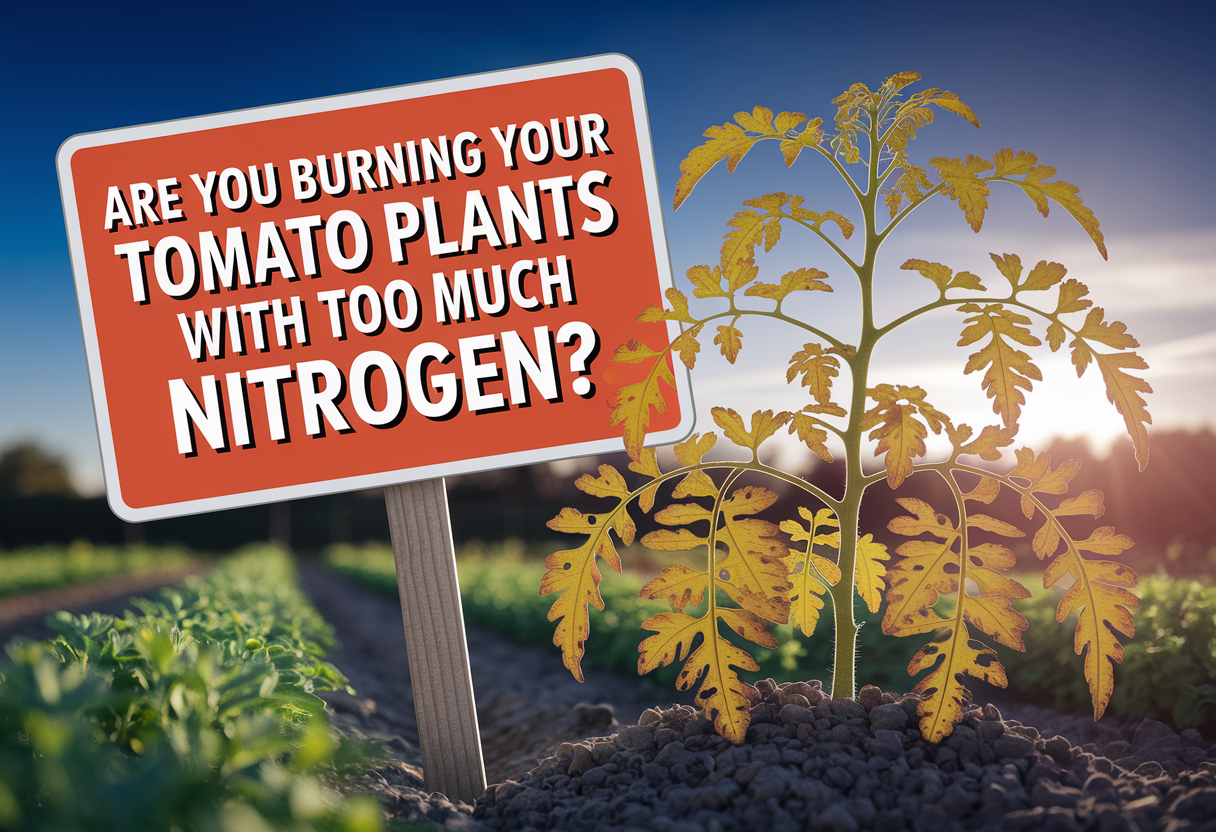
Nitrogen drives vegetative growth — stems, leaves, and overall plant size. When nitrogen is too high during the flowering stage, the plant stays locked in a growth mode and puts little energy into reproduction. The result is a gorgeous, lush, dark green plant that flowers sparingly or not at all, and drops the flowers it does produce.
Signs this is your problem:
- Plants are extremely dark green and vigorously growing
- Little to no flowering, or flowers drop immediately
- You have been feeding with a high-nitrogen fertilizer or one balanced for leafy crops
What to do:
- Stop using high-nitrogen fertilizers immediately
- Switch to a fertilizer higher in phosphorus and potassium — look for something with a ratio like 5-10-10 or similar where the first number is the lowest
- Hold off on fertilizing entirely for 2–3 weeks to let nitrogen levels normalize
- In future seasons, reduce nitrogen feeding as soon as the first flowers appear
The full breakdown of what fertilizer to use and when is in the guide on the best fertilizer for tomatoes that actually works — the timing section in particular explains exactly when to shift your feeding approach during the season.

Reason 3: Inconsistent Watering
Water stress during the flowering stage is one of the fastest triggers for blossom drop. When the soil dries out severely between waterings, the plant enters a survival response and sheds its flowers — reproduction is a luxury it cannot afford when it is fighting to stay alive.
The problem is not just drought. Overwatering creates an equally stressful environment by suffocating roots and preventing nutrient uptake. And the most damaging pattern of all is the cycle of letting the soil get very dry, then soaking it, then letting it dry again. This feast-or-famine approach stresses the plant repeatedly and causes ongoing blossom drop throughout the season.
Signs this is your problem:
- Blossom drop seems to follow hot or dry periods
- Soil is either very dry or waterlogged when you check it
- Leaves are wilting at some points and recovering at others
What to do:
- Aim for consistent, even soil moisture throughout the flowering and fruiting stages
- Water deeply but less frequently rather than giving shallow daily sips — deep watering encourages roots to grow down where moisture is more stable
- Mulch heavily around the base of your plants with straw, wood chips, or shredded leaves to dramatically reduce moisture loss from the soil surface
- Consider a drip irrigation system if inconsistent watering is a recurring problem — it delivers water directly to the root zone on a timer and removes the daily decision entirely
If you are not sure whether you are overwatering or underwatering, the detailed comparison in overwatered vs underwatered tomato plants gives you a clear way to diagnose which problem you are dealing with.
Reason 4: Not Enough Sunlight
Tomatoes are sun-hungry plants. They need a minimum of 6 hours of direct sunlight per day to grow and produce normally — and 8 hours or more to reach their full potential. Below that threshold, flowering is reduced and fruit set suffers.
A plant in partial shade will grow, and it may flower, but the flowers are weaker and less likely to set fruit. The plant simply does not have enough energy coming in to power reproduction at full capacity.
Signs this is your problem:
- Plants are growing slowly and look somewhat pale or stretched
- Flowering is sparse compared to plants in sunnier spots
- The shadier plants in your garden consistently produce less than others
What to do:
- Count actual hours of direct sun at your planting location on a clear day — shade patterns shift significantly through the season as the sun angle changes
- If growing in containers, move plants to a sunnier location. This is one of the biggest advantages of container growing
- Prune surrounding plants or structures blocking light if possible
- In future seasons, choose your tomato planting location based on sun exposure before anything else
The relationship between sun and production is covered in detail in the article on how much sun tomato plants actually need — including what happens at different light levels and how to make the most of a partially shaded spot.
Reason 5: Poor Pollination
Even when temperatures are fine and the plant is healthy, pollination can fail if there are not enough pollinators or enough air movement to shake pollen loose.
This is increasingly common as bee populations decline in some areas, and it is almost universal for tomatoes grown in enclosed spaces — greenhouses, covered patios, grow tents, and sunrooms.
Signs this is your problem:
- Flowers are opening fully but dropping without any fruit forming
- Growing in an enclosed or very sheltered location
- Low bee or insect activity in your garden
What to do:
- Gently shake flowering stems every morning when flowers are open. A light tap on the stem or a brief vibration from an electric toothbrush held against the stem mimics what bees do naturally
- Plant pollinator-attracting flowers near your tomatoes — borage, marigolds, and basil all attract bees and beneficial insects
- If growing indoors or in a greenhouse, run a small oscillating fan to create air movement that helps distribute pollen
- Avoid using broad-spectrum pesticides during flowering, which kill pollinators along with pests
Reason 6: Soil pH Is Off
This one is almost invisible unless you test for it, and it causes problems that look like nutrient deficiencies, fertilizer failures, and general poor performance all at once.
Tomatoes absorb nutrients most efficiently when soil pH sits between 6.2 and 6.8. Outside that range, nutrients that are actually present in the soil become chemically unavailable to the plant. You can fertilize consistently and still have a nutrient-starved plant if the pH is wrong — the roots simply cannot access what is there.
Low soil pH locks out calcium and phosphorus. High pH locks out iron, manganese, and zinc. Any of these deficiencies can reduce flowering and fruit set significantly.
Signs this is your problem:
- Poor performance despite adequate fertilizing and watering
- Yellowing leaves that do not respond to fertilizer
- Blossom end rot on developing fruit despite calcium supplementation
What to do:
- Test your soil pH before assuming the problem is something else. A 4-in-1 soil meter gives you an instant reading
- If pH is too low (acidic), add lime to raise it. The guide on need to raise soil pH — this lime works wonders for tomatoes covers exactly how to do this
- If pH is too high (alkaline), sulfur amendments bring it down. The article on how to lower soil pH fast with this sulfur fix walks through the process
- For a complete overview of managing soil pH for tomatoes, how to change soil pH for tomato plants the right way covers the full picture
Reason 7: Pests and Disease Are Draining the Plant
A plant under heavy pest or disease pressure redirects its energy toward survival and away from reproduction. Significant infestations of aphids, spider mites, or hornworms, or widespread fungal disease, can reduce flowering and fruit set even when the plant still looks reasonably healthy from a distance.
Signs this is your problem:
- Reduced flowering alongside visible pest damage or disease symptoms
- Leaves showing spotting, distortion, or unusual coloring
- Sticky residue on leaves (aphids), fine webbing (spider mites), or large areas of defoliation (hornworms)
What to do:
- Inspect plants thoroughly, including the undersides of leaves, at least once a week
- Address pest problems early before populations build to damaging levels. Insecticidal soap handles most soft-bodied insects safely without harming fruit
- For hornworms specifically, spinosad insecticide is highly effective and approved for organic use
- For fungal diseases, copper fungicide applied at first signs prevents spread significantly better than treating established infections
Reason 8: The Variety Does Not Match Your Climate
Not every tomato variety performs in every climate. Long-season heirloom varieties planted in a short-season Zone 4 garden may never produce fruit simply because they need more days to reach maturity than the season allows. Heat-sensitive varieties planted in a hot southern climate may set a little fruit in spring and then shut down completely for the summer.
Signs this is your problem:
- Plants are large and healthy but have never set fruit despite good conditions
- You are near the end of your growing season with no fruit in sight
- You are in a very hot climate and production stopped in midsummer
What to do:
- Check the days-to-maturity on your variety against your actual growing season length
- For short-season gardens, choose varieties under 70 days to maturity
- For hot climates, choose heat-tolerant varieties specifically bred to set fruit above 90°F
- Consider starting seeds earlier indoors next season to give long-season varieties more time
Reason 9: The Plant Is Simply Too Young
First-year container plants or very young transplants sometimes take longer than expected to begin flowering. This is especially true if the plant experienced transplant shock, cold soil, or significant stress early in the season.
A tomato plant generally needs to establish a minimum amount of vegetative structure before it shifts into reproductive mode. If growth was slow or interrupted, flowering may come later than expected — but it will come.
What to do:
- Be patient if your plant is still young and growing vigorously
- Make sure the plant is getting adequate nutrition and light to support continued development
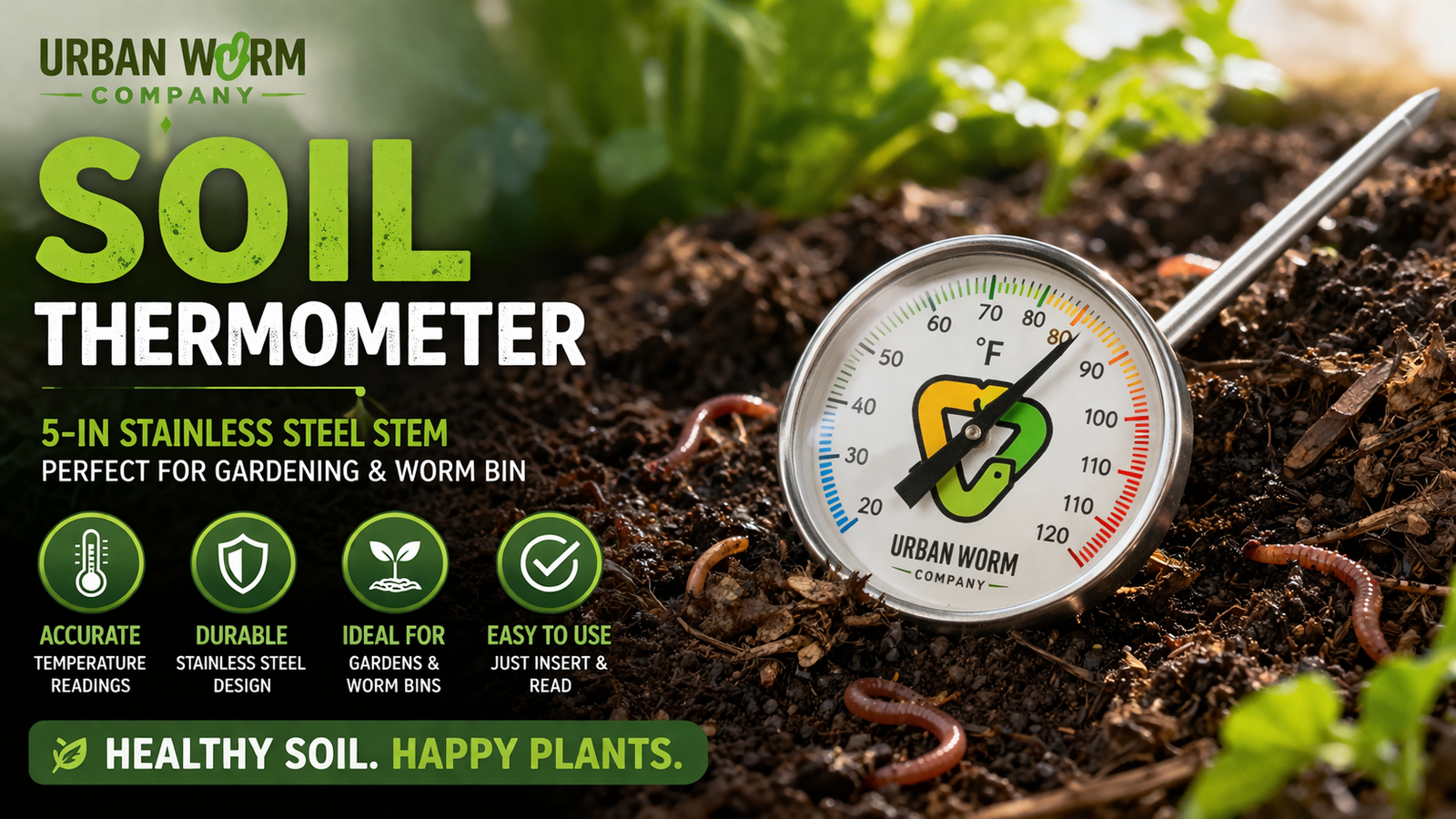
- Check that soil temperature is consistently above 60°F — cold soil is one of the most common reasons for slow early-season development
A Simple Diagnostic Checklist
Work through this list when your tomato plants are not producing:
Step 1: Check the temperature forecast for the past two weeks. Were nights below 55°F or days above 90°F? If yes, temperature is likely the issue.
Step 2: Stick your finger two inches into the soil. Wet or dry? Aim for consistently moist. If you are seeing a pattern of extremes, address your watering approach.
Step 3: Count hours of direct sun at your planting location. Less than 6 hours? That is a production problem.
Step 4: Check the fertilizer you have been using. High nitrogen number? Switch to a phosphorus-forward formula.
Step 5: Test soil pH. Outside 6.2–6.8? Fix the pH before adding more inputs.
Step 6: Inspect plants for pests and disease. Look under the leaves. Check stems near soil line.
Step 7: Look up your variety’s days to maturity. Does it match your season length?
Most production problems are solved somewhere in steps 1 through 4.


What to Do Right Now If Nothing Is Working
If you have worked through the checklist and still cannot identify the problem, here is a reset approach that addresses the most common causes simultaneously:
- Stop fertilizing for two weeks to let nitrogen normalize
- Apply a balanced deep watering and mulch around the base of the plant
- Check and correct soil pH if needed
- Shake flowering stems each morning to assist pollination
- Make sure plants are getting maximum available sun
- Wait 10–14 days and reassess
In the vast majority of cases, at least one of these steps addresses whatever was holding production back.
Related Articles
- Why are my tomato plants not flowering
- When to fertilize tomato plants for juicy big results
- The real reason your tomato plants are turning yellow
- Tomato plant stages week by week — what to expect and what to do
- 9 reasons your tomato plant is sad
- How to grow tomatoes faster — 10 proven tricks that work
- Signs of overwatering tomato plants and what to do next
About the Author
Dave Pritchard has grown tomatoes across two different climate zones for over twelve years, battling everything from heat waves to nutrient lockout to hornworm infestations. He writes practical diagnosis-first guides for home gardeners who want to fix problems fast and get back to growing.
As an Amazon Associate we earn from qualifying purchases through some links in our articles.