
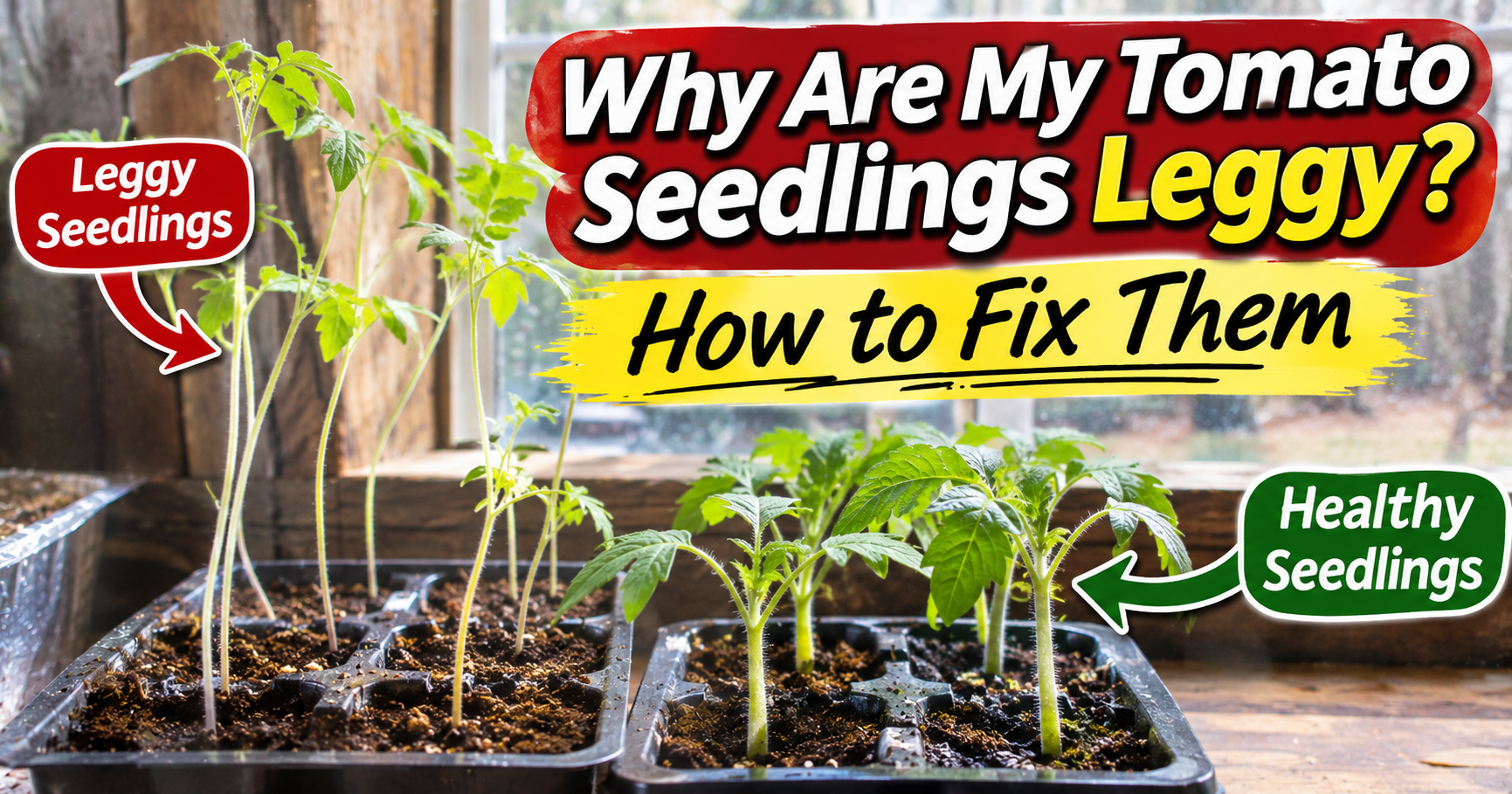
Tomato seedlings sometimes grow tall so quickly that their thin stems cannot support their leaves. They lean toward the nearest window, fall across the seed tray or look more like fragile strings than sturdy young plants.
These are commonly called leggy tomato seedlings. Weak light is usually responsible, although excessive warmth, crowding and starting the seeds too early can make the stretching worse.
I do not automatically throw leggy seedlings away. Tomatoes have the useful ability to grow roots along buried portions of their stems, so most stretched seedlings can recover when I correct the conditions early enough.
What Do Leggy Tomato Seedlings Look Like?
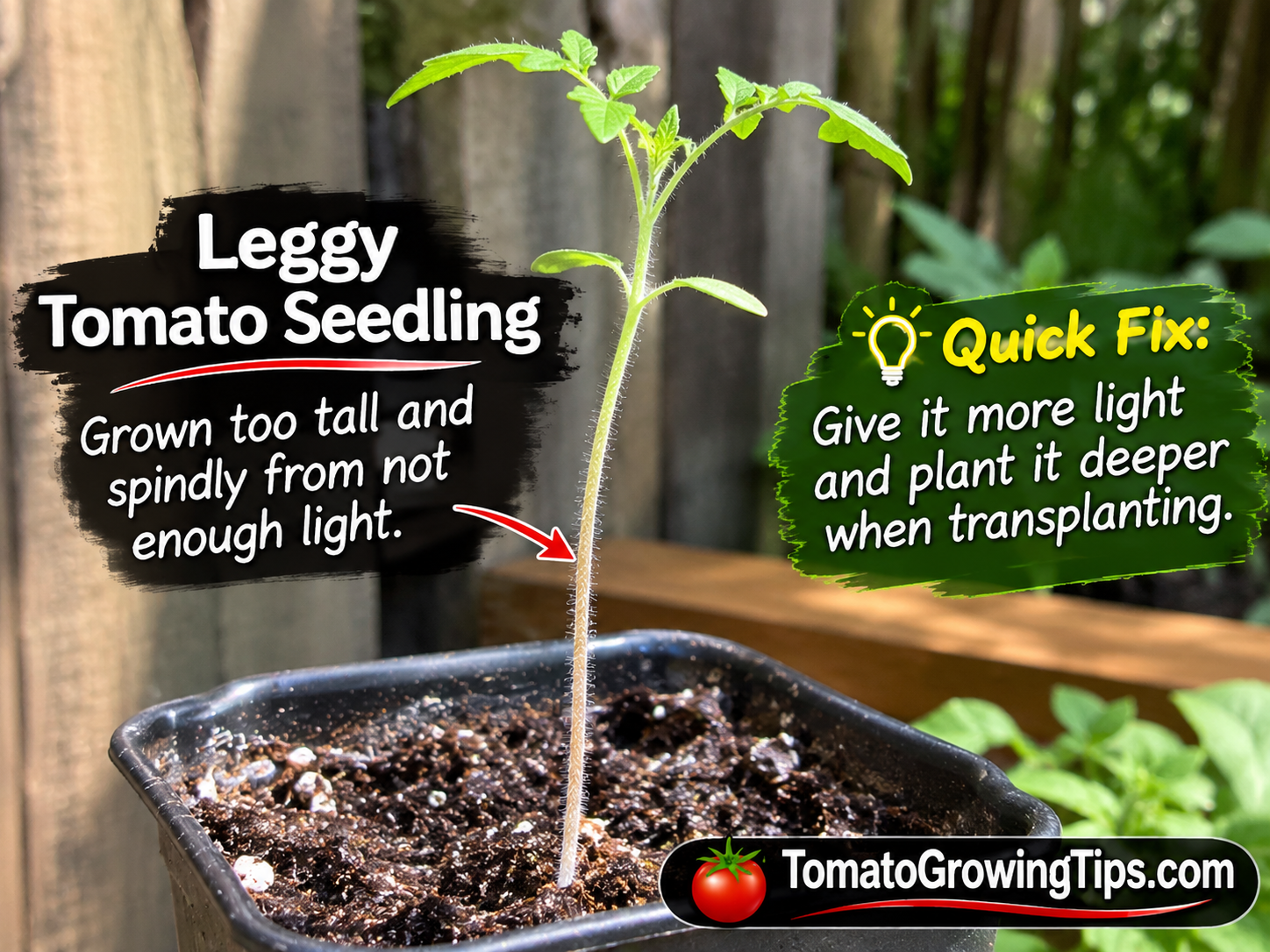
A leggy tomato seedling has an unusually long, thin stem with too much space between its leaves.
The plant may lean toward a window or bend under the weight of its upper leaves. Its stem often looks pale, soft and delicate instead of thick and green.
I watch for several common signs:
- A long bare stem below the first leaves
- Large spaces between sets of leaves
- Seedlings leaning toward the same light source
- Thin stems that bend easily
- Plants falling across neighboring seedlings
- Rapid upward growth with small leaves
Different tomato varieties do not all grow at exactly the same rate. I become concerned when the stem cannot support the plant or when each new section becomes longer and thinner.
My indoor tomato seed-starting method explains how I prepare the containers, growing mix, warmth and lighting before the seedlings emerge.
Why Are My Tomato Seedlings Leggy?
Insufficient light is the most common cause.
A tomato seedling stretches upward when it is searching for stronger light. This can happen beside a window or beneath a grow light that is too weak, too far away or not left on long enough.
Warm conditions can accelerate the problem. Heat encourages fast growth, but the seedling cannot build a sturdy stem when it is growing quickly without receiving enough light.
Crowding also contributes to leggy growth. When several seedlings share a small cell, each one tries to rise above its neighbors to reach the light.


A Sunny Window May Not Be Enough
A window that looks bright to us may still provide less light than a young tomato needs.
Cloudy weather, short winter days, nearby trees and the direction the window faces all affect the amount of usable light reaching the plant. Seedlings beside a window also receive most of their light from one direction, causing them to lean.
Rotating the tray can temporarily change the direction of the lean, but it does not correct a serious light shortage.
I usually use an overhead grow light when starting tomatoes indoors. The light reaches the seedlings more evenly and allows me to control the daily schedule.
How Close Should the Grow Light Be?
The correct distance depends on the fixture.
Some lights can remain close to the seedlings without producing excessive heat. More powerful fixtures may need additional space. I follow the manufacturer’s recommended height and then watch how the plants respond.
If the seedlings continue stretching, the light may be too far away. If the leaves become bleached, curled or dry, the light may be too close or creating too much heat.
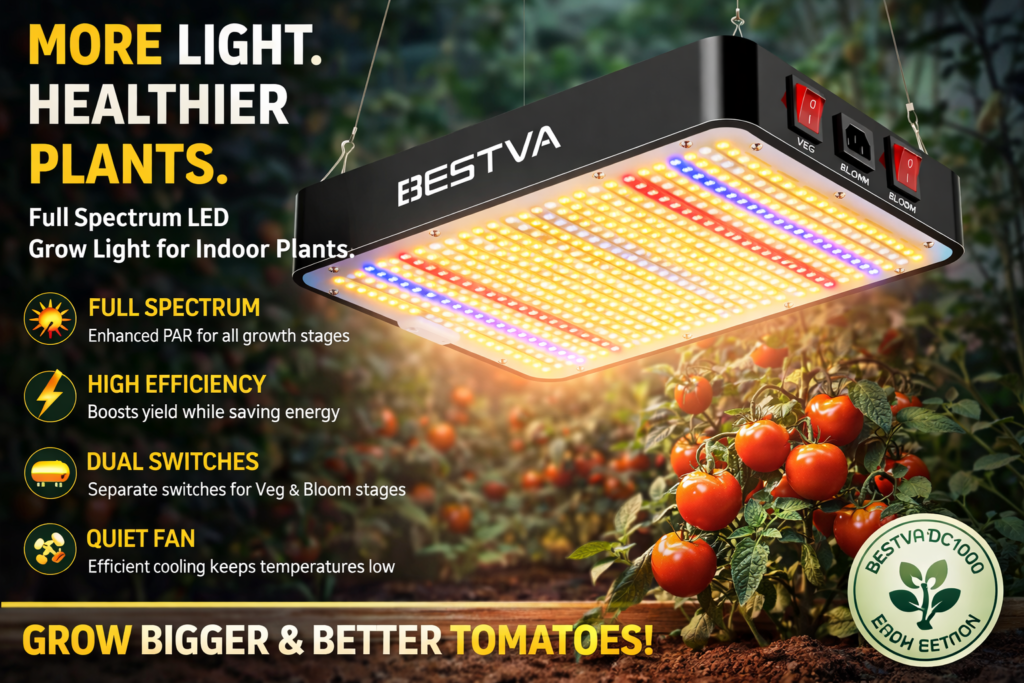
My grow-light setup for strong tomato seedlings shows how I provide overhead light instead of relying entirely on a window.
I generally give tomato seedlings about 14 to 16 hours of artificial light each day. I use a timer so the schedule remains consistent, while still giving the plants a normal period of darkness.


Can Leggy Tomato Seedlings Be Saved?
Most leggy tomato seedlings can be saved if their stems are still healthy.
The already stretched portion will not become shorter. Instead, the goal is to correct the growing conditions so the new growth becomes thicker and more compact.
I am usually willing to keep a seedling when it still has green leaves, an undamaged stem and a healthy root system.
A seedling may not be worth saving when the stem has collapsed, become pinched or started rotting near the soil line. If plenty of growing time remains, starting another seed may be easier than trying to rescue a severely damaged plant.
How I Fix Leggy Tomato Seedlings
The first thing I do is improve the lighting. Repotting a stretched seedling will not solve the problem if it continues reaching for weak light.
I place the seedlings under an appropriate grow light, adjust the fixture to the recommended height and run it for approximately 14 to 16 hours daily.
I also remove unnecessary bottom heat after the seeds have germinated. A heat mat is useful for encouraging germination, but leaving the tray excessively warm can produce fast, soft growth.
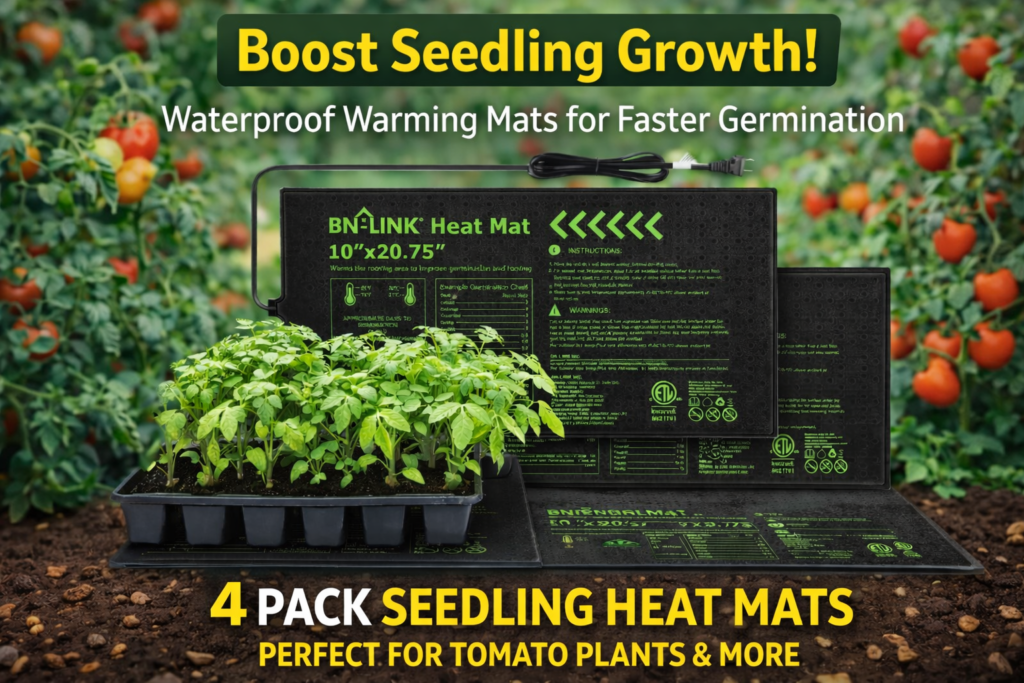
The seedling heat mat setup I use explains when warmth helps and when I remove it.
If several plants are growing in one cell, I thin them so the remaining seedling receives more light and air. I usually clip the unwanted seedlings at soil level instead of pulling them and disturbing the roots.
A small fan set on low can provide gentle air movement. The leaves should move slightly without the stems bending sharply. Air movement can encourage stronger stems, but it cannot replace adequate light.



Can I Repot Leggy Tomato Seedlings Deeper?
Tomato seedlings can be repotted deeper because buried stem tissue can develop additional roots.
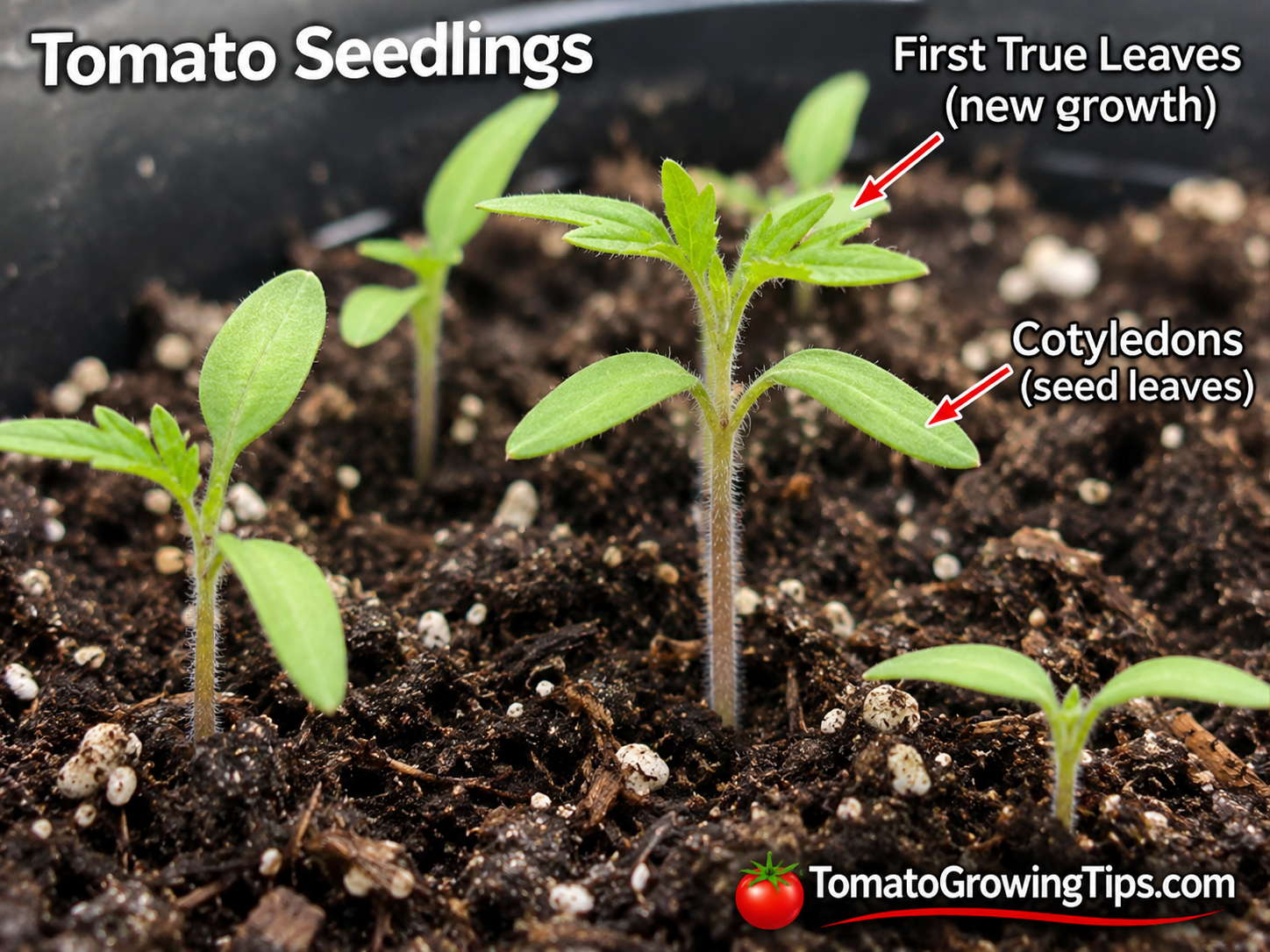
I usually wait until a seedling has at least one or two sets of true leaves. True leaves are the leaves that develop after the first smooth seed leaves.
I move the seedling into a slightly larger container and bury part of the bare stem in fresh potting mix. I keep all leaves above the soil and avoid bending the stem sharply.
The deeper planting provides physical support while giving the buried stem an opportunity to form roots. However, I still need to correct the light or the seedling will begin stretching again.
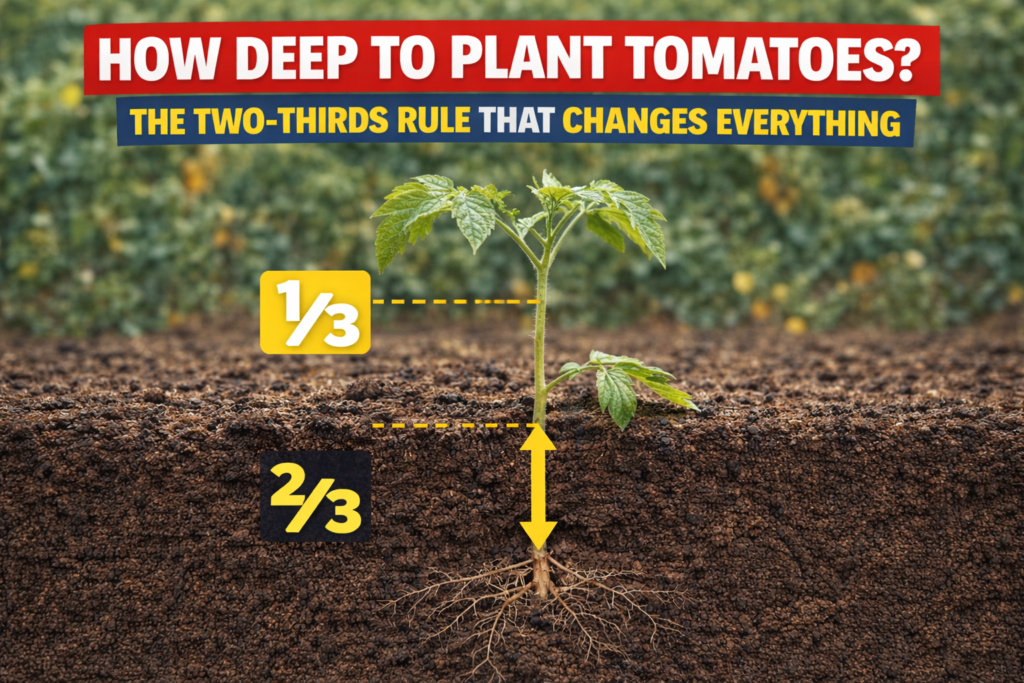
When the plants are large enough for their permanent location, my two-thirds tomato planting method explains how I use the same rooting ability outdoors.
When Should I Repot a Leggy Seedling?
I repot when the plant has true leaves and its roots have begun holding the seed-starting mix together.
A newly emerged sprout can be difficult to handle without damaging its stem or roots. Waiting for some root development makes the move safer.
I do not place a tiny seedling in an enormous pot. A large amount of wet potting mix can remain soggy for too long around a small root system.
The new container only needs to be large enough to provide additional root space and allow me to bury part of the stretched stem.
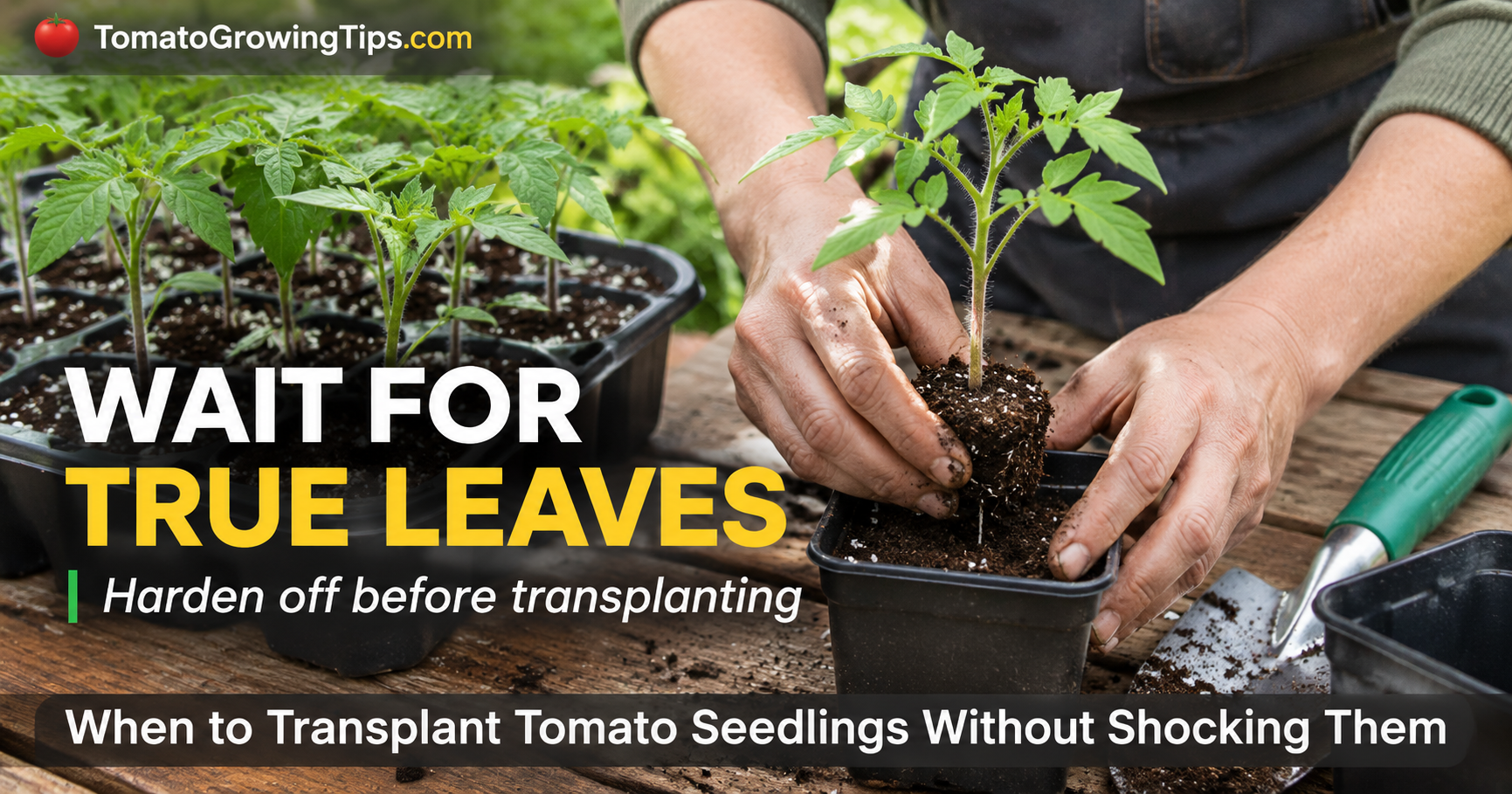
Before moving plants into the garden, I use my tomato seedling transplant readiness guide to check their roots, size and outdoor conditions.
Should I Fertilize Leggy Tomato Seedlings?
Fertilizer does not fix a lighting problem.
A strong fertilizer may encourage the seedling to grow even faster without making its stem sturdier. I correct the lighting, warmth and crowding before worrying about fertilizer.
Once the seedling has developed true leaves, a mild fertilizer suitable for young plants may be used according to its label. I avoid guessing at the concentration because tender roots can be damaged by excessive fertilizer.
How I Water Stretched Seedlings
I keep the growing mix evenly moist without leaving it saturated.
Dry seedlings wilt and lose some of the pressure that helps their stems remain upright. Constantly wet soil limits oxygen around the roots and can contribute to damping off or root problems.
I check the mix before watering instead of following a rigid daily schedule. If the surface looks dry but the container still feels heavy, moisture may remain around the roots.
After repotting, I pay closer attention because a larger container normally takes longer to dry.

How Do I Know the Seedling Is Recovering?
I judge recovery by the new growth rather than the original stretched stem.
A recovering seedling should begin producing thicker upper growth, larger leaves and shorter spaces between each new set of leaves. It should also stop leaning farther toward the light each day.
The improvement will not happen overnight. The original stem remains long, but the plant can become increasingly sturdy as it develops new leaves and roots.
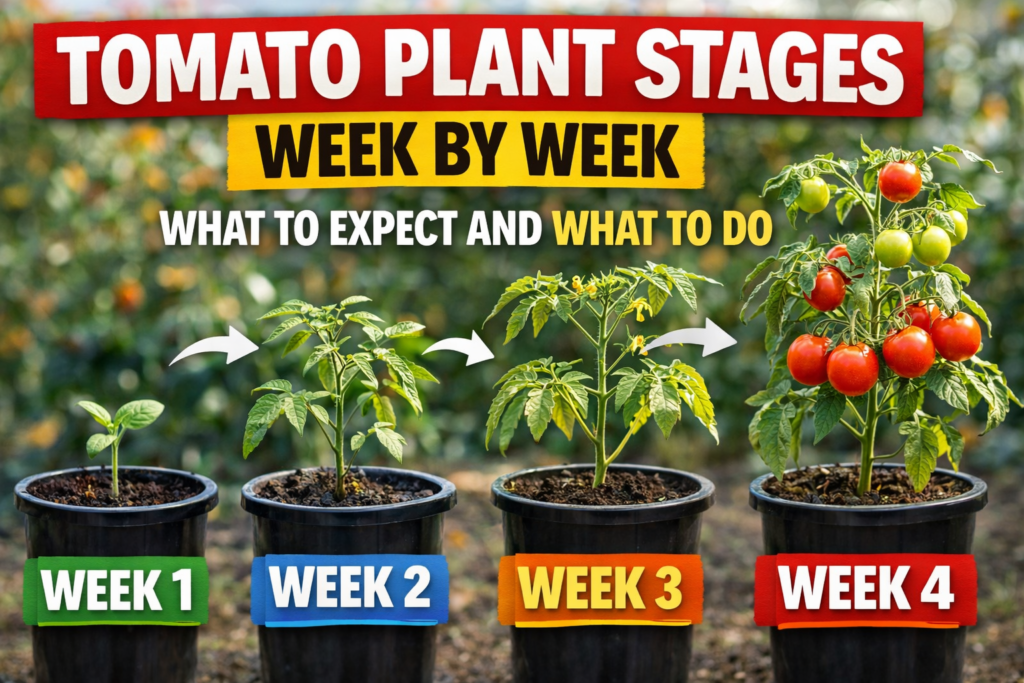
The tomato growth stages I watch week by week provide a useful comparison as seedlings develop into larger plants.
How I Prevent Leggy Tomato Seedlings
I prepare the grow light before planting the seeds so it is ready as soon as the first seedlings appear.
I remove the humidity cover after germination, discontinue unnecessary bottom heat and thin crowded cells early. I also adjust the light upward as the plants grow instead of leaving it at one fixed height.
Starting the seeds at the proper time makes the entire process easier. Seedlings that are started far too early may outgrow their lights and containers before outdoor conditions are safe.

My tomato planting guide for every growing zone can help determine when the plants are likely to move outside.
Hardening Off Leggy Tomato Seedlings
A stretched seedling needs careful hardening off because its thin stem is more vulnerable to wind.
I begin with short periods outdoors in a protected, shaded location. Over several days, I gradually increase the plant’s exposure to outdoor light and air movement.
I do not place an indoor-grown seedling directly in strong midday sun. Even a plant that became leggy from weak light can develop sunburn when moved outside too quickly.
A temporary support can protect a weak seedling from snapping, but I do not tie it so tightly that the stem cannot move at all.
Before the final move, I follow the steps I use to transplant seedlings without shock so the plants are not exposed to cold soil, wind and full sunlight all at once.
Can leggy tomato seedlings still produce tomatoes?
Yes. A leggy seedling can become a productive tomato plant when its growing conditions are corrected. Planting it deeper can also help it develop additional roots.
Will a leggy seedling become shorter?
No. The stretched portion of the stem will remain long. Recovery means the plant begins producing thicker, more compact new growth.
Should I throw away leggy tomato seedlings?
Not automatically. I usually keep seedlings that have green leaves, healthy roots and an undamaged stem. Severely collapsed or rotting seedlings may be easier to replace.
Can I bury a leggy tomato seedling up to its leaves?
Part of the bare stem can be buried because tomatoes can form roots along their stems. I keep all active leaves above the soil.
Can a fan fix leggy seedlings?
A gentle fan may help strengthen the stems, but it cannot correct insufficient light. Proper lighting remains the most important fix.
Why are my tomato seedlings leaning toward the window?
They are growing toward the strongest available light. Rotating the tray may help temporarily, but a suitable overhead grow light provides more even coverage.
Can tomato seedlings receive too much light?
Yes. Excessive intensity or heat can bleach or damage the leaves. I follow the grow-light manufacturer’s recommended distance and watch the plants for changes.
Why did my tomato seedlings become leggy so quickly?
Warm temperatures can cause seedlings to emerge and stretch rapidly before receiving enough light. I place them under the grow light as soon as they begin appearing above the soil.
Written by Mason Hale, a home gardener who starts tomatoes indoors and shares practical lessons for raising stronger plants through Tomato Growing Tips.