
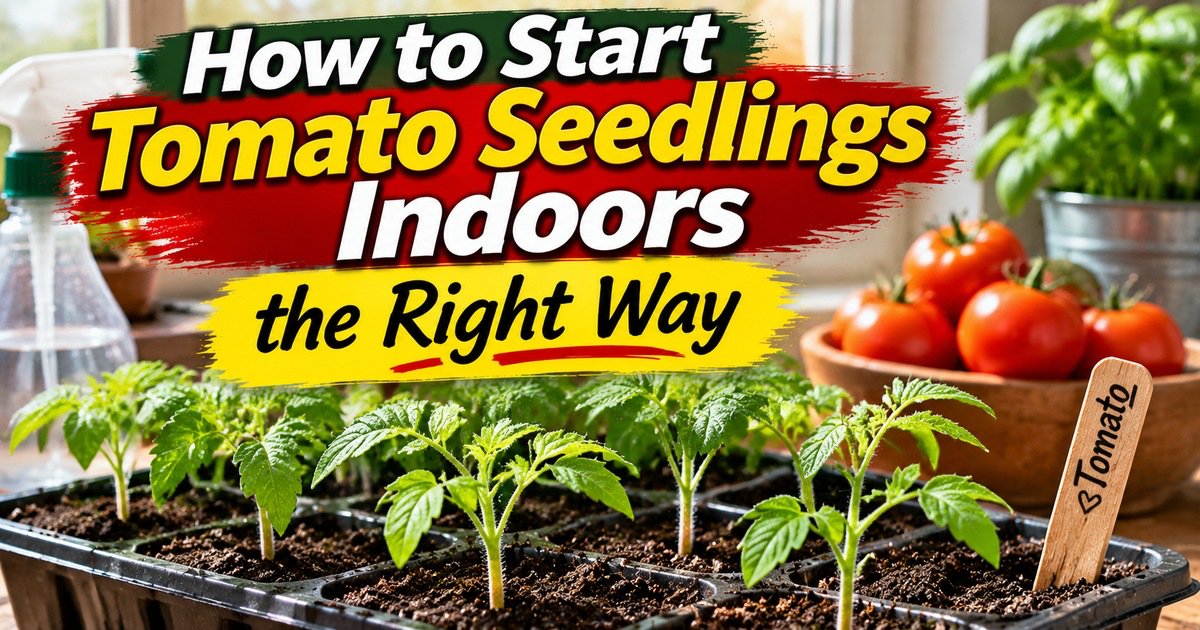
Starting tomato seedlings indoors is not difficult, but the little plants can go from short and sturdy to tall, pale and floppy surprisingly fast.
I start with fresh seeds, a clean container, damp seed-starting mix and enough warmth to encourage germination. Once the seedlings emerge, strong overhead light becomes the most important part of the setup.
The goal is not to grow the biggest tomato plants possible before spring. I want compact seedlings with thick stems, healthy green leaves and roots that fill their containers without becoming badly tangled.
The Short Version of Starting Tomato Seedlings
I start tomato seeds indoors approximately six to eight weeks before I expect to transplant them into the garden.
I plant the seeds about one-quarter inch deep in damp seed-starting mix, keep the mix warm and prevent it from drying out. Once sprouts appear, I remove any humidity cover and place the seedlings directly under a bright grow light.
As the plants develop true leaves, I thin crowded cells, begin light feeding when necessary and move seedlings into larger containers before they become root-bound.
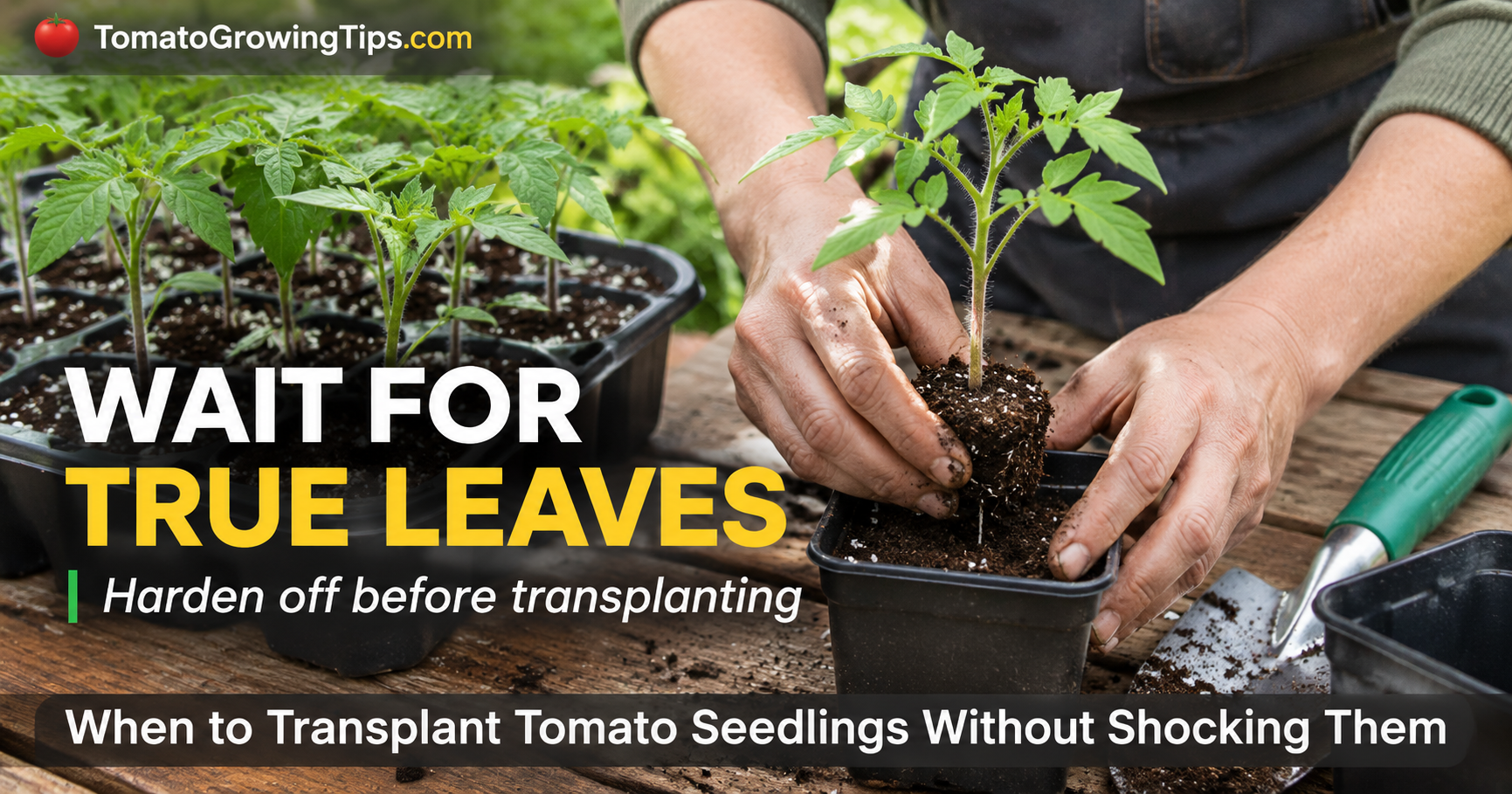
About one or two weeks before planting outside, I gradually harden them off so sunlight, wind and changing temperatures do not shock them.
That is the entire process in a nutshell. The details below are what keep the seedlings from becoming weak, diseased or impossible to manage.

When Should I Start Tomato Seeds Indoors?
Most gardeners should start tomato seeds indoors about six to eight weeks before their expected outdoor transplanting date.
Some Extension recommendations use a five-to-six-week window. I may start slightly earlier when I know I can provide excellent light, sufficient container space and careful temperature control.
Starting extra early does not automatically produce earlier tomatoes.
A seedling kept indoors too long can become leggy, root-bound or stressed before outdoor conditions are safe. A younger, compact transplant often adjusts faster than an oversized plant that has spent months struggling inside a small pot.
Count Backward From Your Planting Date
I begin with the date when tomatoes can realistically go into my garden. Then I count backward approximately six to eight weeks.
Tomatoes should not be planted outside simply because the average final frost date has passed. I also want the soil to warm and nighttime temperatures to become reasonably dependable.
My tomato planting guide for every growing zone explains why the USDA zone alone does not determine the exact planting day.
My Zone 6a Timing
Here in Zone 6a, I generally think about starting tomato seeds during March for transplanting after spring conditions become dependable.
The exact week changes with the variety, local frost history and the space available under my lights. I would rather start a week late and grow sturdy plants than start far too early and babysit sprawling tomatoes indoors.
Read the Seed Packet
The packet may recommend a specific number of weeks before the final frost date. It also provides the variety’s expected days to maturity.
I label every tray when I plant it. Tomato seedlings look remarkably similar when they are young, and I do not trust myself to remember which cell contains which variety six weeks later.
What You Need to Start Tomato Seedlings
A simple seed-starting setup works well. I do not need an expensive indoor greenhouse or a shelf full of complicated equipment.
I use:
- Tomato seeds
- Clean seed-starting cells or small containers
- Sterile seed-starting mix
- A tray that catches drainage
- Plant labels
- A gentle way to add water
- A warm location or seedling heat mat
- A bright overhead grow light
- A timer for the light
- A small fan for air movement after germination
Good conditions matter more than fancy equipment.
Choosing Tomato Seeds
Starting from seed gives me access to far more tomato varieties than I normally find as transplants at a local garden center.
I can choose paste tomatoes, cherry tomatoes, slicers, compact container varieties, disease-resistant hybrids and unusual heirlooms.
I check the expected mature size and days to maturity before buying seeds. A beautiful tomato that needs a very long growing season may not be the smartest choice for every garden.
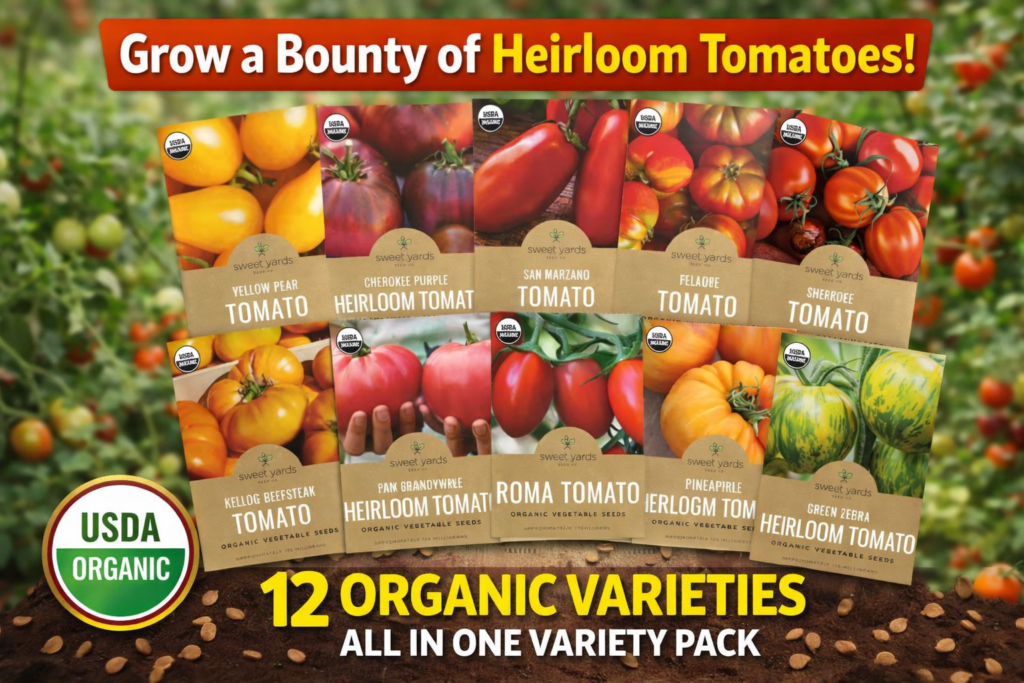
My look at choosing organic tomato seeds and useful varieties provides a practical starting point when the number of available varieties becomes overwhelming.
Can I Use Old Tomato Seeds?
Tomato seeds can remain viable for several years when stored properly, but germination usually becomes less dependable with age.
If I am using older seeds, I plant extras. Once the seedlings develop, I keep the strongest one in each cell.
I do not immediately throw away a tray because nothing appeared in three days. Tomato seeds commonly need several days to germinate, and cool conditions can slow them considerably.
Can I Save Seeds From My Own Tomatoes?
Yes, especially from open-pollinated and heirloom tomatoes.
Seeds saved from hybrid tomatoes may grow, but the next plants may not closely match the original variety.
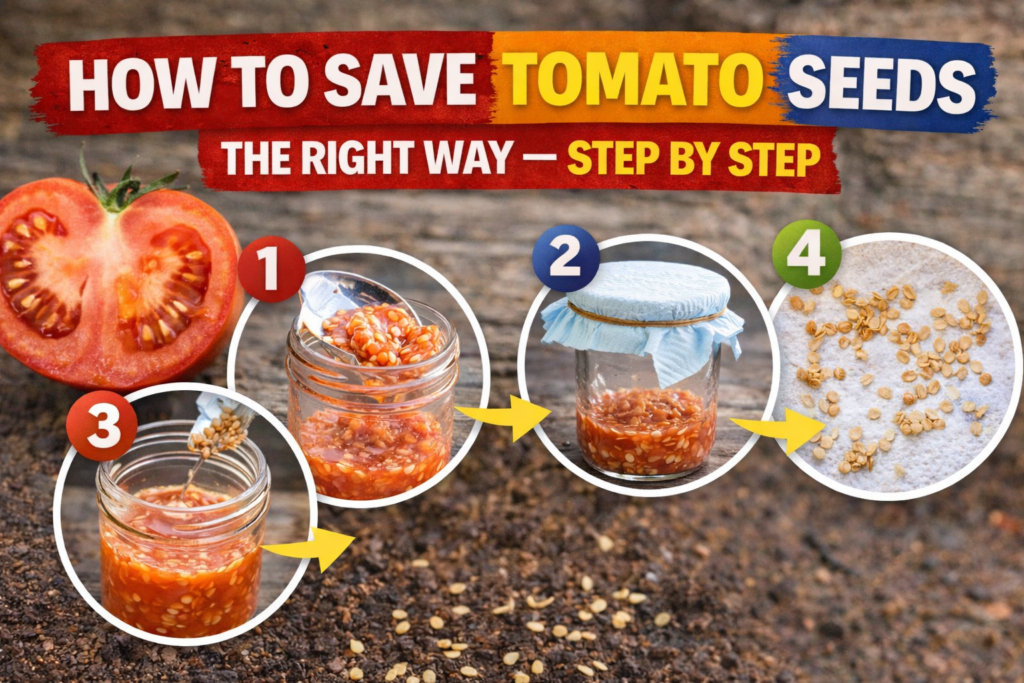
My step-by-step method for saving tomato seeds explains how I separate, ferment, dry and store them for another season.
Use Seed-Starting Mix Instead of Garden Soil
I fill containers with a lightweight seed-starting mix rather than soil dug from the garden.
Garden soil is often too heavy for tiny containers. It may compact, drain unevenly and carry weed seeds or organisms that contribute to seedling disease.
A proper seed-starting mix holds moisture while leaving enough air around developing roots. The same balance of moisture and air also makes seed starting mix for rooting cuttings a useful propagation medium.
I lightly moisten the mix before filling the cells. Pre-moistening prevents dry material from floating or shifting after the seeds are planted.
The mix should feel damp like a wrung-out sponge. It should not release a stream of water when squeezed.
What Containers Work Best?
Seed-starting trays with individual cells make the process organized and help keep roots separated.
Small cups, recycled nursery containers and other clean containers can also work if they have drainage holes.
I do not start seeds in a container with no drainage. Excess water needs somewhere to go.
How Deep Should a Seed-Starting Container Be?
A small cell is sufficient for germination, but the seedling will eventually need more root space.
I normally start seeds in cells or small pots and move the seedlings into larger containers after they develop true leaves and begin filling the original space.
Starting in an enormous pot is not necessary. Large volumes of wet mix can stay soggy around a tiny root system.
Should Used Containers Be Cleaned?
I wash away old potting material and clean reusable containers before planting.
This is especially important if the previous seedlings suffered from damping off, root rot or another unexplained problem.
A dirty tray is not a badge of gardening experience. Sometimes it is just a head start for disease.
How to Plant Tomato Seeds Step by Step
Moisten the Seed-Starting Mix
I add water before filling the cells. The mix should be evenly damp without becoming muddy.
Fill the Containers
I fill each cell almost to the top and gently settle the mix. I do not pack it into a hard block.
Plant the Seeds
I place one or two tomato seeds in each cell.
When the seed is fresh and I have only a limited number, I may plant one per cell. When the seed is older or germination is uncertain, I use two.
Cover the Seeds Lightly
I cover tomato seeds with approximately one-quarter inch of seed-starting mix.
Planting too deeply makes the seedling use more stored energy before reaching the light.
Label the Tray
I label each variety immediately. Waiting until later is how every tray mysteriously becomes “probably a Roma.”
Add Water Carefully
If the mix was properly pre-moistened, it may need only a light watering after planting.
I avoid pouring a forceful stream onto the cells because it can uncover seeds or move them into one corner.
Cover the Tray
A clear humidity dome or loose plastic covering helps keep the mix from drying during germination.
I do not seal the tray into a dripping swamp. The covering retains moisture, but the mix still needs air and reasonable drainage.
Do Tomato Seeds Need Light to Germinate?
Tomato seeds mainly need moisture and suitable warmth to germinate. They do not require strong light before they sprout.
That changes immediately after emergence.

As soon as I see seedlings breaking through the surface, I move them under strong overhead light. Leaving newly emerged plants in a dim room for even a few days can produce long, weak stems. The same light principles continue outdoors, where how much sun tomato plants actually need helps prevent weak growth and supports fruit production.
I also remove the humidity cover after germination. Constantly enclosing emerged seedlings can trap excessive moisture and reduce air movement.
The Best Temperature for Tomato Seed Germination
Tomato seeds germinate most reliably in warm seed-starting mix.
A soil temperature around 75°F to 85°F can promote fast, even germination. The temperature can be lowered after the seedlings emerge.
A cold room may feel comfortable to me while the wet mix inside a seed tray remains several degrees colder. This slows germination and keeps seeds sitting in damp conditions longer.
Do I Need a Heat Mat?
A seedling heat mat is useful when the growing area is cool, especially in a basement, garage or drafty room.
The mat warms the root zone instead of trying to heat the entire room.
My experience with using seedling heat mats for slow tomato germination explains where they help and why I pay closer attention to moisture while one is running.
Heat mats can dry small cells faster than expected. I check the mix at least daily without assuming the humidity dome will keep everything wet.
When Should I Turn Off the Heat Mat?
I usually remove or reduce bottom heat after most seedlings have emerged.
Seedlings need bright light more than high heat. Warm conditions combined with weak light encourage rapid, stretched growth.
How Long Do Tomato Seeds Take to Sprout?
Tomato seeds commonly sprout in about five to ten days under good conditions.
Some emerge sooner. Older seed, cool mix or uneven moisture may extend the process.
If nothing has appeared after approximately two weeks, I check for likely problems:
- The seed-starting mix was too cold.
- The mix dried out during germination.
- The mix stayed saturated.
- Seeds were planted too deeply.
- The seed was old or poorly stored.
- The containers were exposed to damaging temperatures.
- A fungus or other disease affected the seeds.
I do not dig up every cell after four days to see what is happening. Disturbing germinating seeds can damage delicate new roots.

How Much Light Do Tomato Seedlings Need?
Tomato seedlings need intense overhead light for approximately 14 to 16 hours each day.
I use a timer so the schedule remains consistent. I also give the seedlings a dark period each night.
A bright window may look sunny, but spring sunlight through glass is often weaker and less consistent than it appears. Light coming from one side also makes seedlings lean toward the window.
A grow light directly above the tray produces more even growth.
How Close Should the Grow Light Be?
The correct distance depends on the type and strength of the fixture.
Some basic fluorescent or low-output LED setups work best just a few inches above the leaves. More powerful lights need greater distance to avoid bleaching or burning foliage.
I follow the fixture manufacturer’s recommendation and watch how the plants respond.
If seedlings stretch toward the light, it may be too weak or too far away. If leaves bleach, curl upward or develop dry patches, the light may be too intense or too close.
My guide to using an LED grow light for tomato seedlings covers why fixture height must be adjusted as the plants grow.
Raise the Light as the Seedlings Grow
I check the space between the foliage and light regularly.
Tomato seedlings can grow quickly, and the tallest plant may reach the fixture before I notice. Raising the light in small amounts keeps the coverage even without allowing excessive stretching.
How Often Should Tomato Seedlings Be Watered?
I water tomato seedlings when the surface begins drying and the container feels lighter, not according to a fixed daily schedule.
The mix should remain lightly and evenly moist during germination. After emergence, I allow the surface to begin drying slightly between waterings without letting the entire root ball become hard and dry.
Tiny cells can dry much faster than large pots.
Bottom Watering
I can add water to the tray and allow the seed-starting mix to absorb it through the drainage holes.
After the mix has taken up enough moisture, I empty water that remains in the tray. I do not leave seedlings sitting in water for hours.
Bottom watering helps keep foliage dry and avoids knocking over small plants.
Watering From Above
Top watering also works when I use a gentle stream.
I water the mix rather than repeatedly soaking the leaves. Good drainage matters either way.
Signs Seedlings Need Water
Dry seedlings may have limp leaves, a lightweight container and mix that is dry below the surface.
Signs They Are Receiving Too Much
Overwatered seedlings may grow slowly, turn yellow, develop unhealthy roots or remain surrounded by mix that never begins drying.
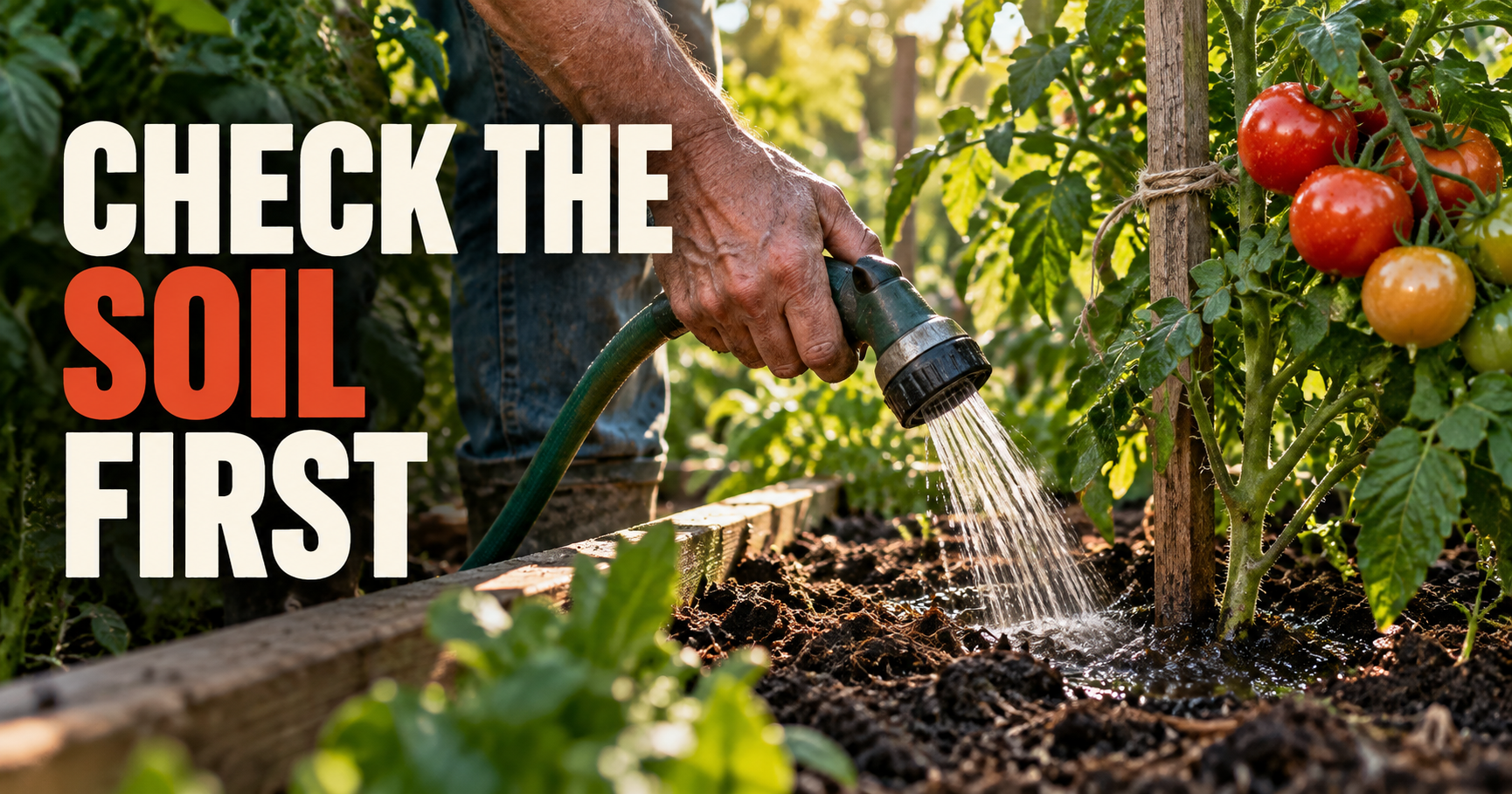
The watering requirements change after tomatoes move outdoors. My simple guide to watering tomato plants covers established plants, raised beds and containers later in the season.
What Are Tomato Seedling True Leaves?
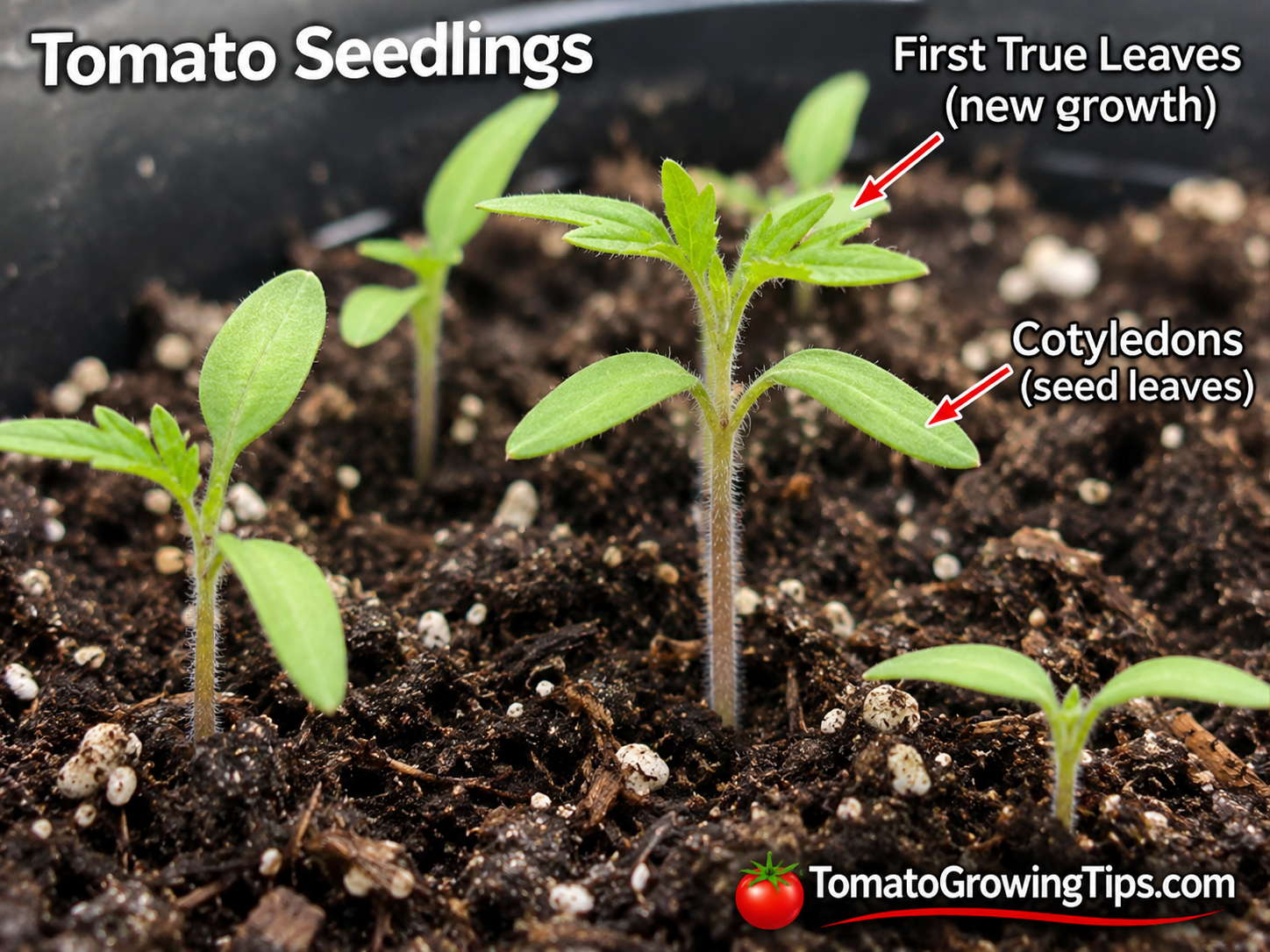
The first two leaves that open are cotyledons, commonly called seed leaves.
They provide stored energy to the young plant but do not look exactly like mature tomato foliage.
The next leaves are true leaves. They develop the familiar divided or serrated appearance associated with tomato plants.
The appearance of true leaves tells me the seedling is moving beyond its earliest stage and will soon need more root space, light and possibly light feeding.
Should I Thin Tomato Seedlings?
If two or more seedlings emerge in the same small cell, I keep the strongest one.
I cut the extras at the soil surface with clean scissors rather than pulling them. Pulling one seedling may disturb the roots of the plant I want to keep.
If the seedlings are valuable varieties and I want to save every one, I can carefully separate them after they have developed true leaves. However, separating tangled young roots always carries some risk.
When Should Tomato Seedlings Be Repotted?
I move seedlings into larger containers after they develop true leaves and begin outgrowing their original cells.
I do not wait until the plants are badly root-bound, constantly wilting or tipping over.
Signs that a seedling needs more space include:
- Roots circling inside the cell
- Roots growing heavily through drainage holes
- The mix drying unusually fast
- Growth slowing despite good light and temperature
- The plant becoming top-heavy
- Several sets of true leaves developing in a tiny cell
How Deep Should I Repot Tomato Seedlings?
Tomatoes can form roots along buried portions of their stems.
When repotting a slightly stretched seedling, I can place it deeper in the new container while keeping the leaves above the mix. This supports the stem and gives the plant an opportunity to develop additional roots.
I remove only leaves that would otherwise be buried.
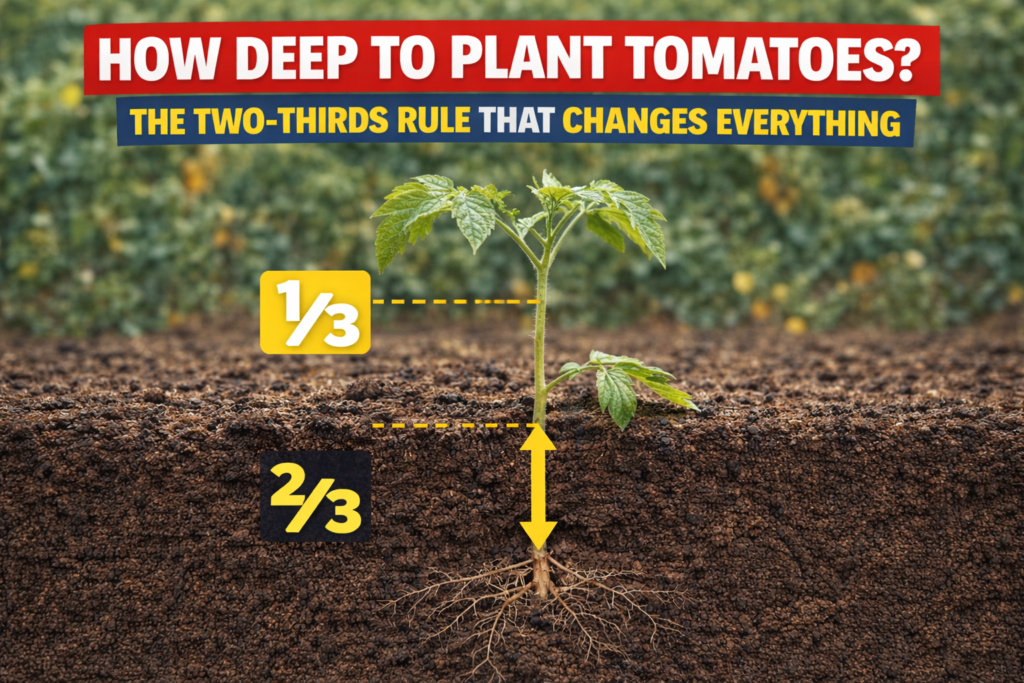
The same ability becomes useful when tomatoes enter the garden. My guide to planting tomatoes deeply using the two-thirds approach explains how I handle longer stems outdoors.
When Should I Fertilize Tomato Seedlings?
Most commercial seed-starting mixes contain little or no fertilizer.
The seed provides the energy needed for germination, so I do not fertilize before sprouts emerge.
Once seedlings have true leaves, they may benefit from a diluted liquid fertilizer, particularly if they will remain indoors for several more weeks.
I start gently. Small roots can be damaged by a strong fertilizer solution.

I follow the product label and generally begin with a reduced concentration suitable for seedlings. I watch the plants rather than assuming more fertilizer will create stronger growth. When feeding becomes necessary, tomato fertilizer for seedlings can help gardeners compare a suitable fertilizer option while following the label.
Signs of Too Much Fertilizer
Excess fertilizer may cause burned leaf edges, unusually dark foliage, weak rapid growth or white salt deposits on the mix.
When seedlings are small, restraint is safer than trying to push them into becoming giant plants.
Why Are My Tomato Seedlings Leggy?
Leggy tomato seedlings have long, thin stems and large spaces between their leaves.
Insufficient light is the most common reason.
Other contributing conditions include:
- Lights positioned too far above the seedlings
- Lights that are not strong enough
- Warm temperatures after germination
- Crowded plants competing for light
- Leaving seedlings under light for too few hours
- Starting seeds too early
I move the light closer when the fixture allows it, give the seedlings adequate daily light and reduce unnecessary heat.
I also rotate trays if one side receives stronger coverage.
Can Leggy Tomato Seedlings Be Saved?
Usually, yes.
Tomatoes tolerate deeper repotting because buried stems can develop roots. I move the seedling into a taller container and bury part of the stem.
I still correct the lighting problem. Burying the stem helps once, but it does not prevent the plant from stretching again.
A severely weak seedling may be more trouble than it is worth when I have healthy extras available.
Why Are My Tomato Seedlings Leaning?
Seedlings lean when light comes primarily from one direction.
A sunny window causes plants to bend toward the glass. I can rotate the tray, but strong overhead lighting is a better long-term solution.
Plants may also lean because their stems are stretched, the mix is loose or water was poured forcefully onto them.
A small fan can encourage sturdier stem growth, but I use a gentle setting. The leaves should move slightly, not look as if they are trapped in a thunderstorm.
Why Are My Tomato Seedlings Turning Yellow?
Yellow tomato seedlings may be receiving too much water, insufficient light, inadequate nutrients or unsuitable temperatures.
The location of the yellowing helps narrow the cause.
Yellow Seed Leaves
Cotyledons naturally yellow and drop after true leaves develop. This is usually normal when the rest of the plant looks healthy.
Yellow True Leaves
Yellow true leaves deserve more attention.
I check whether the mix stays wet, whether roots have enough room, whether the seedlings receive adequate light and whether they have gone several weeks without nutrients.
Yellow and Wilted in Wet Mix
This pattern makes me suspicious of excessive water or unhealthy roots.
I improve drainage, allow the surface to begin drying and avoid adding fertilizer until the root problem is understood.
A dedicated yellow-seedling article belongs later in this cluster because it can fully separate natural cotyledon loss from water, light, nutrient and root problems.
Why Are Tomato Seedling Leaves Curling?
Seedling leaves can curl from excessive light, heat, cold drafts, watering problems, root stress or certain pest and disease issues.
I inspect the environment before treating the seedlings with anything.
If every plant directly beneath the center of a light curls upward, the fixture may be too close or intense.
If the mix remains saturated, root stress may be responsible.
If only a few plants are affected, I inspect them for pests and signs of physical or disease damage.
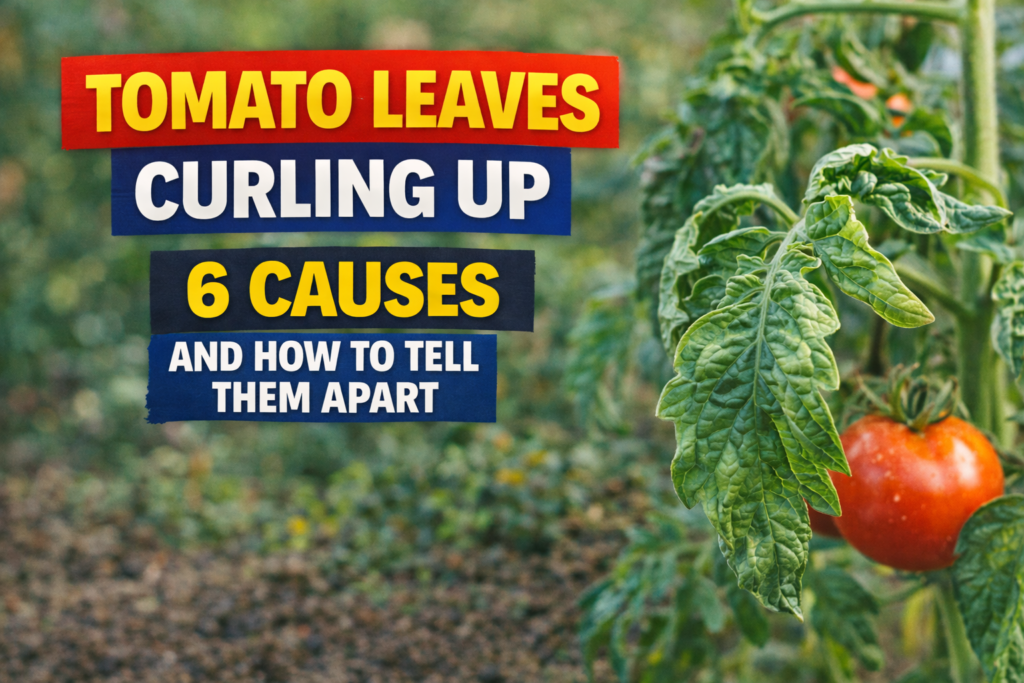
The site already has guides for mature plants with tomato leaves curling upward and downward, but seedlings deserve their own future page because indoor conditions introduce different causes.
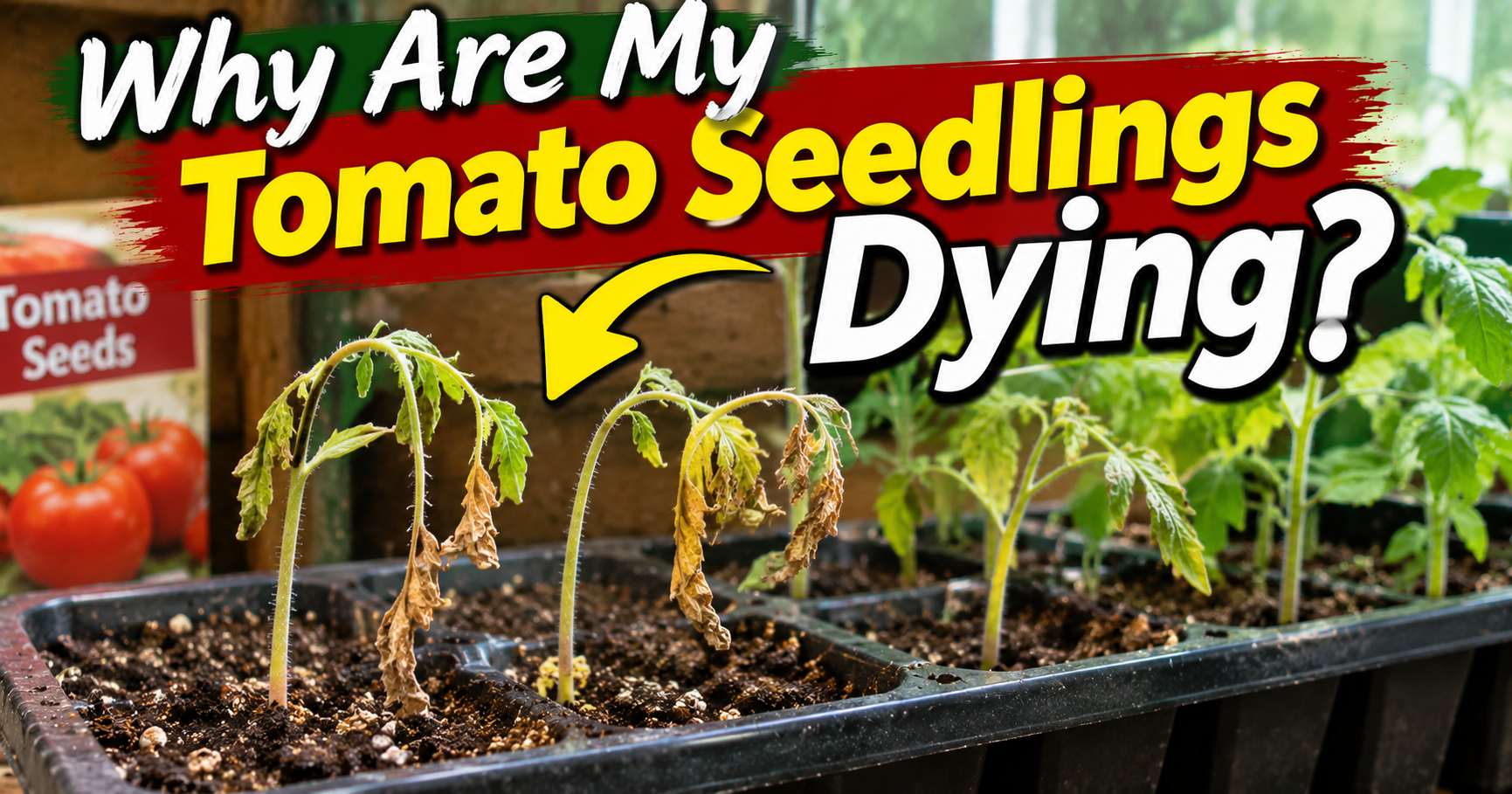
What Causes Tomato Seedlings to Die Suddenly?
A seedling that falls over near the soil line may have damping off.
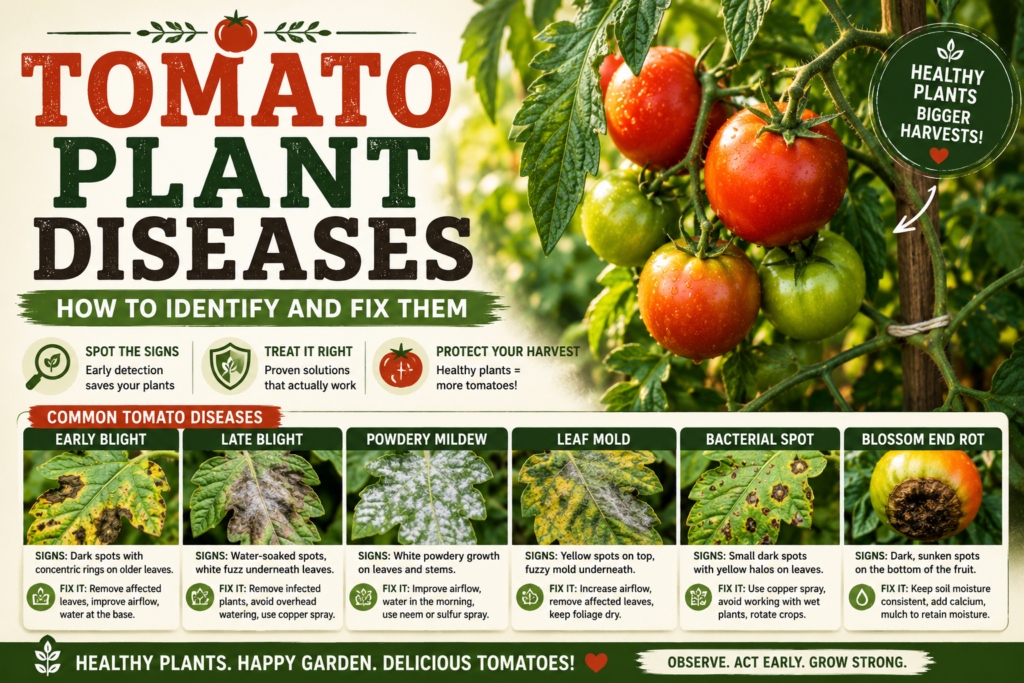
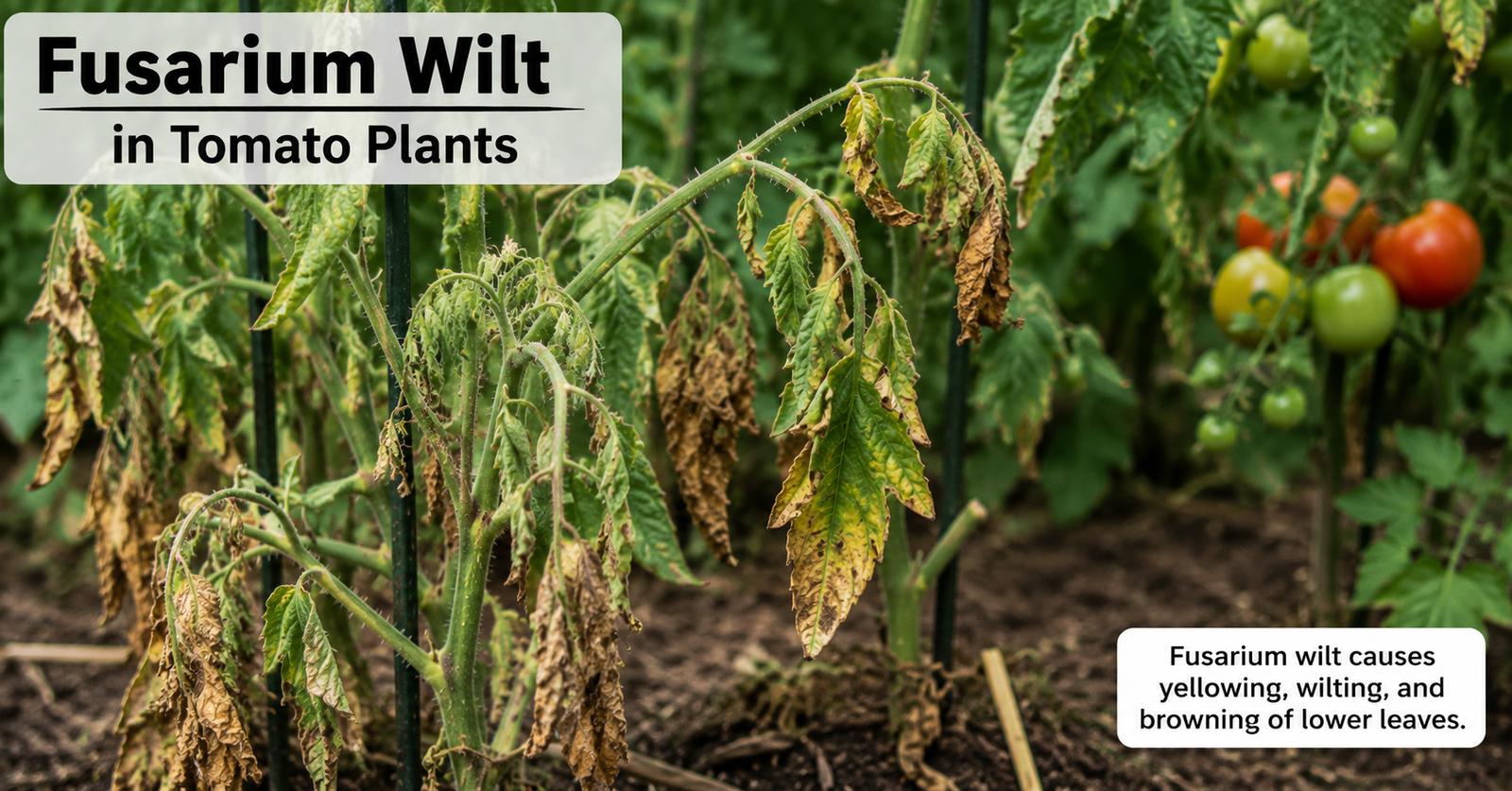
The affected stem often looks thin, pinched, dark or water-soaked where it meets the mix. Once a seedling collapses from damping off, it usually cannot be saved. Because damping off can resemble other seedling problems, tomato disease diagnosis and treatment can help distinguish disease symptoms and choose the right response.
I reduce the risk by using:
- Clean containers
- Fresh seed-starting mix
- Proper drainage
- Moderate moisture
- Air movement
- Enough space between seedlings
- A removed humidity dome after emergence
I do not try to rescue seedlings by keeping the mix constantly soaked. That creates the conditions many seedling diseases prefer.
Should I Put Tomato Seedlings Outside on Warm Days?
Eventually, but not without a gradual adjustment period.
Indoor-grown leaves are not prepared for intense outdoor sunlight, wind or rapid temperature changes. A plant can develop sunscald even on a day that feels pleasant.
I begin hardening off about one or two weeks before transplanting.
A Simple Hardening-Off Schedule
On the first day, I place seedlings in a sheltered, shaded outdoor area for a short period.
Over the following days, I gradually increase their outdoor time and introduce mild morning sun.
I continue extending the exposure until the plants can handle most of a normal day outside.
I bring them in when temperatures become too cold, storms threaten or wind is excessively strong.
Rushing this process can damage weeks of careful indoor growth in a single afternoon.
When Are Tomato Seedlings Ready to Transplant Outside?
A tomato seedling is ready when it is sturdy, healthy, hardened off and outdoor conditions are appropriate.
I look for:
- Several sets of true leaves
- A reasonably thick stem
- Healthy green growth
- Roots that hold the mix together without being badly tangled
- A plant that has completed hardening off
- Warm soil
- Nighttime temperatures that are no longer consistently cold
- No immediate frost threat
Height is less important than overall quality. A short, thick transplant is often better than a tall plant with a weak stem.
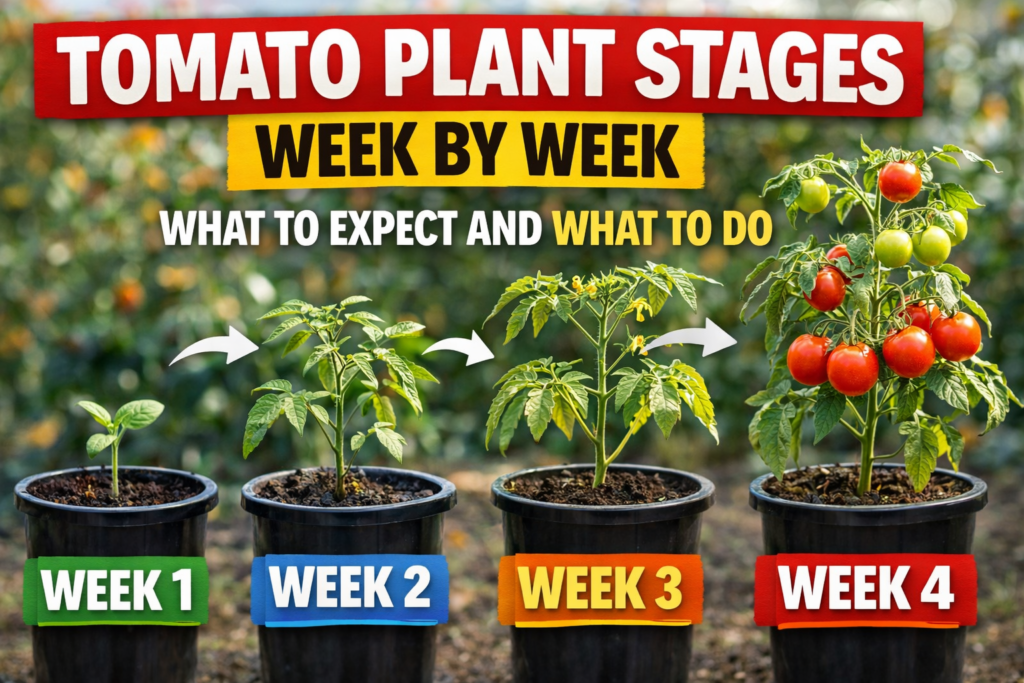
The site’s week-by-week tomato growth stage guide shows what happens after seedlings become established garden plants.
Mistakes That Weaken Tomato Seedlings
Starting Too Early
The seedlings outgrow their space before outdoor conditions are ready.
Depending on a Dark Windowsill
The plants stretch toward inadequate light and develop thin stems.
Leaving the Humidity Dome On
The enclosed tray remains overly humid after seedlings emerge.
Keeping the Heat Mat Running Too Warm
Warmth encourages rapid stem growth when light cannot keep up.
Planting Seeds Too Deeply
The seedlings use extra energy reaching the surface or fail to emerge.
Using Heavy Garden Soil
The mix compacts, drains poorly and may carry organisms that harm seedlings.
Watering Every Day Automatically
The mix remains saturated even when the plant has not used the previous water.
Allowing the Mix to Become Bone Dry
Tiny cells contain little moisture and can dry much faster than expected.
Applying Strong Fertilizer
Young roots and foliage burn easily.
Skipping Hardening Off
Indoor leaves become damaged by outdoor sun and wind.
Growing Too Many Seedlings in One Cell
The plants compete for light, water and root space.
My Indoor Tomato Seedling Routine
I begin by counting backward from a realistic outdoor planting date.
I moisten seed-starting mix, plant one or two seeds per cell and keep the tray warm until sprouts appear.
The moment seedlings emerge, they receive strong overhead light. I remove the humidity cover and begin watching moisture rather than keeping the tray constantly wet.
After true leaves develop, I thin crowded cells and repot plants that need more space. I begin gentle fertilizing only when the seedlings need it.
I keep the lights close enough to prevent stretching and run a small fan gently enough to create light movement.
One or two weeks before planting, I gradually harden the plants off.
This approach produces seedlings that are manageable, sturdy and ready to grow instead of oversized plants that have already spent weeks struggling.
How early should I start tomato seedlings?
Start approximately six to eight weeks before your expected outdoor transplanting date. Five to six weeks can also produce excellent plants when light and growing conditions are good.
What month should tomato seeds be started indoors?
The month depends on the local transplanting date. Many U.S. gardeners start during February, March or early April. Count backward from the date when frost danger has passed and the soil is warm.
How deep should tomato seeds be planted?
Approximately one-quarter inch deep is a reliable starting point. Check the seed packet for variety-specific directions.
Do tomato seeds need darkness to germinate?
They do not need strong light before emerging, but the seedlings need bright overhead light immediately after sprouting.
How many tomato seeds should I plant in each cell?
One fresh seed may be enough. I commonly plant two when germination is uncertain and later cut off the weaker seedling.
How long do tomato seeds take to germinate?
Many sprout in about five to ten days under warm, moist conditions. Cool temperatures and older seeds may make germination slower.
Should I soak tomato seeds before planting?
Soaking is generally unnecessary. Tomato seeds normally germinate well when placed directly into warm, moist seed-starting mix.
Can I start tomato seeds in regular potting soil?
Fine potting mix may work, but dedicated seed-starting mix is lighter and better suited to small seeds and delicate new roots. Heavy garden soil is a poor choice for small indoor cells.
Do tomato seedlings need a heat mat?
Not always. A heat mat is most useful when the seed-starting area is cool. Remove or reduce excess bottom heat after germination.
How many hours of light do tomato seedlings need?
Approximately 14 to 16 hours of strong light per day works well. Give them a dark period every night.
Should grow lights stay on all night?
No. Tomato seedlings need a regular dark period. A timer makes the schedule consistent.
When do tomato seedlings get true leaves?
True leaves appear after the first smooth seed leaves open. Their timing varies with temperature, light and the individual variety.
Can two tomato seedlings grow in one pot?
They can begin together, but crowding eventually causes competition. I keep one strong seedling per small cell or separate them carefully.
When should I move tomato seedlings into larger pots?
Repot after true leaves develop and the roots begin filling the original cells. Do not wait until the plants become badly root-bound.
Can I bury a leggy tomato seedling deeper?
Yes. Tomato stems can form roots along buried portions. Keep all remaining leaves above the potting mix.
Why are my tomato seedlings tall and skinny?
They usually need stronger light, a closer fixture or more daily light. Excessive warmth and crowding can make the stretching worse.
When should I begin fertilizing tomato seedlings?
Wait until true leaves develop. If the seed-starting mix contains no nutrients, begin with a diluted fertilizer suitable for seedlings.
When can tomato seedlings go outside?
They can be transplanted after hardening off, once frost danger has passed, the soil is warm and nighttime conditions are suitable for tomatoes.
Written by Mason Hale, a hands-on home gardener who shares practical seed-starting lessons, tomato problem-solving tips and straightforward growing advice through Tomato Growing Tips.