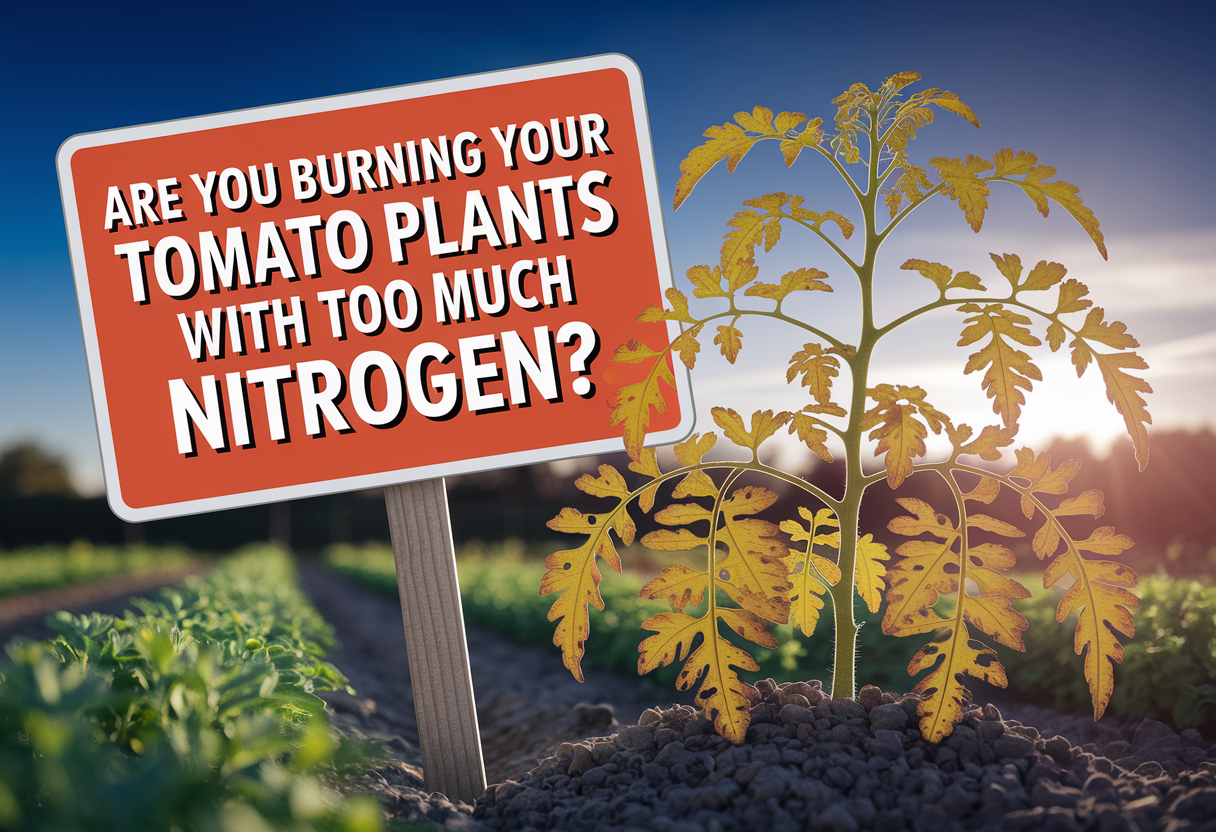
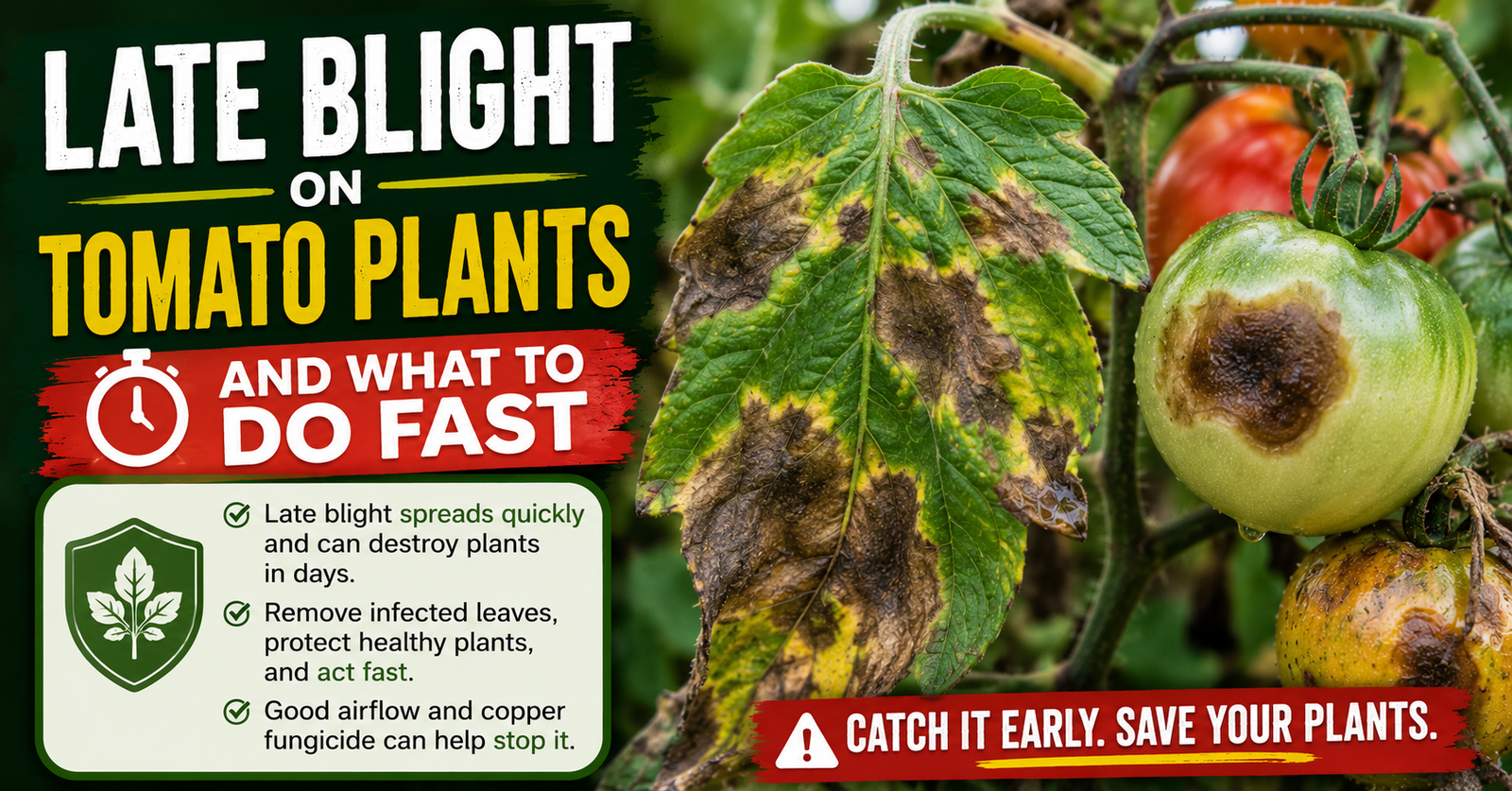
A tomato plant can go from looking healthy to covered in dark, collapsing foliage surprisingly fast when late blight arrives. That speed is one of the biggest clues that I may be dealing with something more serious than an ordinary leaf spot.
Late blight attacks tomato leaves, stems and fruit. It thrives during cool, damp weather and can spread rapidly through a garden when infected foliage stays wet.
I take suspected late blight seriously, but I do not panic over every brown tomato leaf. Early blight, Septoria leaf spot, bacterial diseases, sunscald and even cold injury can produce symptoms that initially look similar. Comparing those possibilities with bacterial disease symptoms can help clarify which pattern is affecting the plant.
The first step is knowing exactly what late blight looks like and how its behavior differs from more common tomato problems.
What Does Late Blight Look Like on Tomato Plants?
Late blight usually produces irregular, water-soaked-looking areas on tomato leaves. The lesions may start pale green or gray before changing to olive green, dark brown or nearly black.
Unlike many common leaf spot diseases, late blight lesions do not normally form neat circles. They spread across the leaf in uneven patches.
As the disease progresses, I look for several symptoms appearing together.
Dark Water-Soaked Leaf Lesions
The earliest leaf lesions may look wet or greasy even when the plant is dry. They enlarge quickly and turn brown as the tissue dies.
Entire leaves may shrivel while remaining attached to the plant.
White Growth Under the Leaves
During damp weather, white fuzzy growth may appear along the edges of lesions on the undersides of tomato leaves. This growth contains spores that help the disease spread.
It may disappear after the weather becomes dry, so not seeing white growth does not completely rule out late blight.
I inspect suspicious plants early in the morning while dew is still present. That is often when the fuzzy growth is easiest to see.
Dark Lesions on Tomato Stems
Late blight can produce brown or nearly black lesions on stems and leaf stalks. These areas may appear greasy or water-soaked before becoming dry and dark.
Stem lesions are an important warning sign. Early blight and several other diseases can affect tomato stems, but fast-moving dark lesions combined with collapsing foliage deserve immediate attention.
Olive or Brown Damage on Tomato Fruit
Infected tomatoes may develop firm, greasy-looking lesions that change from gray-green to olive brown. These areas can expand until they cover a large portion of the fruit. When fruit symptoms look less like disease and more like feeding injury, compare the visual signs of stink bug feeding.
Late blight can infect green and ripe tomatoes. Secondary organisms may eventually invade the damaged tissue and cause soft, foul-smelling rot.
The University of Maryland Extension’s late blight guide describes shiny, dark or olive-colored fruit lesions that may cover large areas of an infected tomato.
How Fast Does Late Blight Spread?
Late blight can spread much faster than early blight or Septoria leaf spot when weather conditions favor it.
A few suspicious lesions can be followed by widespread browning and plant collapse within days. The exact speed depends on moisture, temperature, airflow, plant density and how much inoculum is present.
Cool nights, mild days, frequent rain, heavy dew and extended leaf wetness create favorable conditions. Spores can move between plants through wind and splashing water.
This is why I do not wait a week to recheck a plant that strongly resembles late blight. I inspect it closely, take clear photographs and begin protecting nearby plants immediately.

Late Blight Versus Early Blight
The names make these diseases sound closely related, but they are caused by different pathogens and behave differently.
Early blight commonly begins on older leaves near the bottom of a tomato plant. Its brown lesions frequently develop visible rings that resemble a target or bull’s-eye. Yellow tissue often surrounds the spots.
Late blight lesions are generally irregular and water-soaked rather than ringed. They can appear on younger foliage near the top of the plant as well as elsewhere. The disease may spread much more rapidly during cool, wet weather.
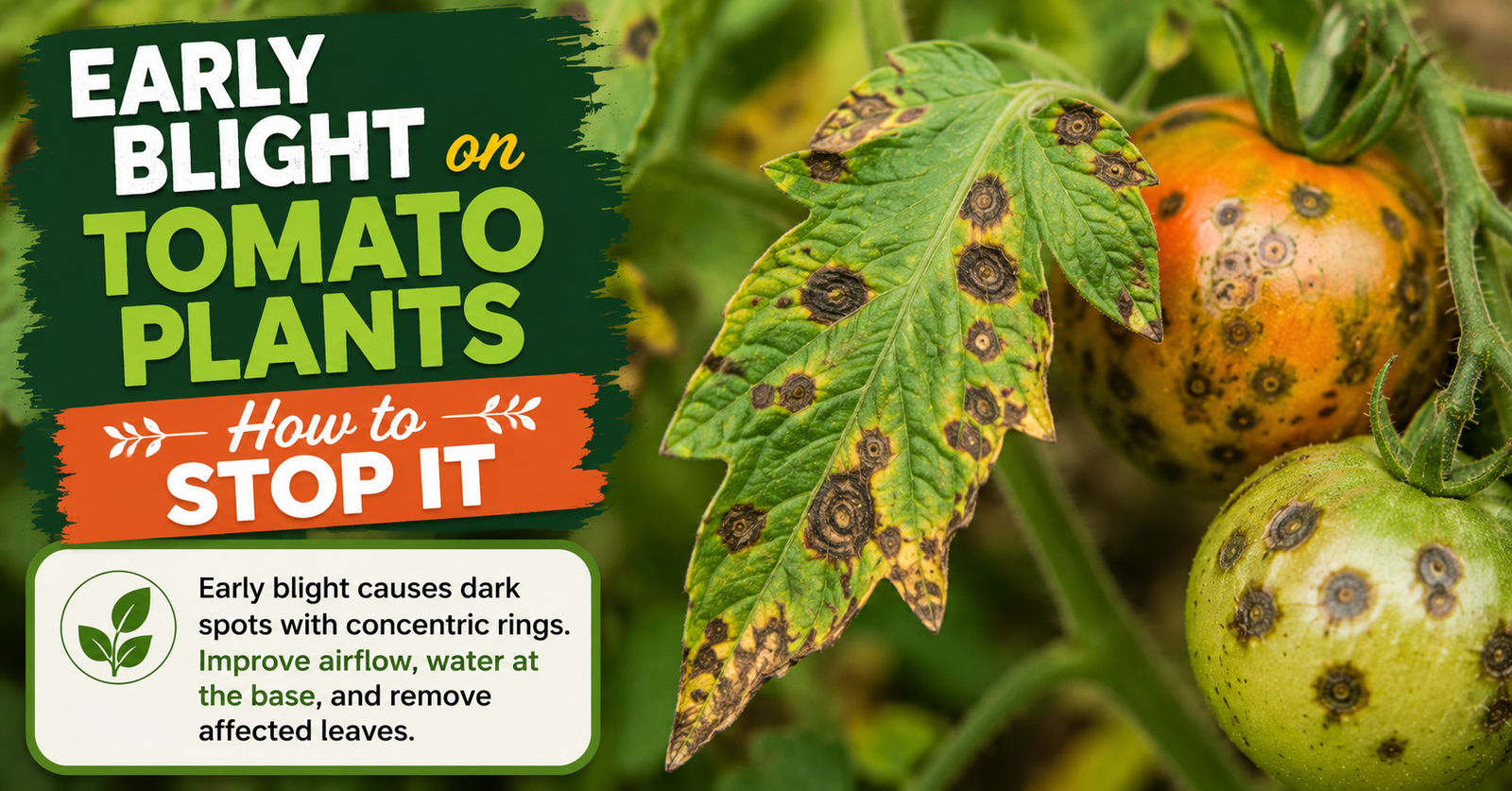
If the spots have distinct rings and the damage is progressing gradually from the bottom upward, I compare them with my complete guide to early blight symptoms before removing an otherwise productive plant.
Late Blight Versus Septoria Leaf Spot
Septoria leaf spot normally creates many small, round spots. Mature spots often have pale centers, dark borders and tiny black specks inside them.
Late blight produces larger, irregular lesions that may initially look wet. It can also create substantial stem and fruit damage, while Septoria primarily affects the foliage.
Septoria usually begins on lower leaves and moves upward over time. Late blight may appear higher in the canopy and can cause large areas of the plant to collapse quickly.
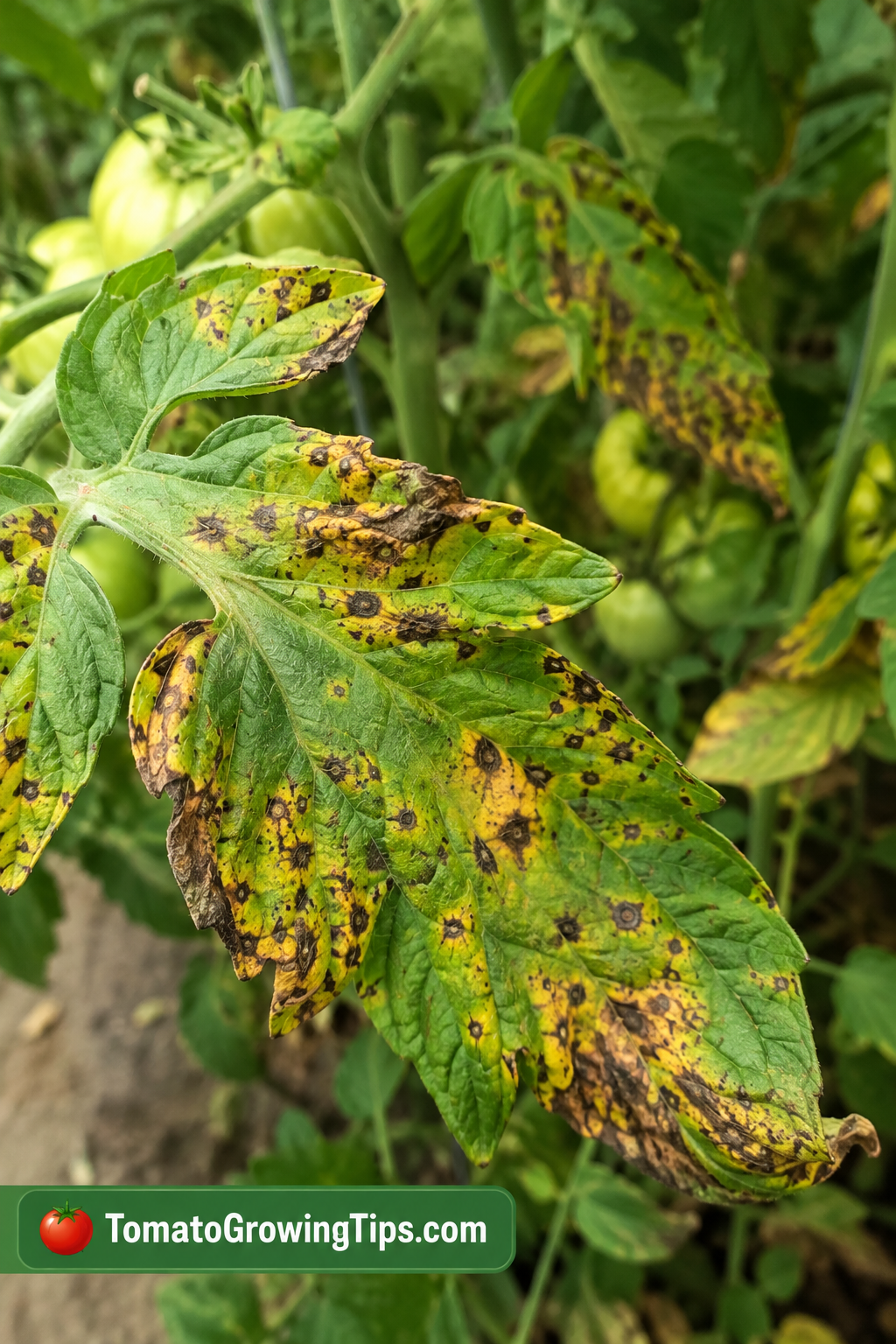
My Septoria leaf spot identification guide shows the small, pale-centered spots that separate Septoria from the broad lesions associated with late blight.
Late Blight Versus Sunscald
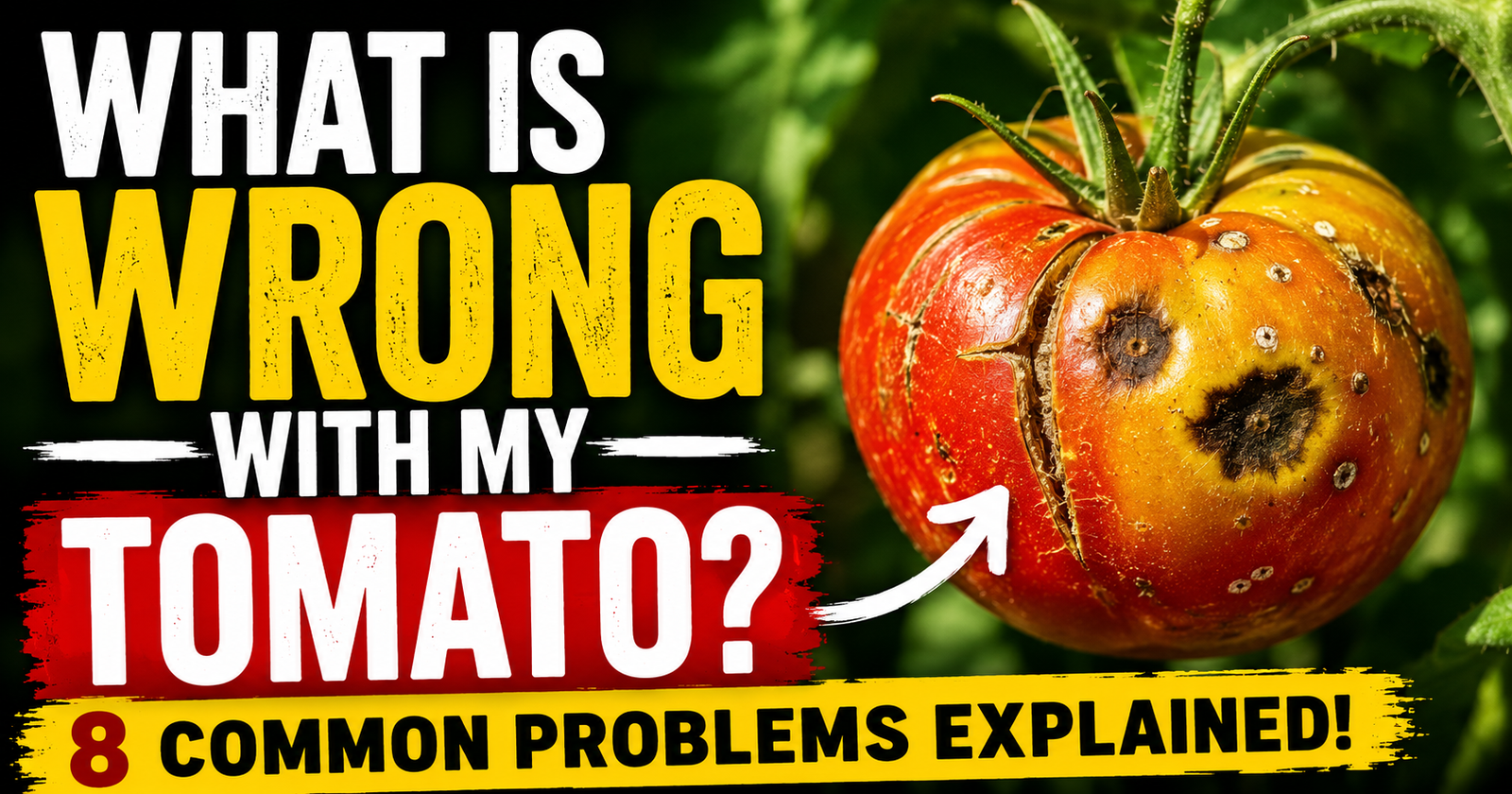
Sunscald damages tomato fruit that has been suddenly exposed to intense sunlight. The injured area usually appears pale, white, yellowish or tan and develops on the side facing the sun. For a wider comparison of pale, cracked, scarred, and sunken fruit, see pale tomato fruit damage.
Late blight fruit lesions are more likely to look greasy, olive green or brown. They are not limited to the sun-facing side of the tomato.
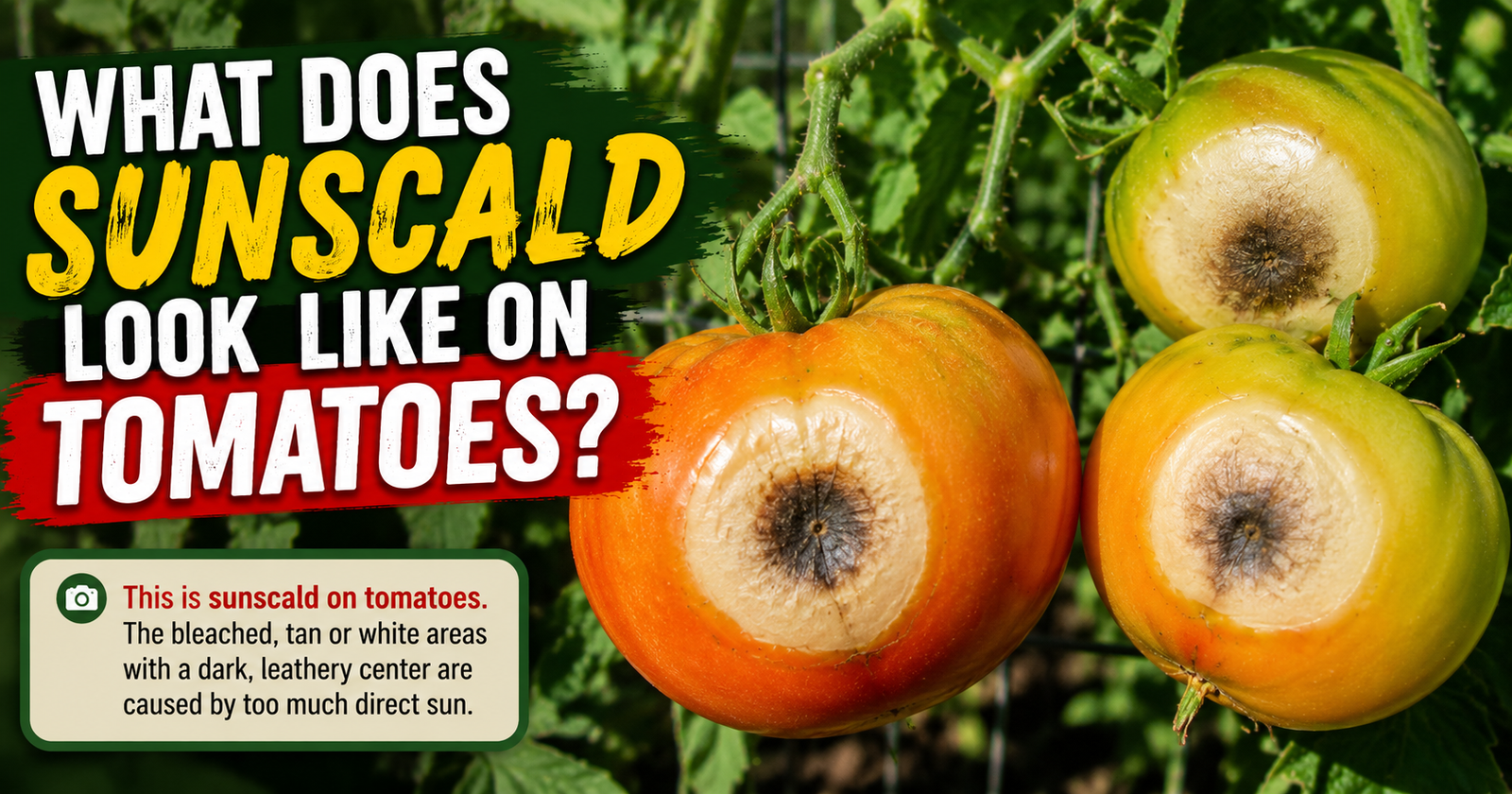
Sunscald does not cause dark water-soaked leaf lesions or blackened stems. If the plant has healthy foliage but one exposed side of the fruit is pale and leathery, I look at the signs in my tomato sunscald identification guide.
Late Blight Versus Cold Injury
Cold injury can make tomato foliage and fruit look water-soaked, dark and soft. This can be confusing when temperatures recently dropped below what tomato plants tolerate well.
The timing provides an important clue. Cold damage usually appears shortly after a significant temperature drop and may affect exposed tissue across several plants at once.
Late blight develops as an infectious disease pattern. Lesions spread and enlarge, stems become affected, and nearby tomato or potato plants may begin showing similar symptoms.
If the weather history and symptoms do not provide a clear answer, I contact a local Extension office or plant diagnostic laboratory rather than guessing.
Is Late Blight a Fungus?
Late blight is caused by Phytophthora infestans. It is frequently called a fungal disease, but the pathogen is technically a water mold, or oomycete.
For a home gardener, the most important fact is that it thrives when susceptible plants remain wet during favorable temperatures. Its spores can travel through wind and rain, allowing the disease to move beyond a single garden.
Tomatoes and potatoes are its most important garden hosts. Volunteer potato plants and infected potato tubers can help the pathogen survive and contribute to future infections.
What I Do When I Suspect Late Blight
I handle suspected late blight differently from a few ordinary leaf spots. Because the disease can spread quickly, I focus on confirmation, containment and protecting nearby plants.

I Stop Handling Other Tomato Plants
After touching a suspicious plant, I do not immediately move down the row pruning healthy tomatoes.
I wash my hands and clean any tools that contacted the plant. I also avoid working among tomatoes when their foliage is wet.
Although wind and weather are major methods of spread, there is no reason to help move contaminated plant material around the garden.
I Photograph the Symptoms
I take close photographs of the upper and lower leaf surfaces, stems, fruit and the entire plant.
Good photographs make it easier to compare symptoms and ask a local Extension office for help. I include healthy tissue next to the damaged area because that border can reveal useful details.
I also note recent temperatures, rainfall and how quickly the symptoms appeared.


I Inspect Nearby Tomatoes and Potatoes
I check every tomato and potato plant nearby, not just the one that first caught my attention.
I pay particular attention to shaded areas, dense foliage and locations where leaves remain wet after the rest of the garden dries.
A suspicious pattern across both tomato and potato plants increases my concern.
I Confirm the Diagnosis When Possible
Late blight is serious enough that I prefer professional confirmation when the symptoms are uncertain.
A county Extension office may be able to examine photographs or explain how to submit a sample to a plant diagnostic clinic. Regional late blight reports may also reveal whether the disease has been confirmed nearby.
The goal is to avoid two costly mistakes: leaving a contagious late blight infection in place or destroying a tomato plant that only has a manageable leaf spot disease.
Should I Remove a Tomato Plant With Late Blight?
When late blight is confirmed, removing the infected tomato plant is generally the safest choice for a home garden.
This disease is not managed like a light case of Septoria where I can remove a few lower leaves and watch the plant continue producing. A late blight infection can generate spores that threaten nearby gardens and farms.
I carefully remove the entire plant, including infected fruit and fallen foliage. I try not to shake or drag it through healthy plants.
The material goes directly into a heavy plastic bag. I seal the bag and dispose of it with household trash according to local rules.
I do not place a late-blight-infected plant in an ordinary backyard compost pile.
The University of Maryland Extension specifically recommends pulling infected tomato plants, sealing them in a plastic bag and keeping them out of compost.
Can I Save Part of a Plant With Late Blight?
Removing one or two leaves may seem reasonable when symptoms are limited, but confirmed late blight changes the situation.
The visible lesions may not represent the full extent of infection. Additional plant tissue may already be infected before obvious symptoms appear.
For ordinary early blight or Septoria, selective pruning can be useful. For confirmed late blight, complete removal is a safer way to reduce spores and protect surrounding plants.
If I am not certain of the diagnosis, I isolate my activity around the plant and seek confirmation before taking irreversible action.
Can Tomatoes From a Late Blight Plant Be Eaten?
I do not eat tomatoes that show late blight lesions, soft rot, mold or other deterioration.
A firm, completely symptom-free tomato from a plant suspected of late blight presents a different situation, but it requires careful inspection and prompt use. Symptoms can develop after harvest, so I do not store questionable fruit with healthy tomatoes.
I never attempt to salvage a visibly infected area by cutting around it. A late-blight-damaged tomato may have deterioration extending beyond what is obvious on the surface.
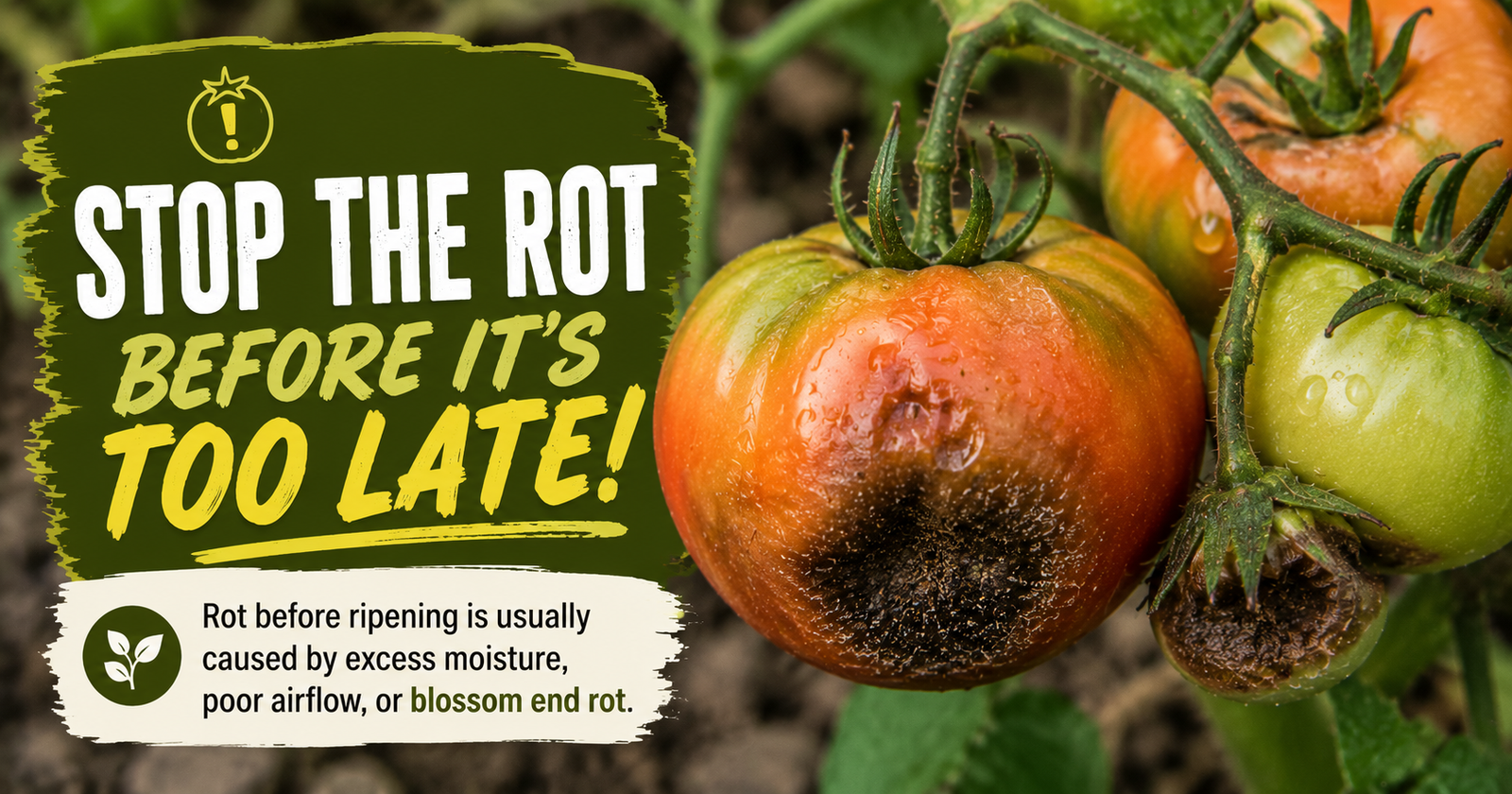
When the cause of fruit damage remains uncertain, I compare it with my tomato rot troubleshooting guide before deciding whether the fruit belongs in the kitchen.
Do Not Can Tomatoes Showing Late Blight
I do not use tomatoes showing late blight symptoms for home canning.
Disease damage may raise the pH of the tomato tissue and create conditions that interfere with safe preservation. Tomatoes used for canning should be firm and free from disease and decay.
Penn State Extension’s food-preservation guidance recommends that tomatoes showing signs of late blight not be used for canning.
This is not a situation where trimming away one damaged section makes the rest suitable for a canning recipe.
Can Copper Fungicide Cure Late Blight?
Copper fungicide cannot cure a tomato plant once late blight has become established.
Protective fungicides work best before infection or before symptoms become widespread. Once the disease is actively moving through a plant, spraying will not return dead tissue to health.
Product labels also differ. I never assume that every copper product is labeled for late blight or appropriate for every situation. For gardeners evaluating a preventative option, copper fungicide for tomato disease should still be used only when its label covers the crop and intended disease.
If late blight has been reported locally but my plants remain healthy, I may evaluate a labeled preventative product as part of a broader plan. I read the label carefully and follow its directions for timing, coverage, weather and harvest intervals.

My guide to using copper fungicide around tomatoes explains why correct timing matters more than simply spraying after damage appears.
How I Protect Healthy Plants Nearby
After removing a confirmed infected plant, I turn my attention to the remaining tomatoes.
Keep the Foliage Dry
I stop overhead watering and direct irrigation toward the soil. Drip irrigation and soaker hoses make this easier.
When hand watering, I keep the wand close to the root zone so water does not bounce soil onto the foliage.
Morning watering gives accidentally wet leaves time to dry before nighttime temperatures fall.
Create Better Airflow
Crowded tomato plants hold moisture. I secure loose vines, remove surrounding weeds and make sure foliage is not lying across the soil. For securing loose vines while improving airflow, twist ties for tomato vines can be a practical addition to this cleanup routine.
I avoid severe pruning during a suspected outbreak. Cutting away too much healthy foliage stresses the plant and creates additional wounds.
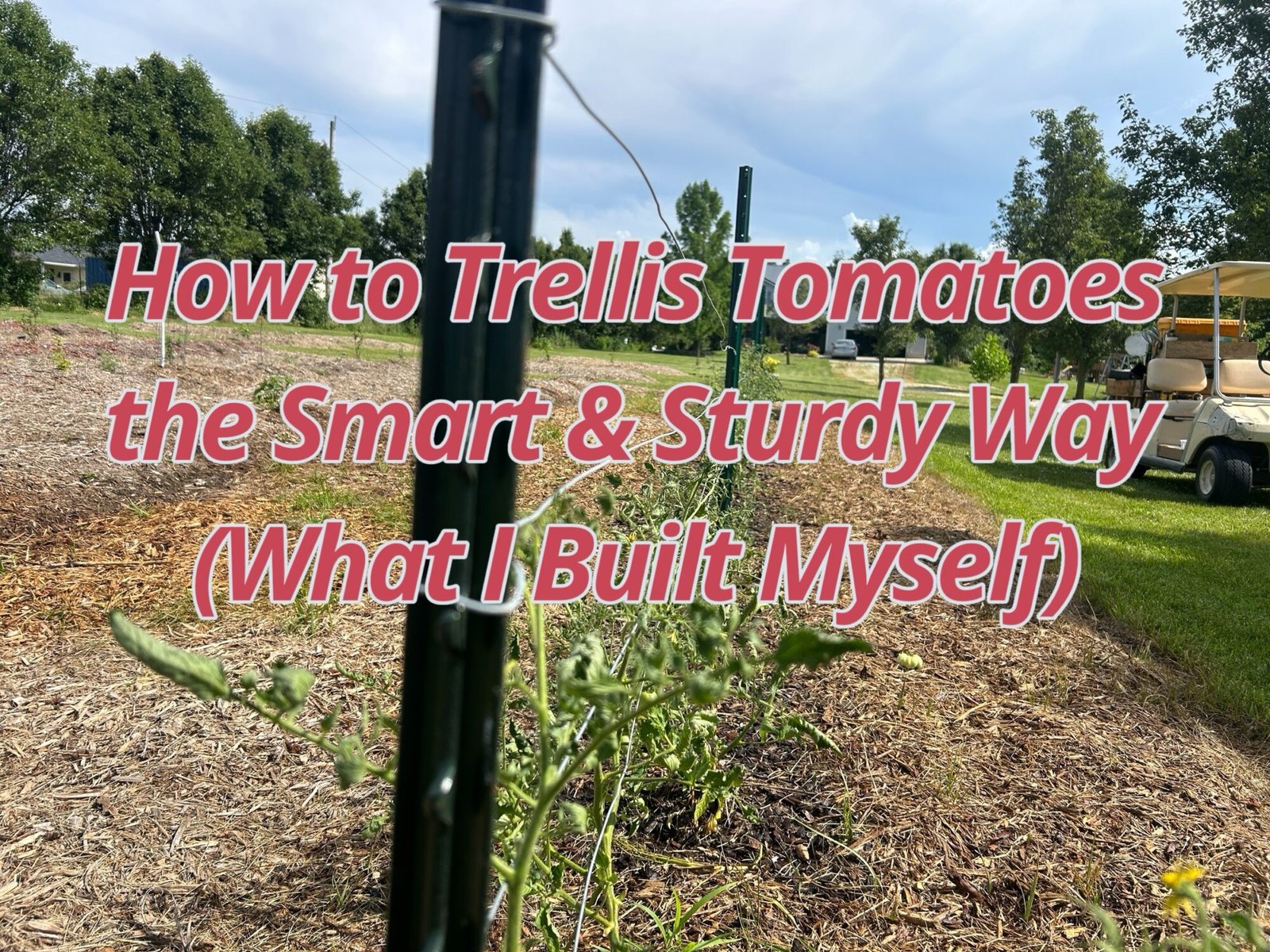
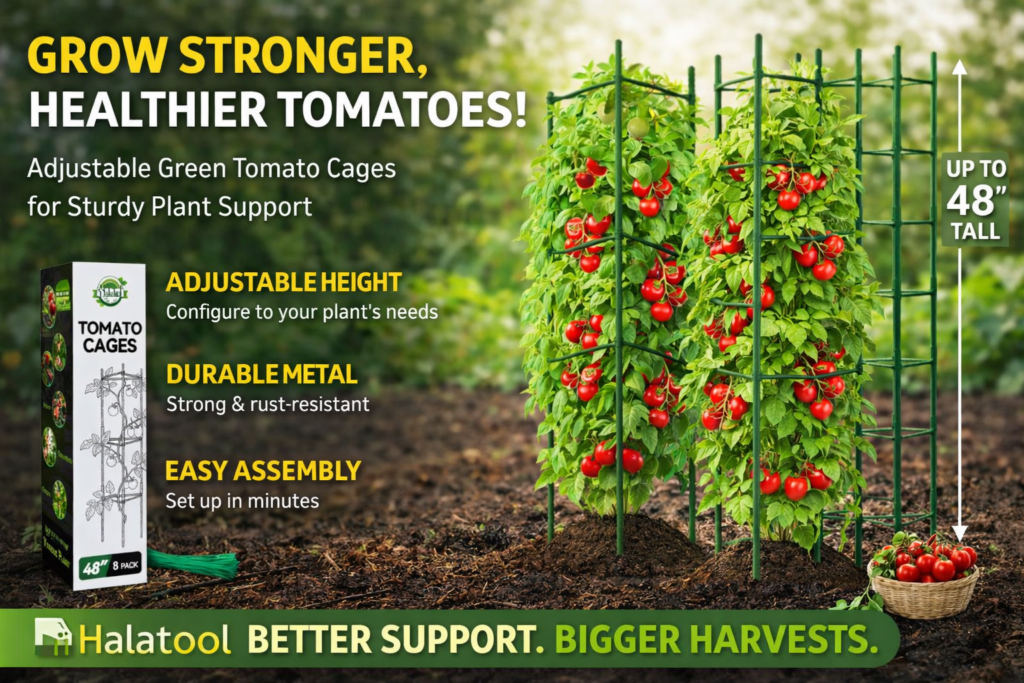
A well-supported plant dries faster and is easier to inspect. My sturdy tomato trellis method helps keep heavy vines separated and above wet ground.
Watch the Weather
Cool, wet stretches deserve extra attention. I inspect plants after rain and during periods of heavy morning dew.
I check shaded sections first because they generally remain damp longer.
Hot, dry weather may slow disease development, but I do not assume an infected plant has recovered simply because symptoms temporarily stop advancing.
Inspect Plants Daily
During a suspected outbreak, I check tomato leaves, stems and fruit every day.
I look for new irregular lesions, dark stem areas, white growth beneath leaves and olive-colored fruit damage.
Finding symptoms early gives me a better chance to remove an infected plant before it produces and spreads more spores.
Clean Tools and Supports
I clean pruners, knives and other tools after working with suspicious plants.
At the end of the season, I also clean reusable cages, stakes and trellises before storing them. Plant residue stuck to supports should not be carried directly into next year’s garden.
How Late Blight Reaches a Garden
Late blight does not necessarily begin because a gardener did something wrong.
Spores can arrive through wind from infected plants some distance away. Infected tomato transplants may also introduce the disease. Potato tubers and volunteer potato plants can provide living material that allows the pathogen to persist.
Weather determines whether an introduction becomes a major outbreak. When foliage stays wet and temperatures remain favorable, infections can develop and produce additional spores rapidly.
This is why regional disease reports matter. A confirmed outbreak nearby increases the importance of inspecting plants and protecting healthy foliage.
Can Late Blight Live in the Soil?
In many areas, the late blight pathogen does not survive independently in bare soil for long periods. It generally needs living plant tissue, such as infected potato tubers, to persist between seasons.
However, gardeners should not use that as a reason to leave infected debris in place.
Tomato and potato material should be cleaned up, volunteer plants controlled and questionable potatoes prevented from sprouting near the garden.
Crop rotation also helps reduce several other diseases that can survive longer in soil or plant debris.
How I Reduce the Risk Next Season
No single step guarantees that late blight will stay away, especially when spores can arrive from outside the garden. I still use several practices to lower the risk.
Start With Healthy Tomato Plants
I inspect transplants before purchasing them. I avoid plants with water-soaked leaf lesions, unexplained stem damage or collapsing foliage.
Buying locally grown transplants or starting my own gives me more confidence about where the plants came from.
Choose Resistant Varieties
Some tomato varieties provide useful resistance to late blight. Resistance does not always mean complete immunity, especially under severe disease pressure, but it may slow infection and reduce damage.
I check seed descriptions for specific late blight resistance rather than assuming that a variety labeled “disease resistant” covers every tomato disease.
Rotate Tomatoes and Potatoes
I avoid planting tomatoes, peppers, potatoes or eggplants in the same bed year after year when garden space allows.
The University of Minnesota Extension recommends a three-to-four-year rotation away from tomato-family crops as part of home-garden late blight management.
Rotation also reduces pressure from early blight, Septoria, Fusarium and other garden diseases.
Prevent Volunteer Potatoes
Small potatoes accidentally left in the soil can sprout the following year. If an infected tuber survives, the resulting volunteer plant may become a source of late blight.
I remove volunteer potatoes rather than letting them grow beside the new crop.
Give Plants Enough Room
Tomato seedlings look small when planted, but many become several feet wide.
I space plants according to their mature size so air can circulate through the foliage. Better spacing shortens the amount of time leaves remain wet after rain or dew.
Water at Ground Level
Keeping irrigation water off the foliage is one of the simplest disease-prevention habits I use.
It does not prevent windblown spores from arriving, but it removes one source of extended leaf moisture and reduces splashing between plants.
Clean Up the Garden
At the end of the season, I remove tomato and potato debris, fallen fruit and volunteer plants.
I do not leave questionable potatoes in a pile where they can sprout. Cull piles should be managed so infected tubers cannot become a source of new plants.
Common Late Blight Mistakes
Waiting for the Plant to Recover
A tomato plant with confirmed late blight is unlikely to outgrow the disease. Waiting can give the pathogen more time to produce spores and reach neighboring plants.
Assuming Every Brown Leaf Is Late Blight
Ordinary lower-leaf aging, early blight, Septoria and watering stress are much more common in many gardens.
I look for the complete pattern, including rapid spread, irregular water-soaked lesions, stem damage and weather conditions that favor the disease.
The small, pale-centered spots shown in my detailed Septoria leaf spot guide should not be mistaken for late blight’s broad, greasy-looking lesions.
Composting Confirmed Infected Plants
An ordinary compost pile may not destroy all infected plant material quickly enough. Bagging confirmed late blight debris is the safer choice.
Spraying After the Plant Collapses
Fungicides protect healthy tissue. They do not bring dead leaves and blackened stems back to life.
Canning Damaged Tomatoes
Tomatoes showing late blight or other decay should not be canned. Home canning requires sound, disease-free fruit and a tested recipe.
Ignoring Nearby Potato Plants
Tomatoes and potatoes are both major hosts. I inspect both crops when either one develops suspicious blight symptoms.
My Fast Late Blight Check
When I suspect late blight, I ask myself a few practical questions.
Did the Damage Appear Quickly?
Rapid decline over several cool, wet days is more concerning than a few lower leaves slowly developing spots.
Do the Lesions Look Wet or Greasy?
Irregular water-soaked lesions fit late blight better than small dry spots with pale centers or larger target-shaped lesions.
Are the Stems Affected?
Dark brown or black stem lesions increase my concern, particularly when nearby leaves are collapsing.
Is There White Growth Beneath the Leaves?
White fuzzy growth near lesion edges during damp weather is a strong warning sign.
Are the Tomatoes Developing Olive-Brown Lesions?
Firm, greasy-looking fruit lesions can be part of a late blight infection.
Are Potatoes Showing Similar Damage?
Symptoms on nearby potato plants make late blight more likely and increase the urgency of seeking confirmation.
Has Late Blight Been Reported Nearby?
A local report makes suspicious symptoms more meaningful. Extension offices and regional disease-monitoring programs can provide valuable information.
Can late blight appear overnight?
The disease does not literally infect and destroy an entire plant in one night, but symptoms can advance so quickly during cool, wet weather that the change seems almost overnight.
Does late blight start at the bottom of a tomato plant?
It can appear on different parts of the plant, including younger foliage near the top. Early blight and Septoria are more strongly associated with symptoms beginning on older lower leaves.
Can late blight spread when the weather is dry?
Dry weather can slow infection and spore production, but existing disease does not necessarily disappear. Symptoms may advance again when favorable moisture returns.
Should I remove only the infected leaves?
Selective leaf removal may be appropriate while seeking a diagnosis. Once late blight is confirmed, removing the entire plant is generally the safer choice for protecting nearby gardens.
Can late blight spread to peppers?
Tomatoes and potatoes are the primary garden hosts. Some related plants may be affected under certain conditions, which is one reason crop rotation recommendations include tomato-family crops.
Can I reuse tomato cages after late blight?
Yes, but I remove all plant debris and clean the cages before using them again. I do not store supports with infected vines still wrapped around them.
Will neem oil stop late blight?
I do not rely on neem oil to control an established late blight infection. A confirmed infected plant should be removed, and any preventative product used on healthy plants must be specifically labeled for the intended disease and crop.
Should I remove healthy green tomatoes before pulling the plant?
I avoid keeping fruit with visible lesions or signs of decay. Completely symptom-free tomatoes require careful inspection and should not be stored with healthy fruit from unaffected plants. I do not use questionable tomatoes for canning.
Late blight deserves quick attention because it can move through tomato and potato plantings much faster than ordinary leaf spot diseases. Careful identification matters just as much as speed, though. I confirm the pattern, protect nearby plants and remove confirmed infections before they become a larger source of spores.
Written by Rebecca Dawson, a lifelong home gardener who shares practical ways to recognize plant trouble, prevent common growing problems and raise healthier tomatoes through Tomato Growing Tips.