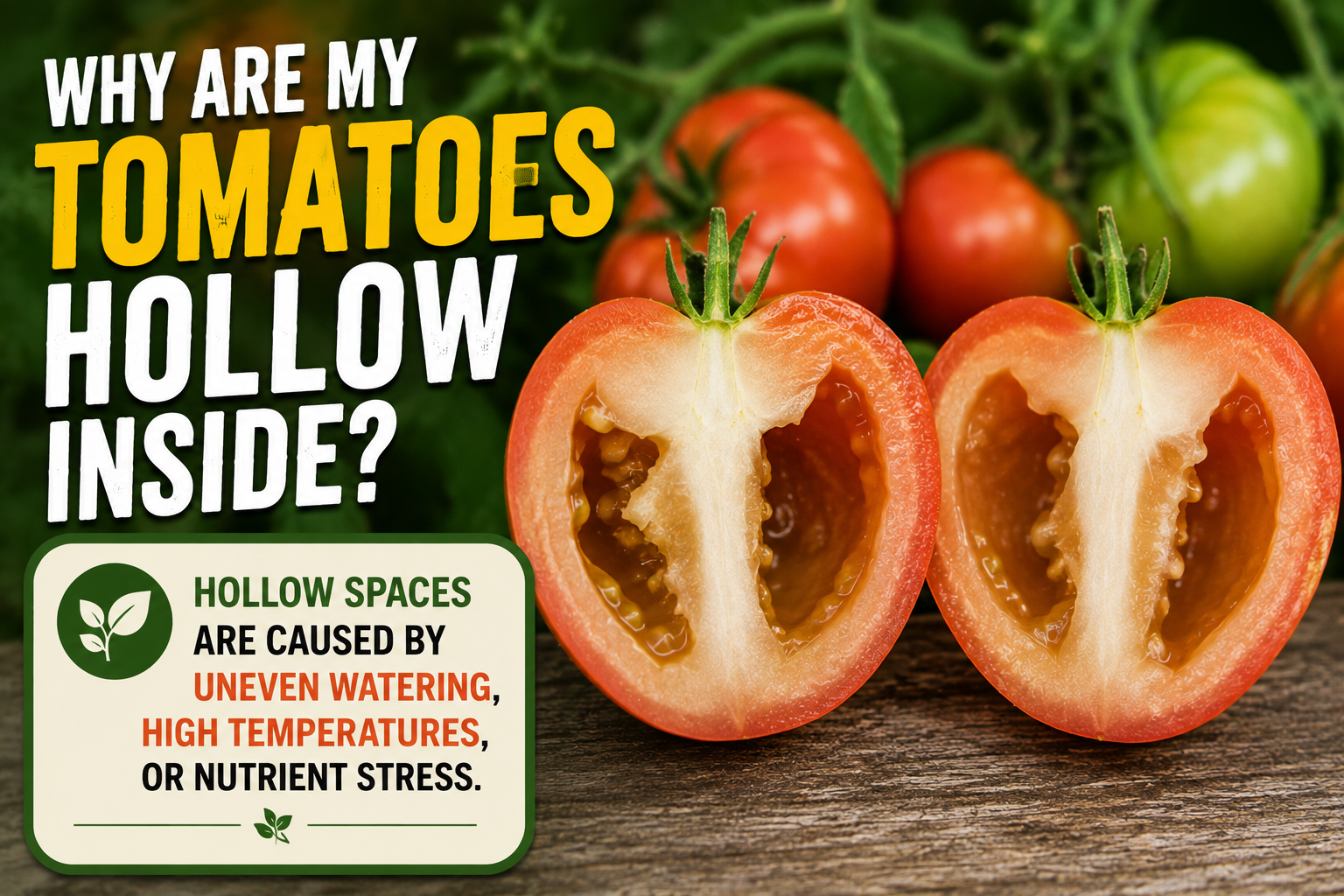
A tomato can look fairly normal from the outside and still be mostly empty when you slice it open. Instead of juicy seed cavities filled with gel, you find large air pockets, dry walls, or only a few poorly developed seeds.
This condition is commonly called tomato puffiness or puffy fruit.
Hollow tomatoes usually develop when flowers are not pollinated completely. Temperature extremes, high humidity, uneven moisture, poor nutrition, and too much nitrogen can all interfere with fruit development.
The tomato may reach a normal size, but its internal seed cavities never fill properly. It often feels unusually light for its size and may have a flat-sided or slightly angular shape.
Why Are My Tomatoes Hollow Inside?
Tomatoes are often hollow inside because of incomplete pollination and poor seed development. Without enough properly fertilized seeds, the gel and internal tissue surrounding the seed cavities may not form normally.
Common causes include:
- Cold weather during flowering
- Extreme summer heat
- High or very low humidity
- Poor flower movement
- Uneven watering
- Too much nitrogen
- Nutrient imbalance
- Root stress
- Variety genetics
- Picking immature fruit too early
The condition affects fruit quality, but it is not usually a contagious disease.
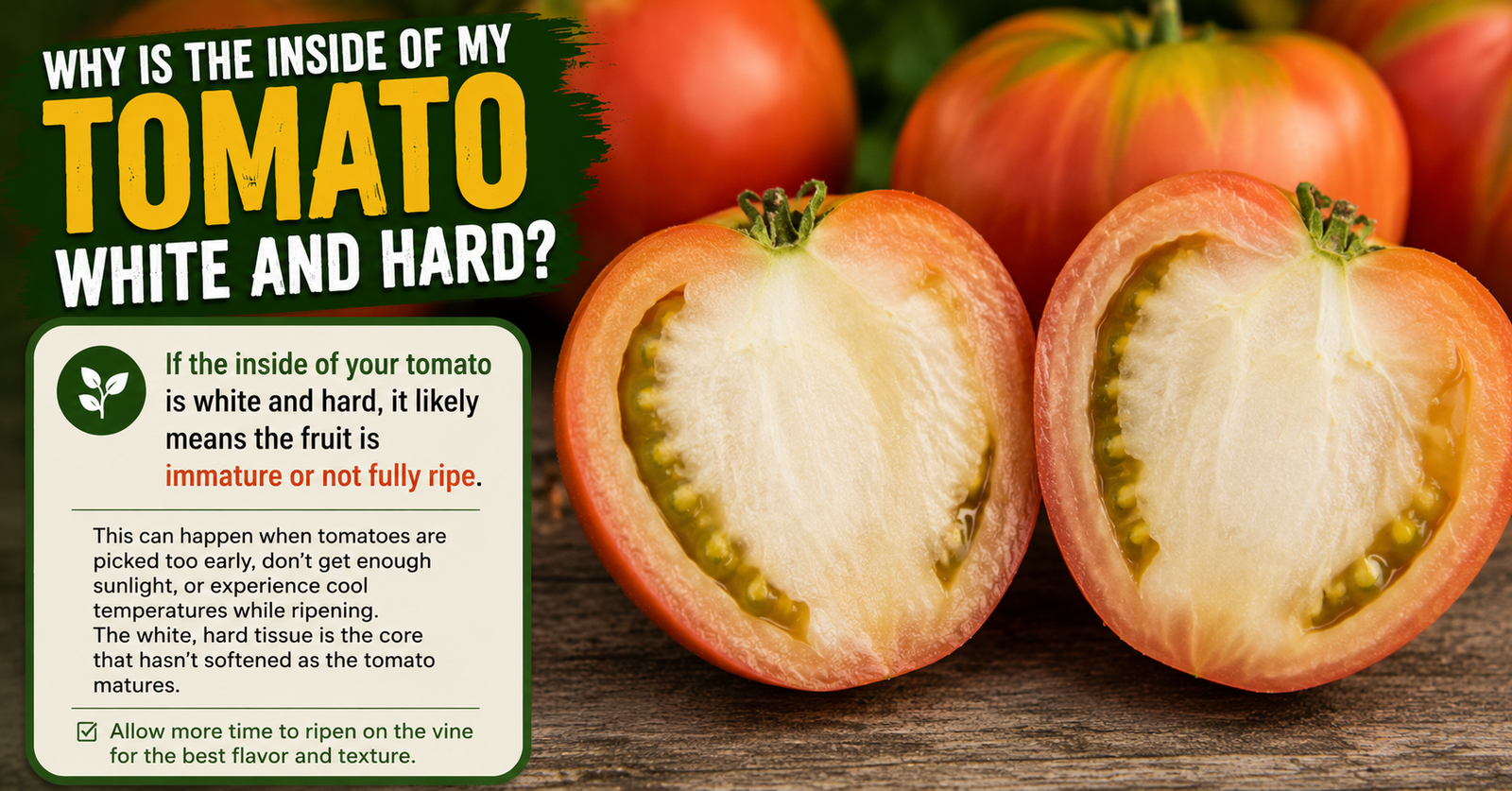
If the tomato contains firm white tissue instead of empty cavities, that is a different problem. My guide explaining why tomatoes are white and hard inside covers heat stress, yellow shoulders, potassium uptake, and stink bug damage.

What Does a Hollow Tomato Look Like?
The easiest way to identify tomato puffiness is to cut the fruit from top to bottom.
A puffy tomato may have:
- Large empty seed cavities
- Very little gel
- Only a few seeds
- Dry or underdeveloped internal tissue
- Thick outer walls surrounding empty spaces
- A lightweight feel
- Flat or angular sides
- Weak flavor
- Uneven softness
- A hollow sound when tapped
Some affected tomatoes look normal until they are cut. Others appear slightly boxy or pinched because the internal cavities did not fill evenly.
Why Seeds Matter to Tomato Development
A tomato fruit begins growing after its flower is pollinated and fertilization occurs.
Successful seeds produce plant hormones that encourage the surrounding fruit tissue to develop. When only part of the flower is fertilized, only part of the tomato receives that strong developmental signal.
The outer fruit may continue expanding, but its internal chambers remain partly empty.
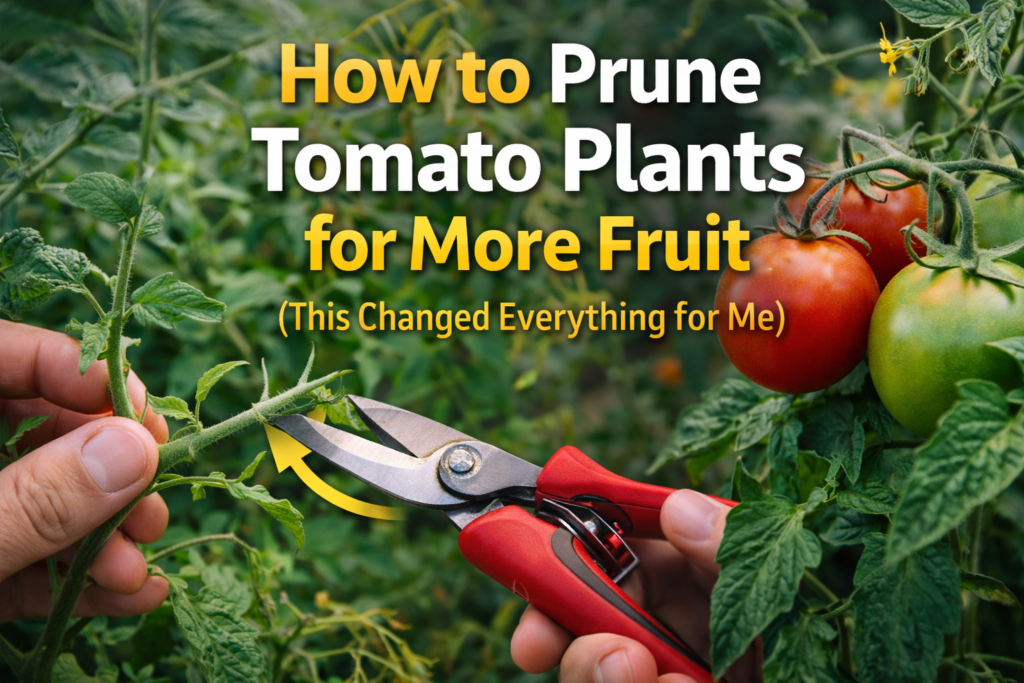
This is why hollow tomatoes often contain fewer seeds than normal. The missing gel and tissue are connected to poor seed development rather than something eating the inside. If the fruit has visible blemishes or corky tissue beneath the skin, compare it with stink bug damage inside tomatoes before assuming the problem is hollow fruit.
Poor Pollination Is the Main Cause
Tomato flowers contain both male and female reproductive structures. They can pollinate themselves, but pollen still needs to move inside the flower.
Wind, insects, and physical movement help shake pollen loose. In a protected greenhouse or extremely still location, flowers may receive too little movement.
Weather can also make pollen sticky, sterile, or difficult to release.
A flower may still produce a tomato after incomplete pollination, but the fruit can become hollow, lopsided, or puffy.
Cold Weather Can Create Puffy Tomatoes
Tomato pollen does not perform well during cold conditions.
Chilly nights can interfere with flower development, pollen release, and fertilization. The flower may remain attached and begin growing a fruit even though seed formation was incomplete.
Early-season tomatoes are often the most affected because their flowers formed during cool spring weather.
Fruit from later blossoms may be normal once nighttime temperatures become warmer.
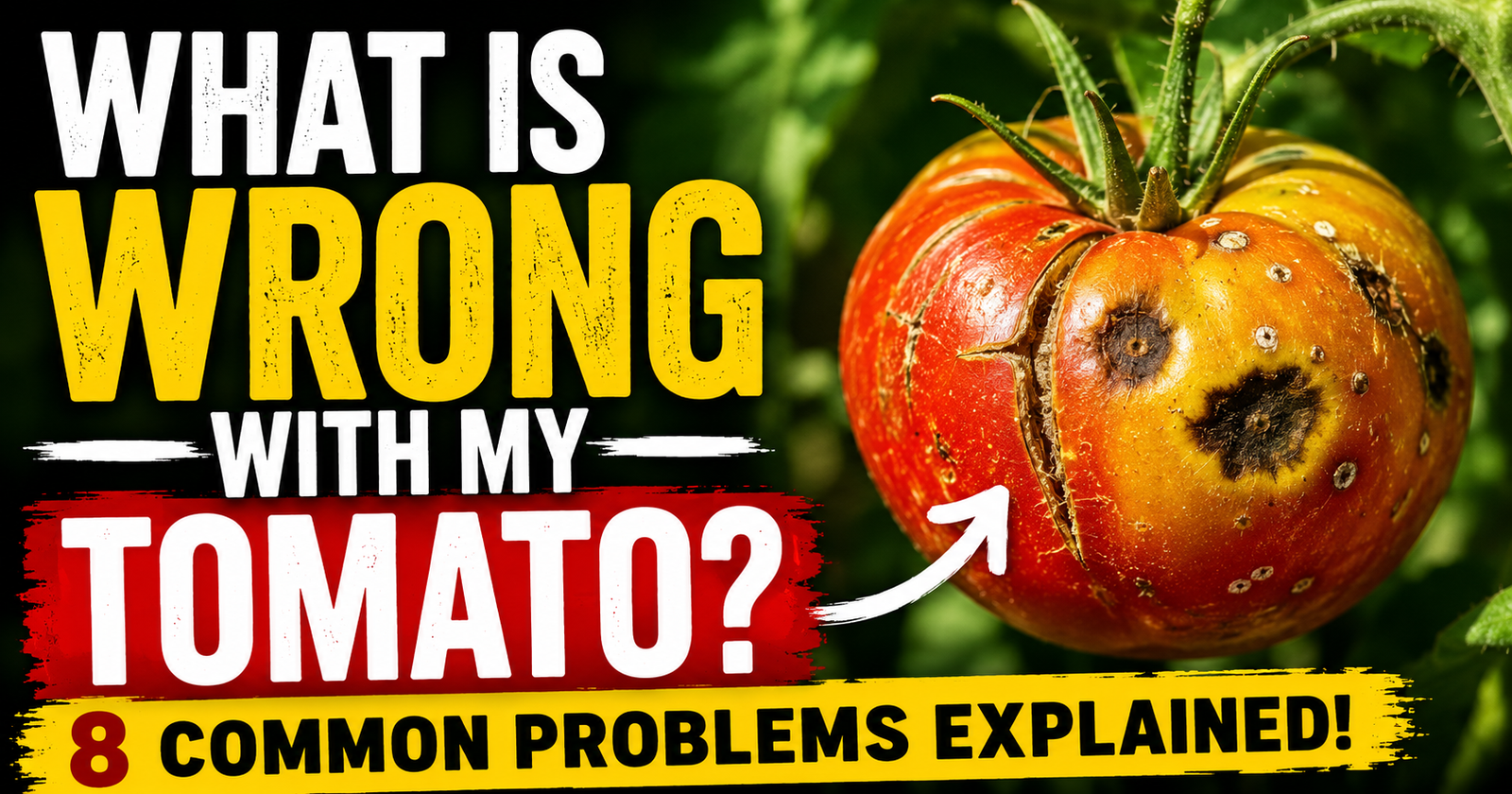
Cold weather can also produce catfacing, especially in large-fruited varieties. Catfaced fruit is visibly folded and scarred, while puffy fruit may look nearly normal outside. The focus article explains how to compare this folded, scarred appearance with other common tomato defects in catfaced fruit problems.
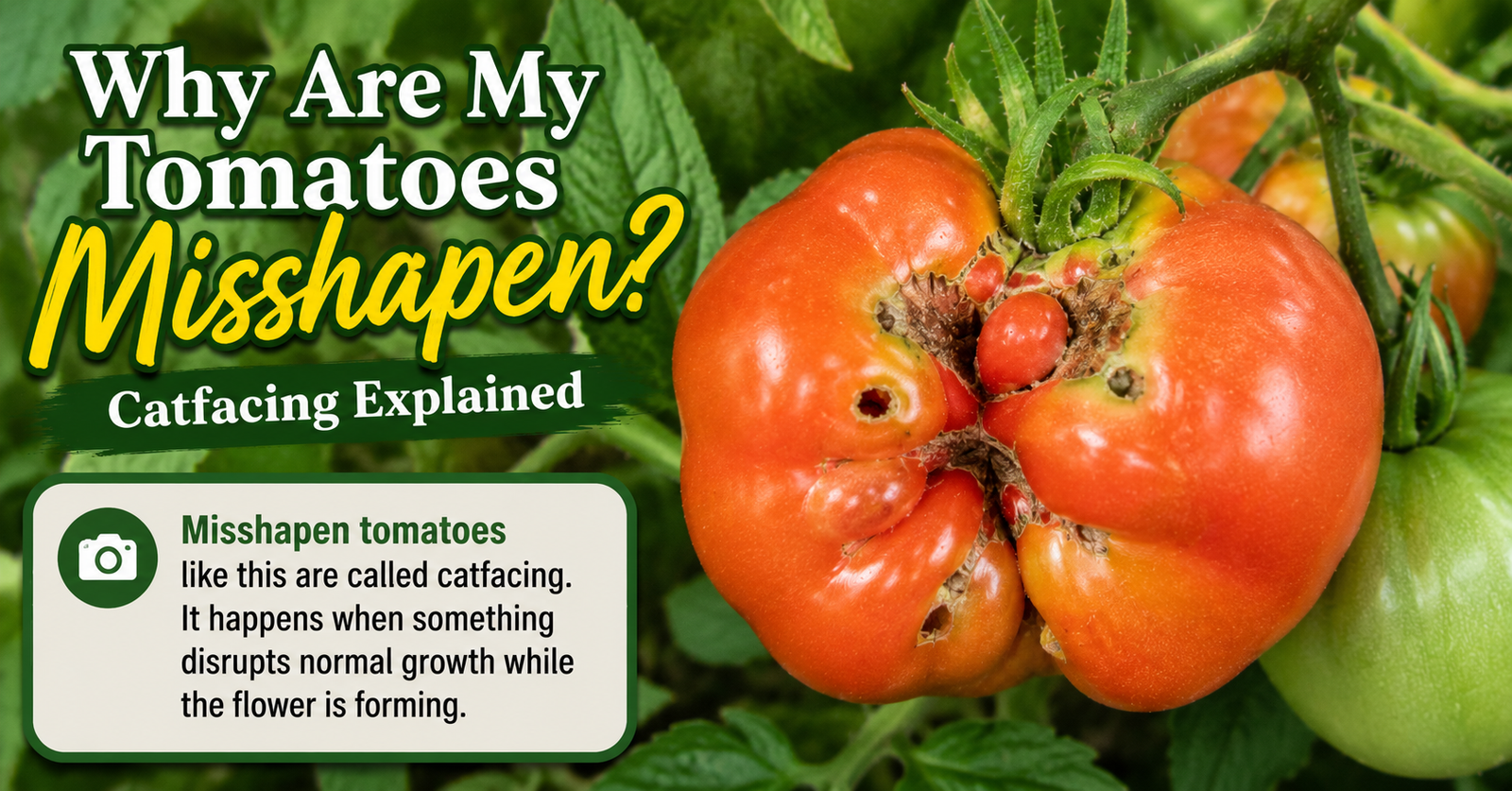
If the tomato is badly twisted or lobed, compare it with catfacing on misshapen tomatoes instead.
Extreme Heat Also Interferes With Pollination
Hot weather creates the opposite problem but can lead to the same hollow result.
When daytime temperatures remain in the 90s and nights stay very warm, tomato pollen may become less viable. Blossoms may drop completely, or they may produce poorly filled fruit.
Heat also increases water stress. A plant can appear healthy in the morning and wilt badly by afternoon.
Flowers developing during a heat wave may produce fewer seeds and less internal gel, even if the fruit continues growing.
High heat can cause uneven ripening at the same time. One tomato may be hollow, blotchy, and hard around the shoulders because several stresses occurred together.

High Humidity Can Make Tomato Pollen Sticky
Tomato pollen needs to move from the flower’s anthers to its receptive reproductive surface.
During very humid weather, pollen can become sticky and fail to release efficiently. The flower may not receive enough pollen to fertilize all of its potential seeds.
This is common in greenhouses, high tunnels, and humid summer gardens with poor airflow.
The answer is not to dry the plant out. I improve air movement around the flowers while keeping soil moisture reasonably consistent.
Very Dry Air Can Cause Problems Too
Extremely dry conditions can reduce pollen performance and cause flower parts to dry prematurely.
The plant may also become water-stressed, which affects flower retention and fruit development.
A tomato plant under severe drought may drop its blossoms rather than setting fruit. Flowers that do produce tomatoes may develop them unevenly.
Stable growing conditions are more helpful than either extreme.
How I Help Tomato Flowers Pollinate
Outdoor tomato plants usually receive enough movement from wind and insects. When flowers grow in still air, I give them a little help.
I gently tap the flower cluster or support stake during the middle of the day when flowers are dry. The goal is to vibrate the blossom, not shake the entire plant violently.
An electric toothbrush held against the flower stem can also create gentle vibration. I do not place it directly against delicate petals.
I repeat the process every day or two while several flowers are open.
This works best when temperature and humidity are suitable. Vibration cannot make heat-damaged or cold-damaged pollen fertile.
Do Tomatoes Need Bees for Pollination?
Tomatoes are self-pollinating, so they do not require pollen to move from a separate plant.
Bees still help. Bumblebees and certain other bees use buzz pollination, vibrating the flower and releasing pollen.
Honeybees do not perform buzz pollination in the same way, although their movement may still contribute around the garden.
A tomato plant can produce fruit without bees, particularly when wind moves the flowers. In a still greenhouse, manual vibration may improve fruit set.

Why Greenhouse Tomatoes Become Hollow
Greenhouses protect plants from rain and cold, but they can create several conditions that interfere with pollination:
- Limited air movement
- High humidity
- Extreme daytime heat
- Warm nighttime temperatures
- Few pollinating insects
- Rapid moisture changes
- Heavy fertilizer use
Ventilation is essential. I open vents or doors when conditions permit and use fans when appropriate to keep air moving.
Flowers may also need gentle vibration if wind and insects cannot reach them.
Can Too Much Nitrogen Cause Hollow Tomatoes?
Yes. Excess nitrogen can promote vigorous foliage at the expense of balanced flower and fruit development.
The plant may become tall, dark green, and impressive while producing fewer tomatoes. Fruit that does develop may be puffy, slow to mature, or poorly filled.
Heavy leaf growth can also trap humidity around flowers, reducing pollen movement.
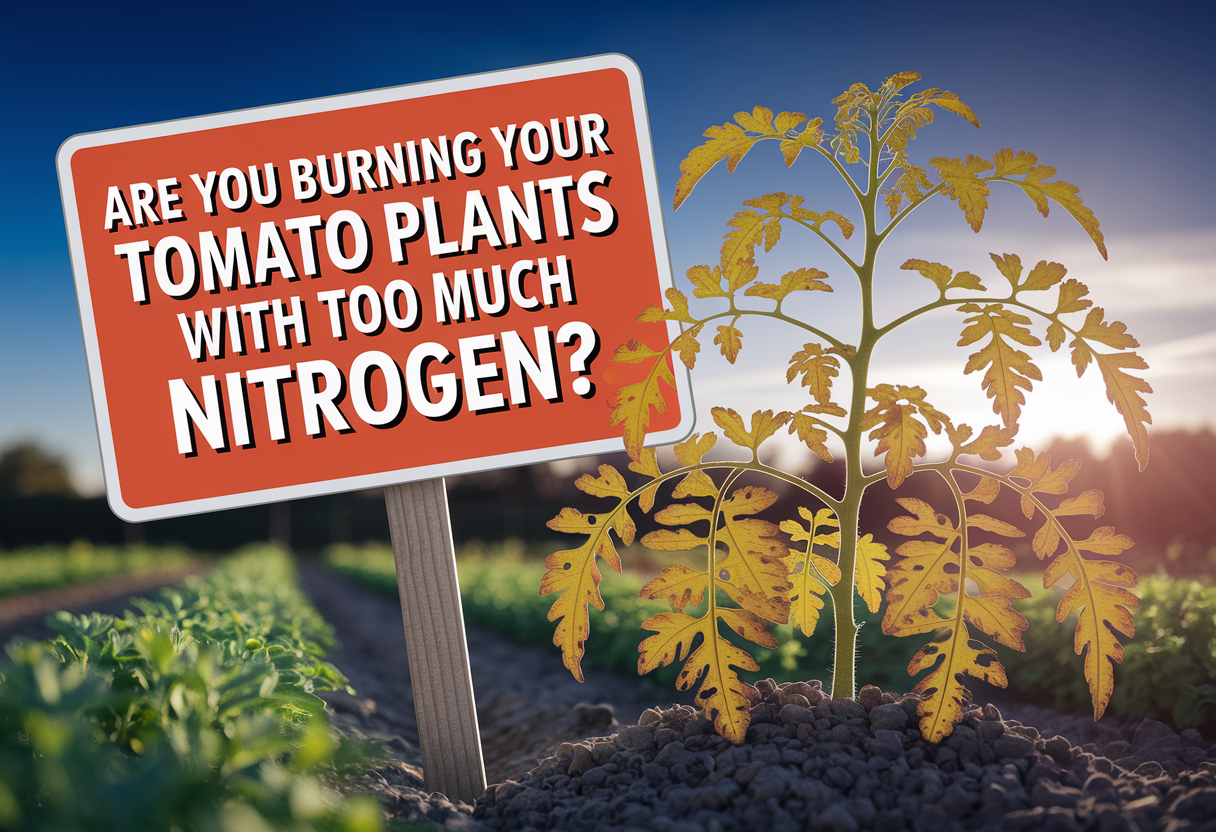
If the plant is mostly leaves with disappointing fruit, check whether too much nitrogen is affecting your tomatoes before adding another feeding.
Can Too Little Fertilizer Cause Hollow Fruit?
A severely undernourished plant may struggle to support flowers and developing fruit.
However, hollow tomatoes do not automatically mean the plant needs fertilizer. Weather and incomplete pollination are more common causes.
I look at the entire plant. Pale leaves, weak growth, poor flowering, and a soil test indicating low fertility provide better evidence than one hollow tomato. A soil pH and nitrogen test kit can help check whether fertility is contributing to the plant’s overall symptoms.
Adding random fertilizer during extreme heat can stress roots and make the situation worse.
Potassium and Puffy Tomato Fruit
Potassium supports water regulation, fruit development, and overall quality.
Low potassium availability may contribute to weak fruit development, uneven ripening, and poor internal quality. The soil can contain potassium while stressed roots remain unable to absorb it properly.
Compacted soil, waterlogging, drought, incorrect pH, and nutrient competition all affect uptake.
I test before adding a concentrated amendment. A soil pH and nutrient test helps separate an actual shortage from a root or weather problem.
Uneven Watering Can Affect Internal Development
Tomato fruit needs a steady supply of moisture while it grows.
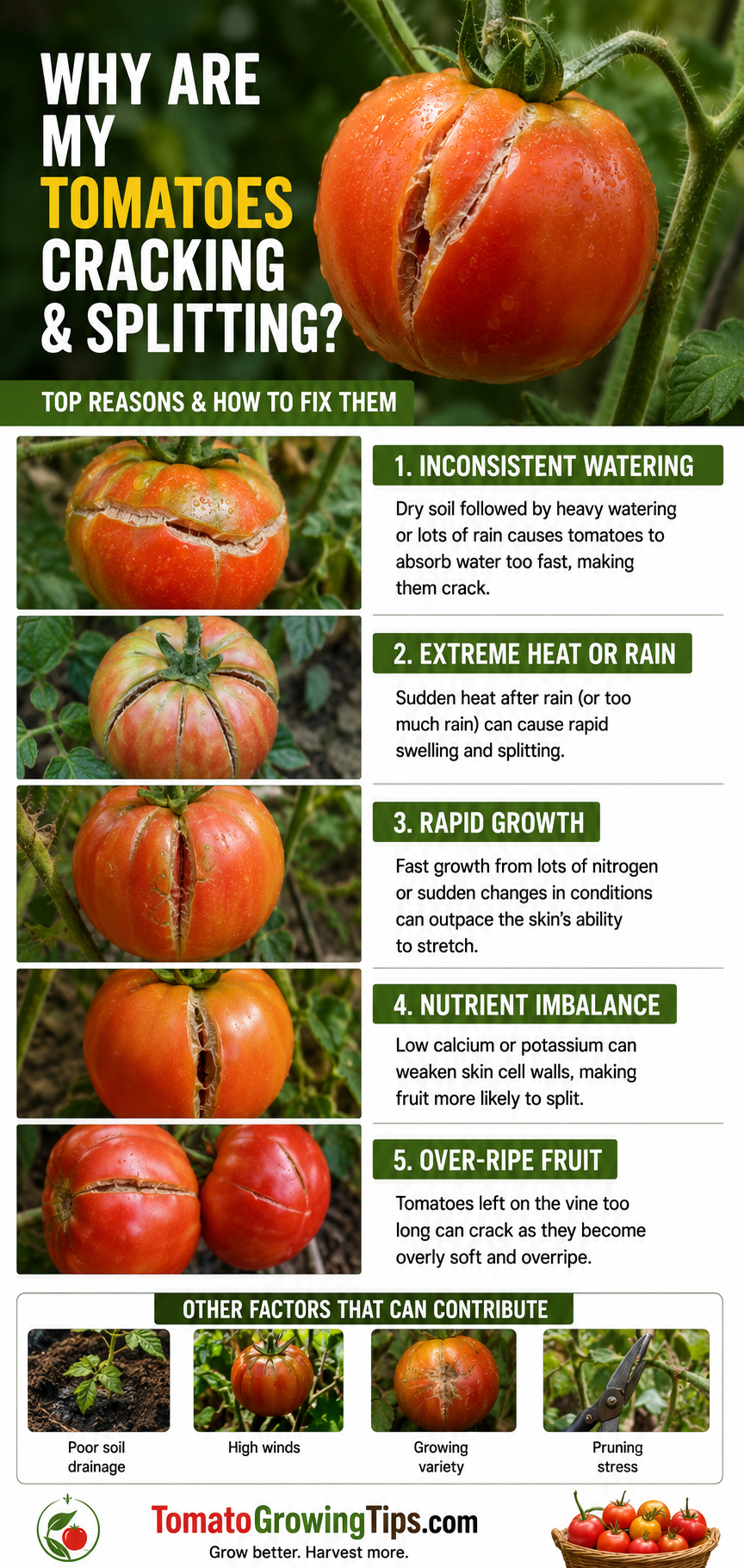
Repeated cycles of drought and heavy watering stress the roots and interfere with nutrient movement. The fruit may crack, develop blossom end rot, or grow with poor internal quality. The same drought-to-heavy-watering pattern is explained in this guide to tomato cracking from moisture swings.
Constantly saturated soil is not better. Roots need oxygen, and waterlogged ground can reduce their ability to function.
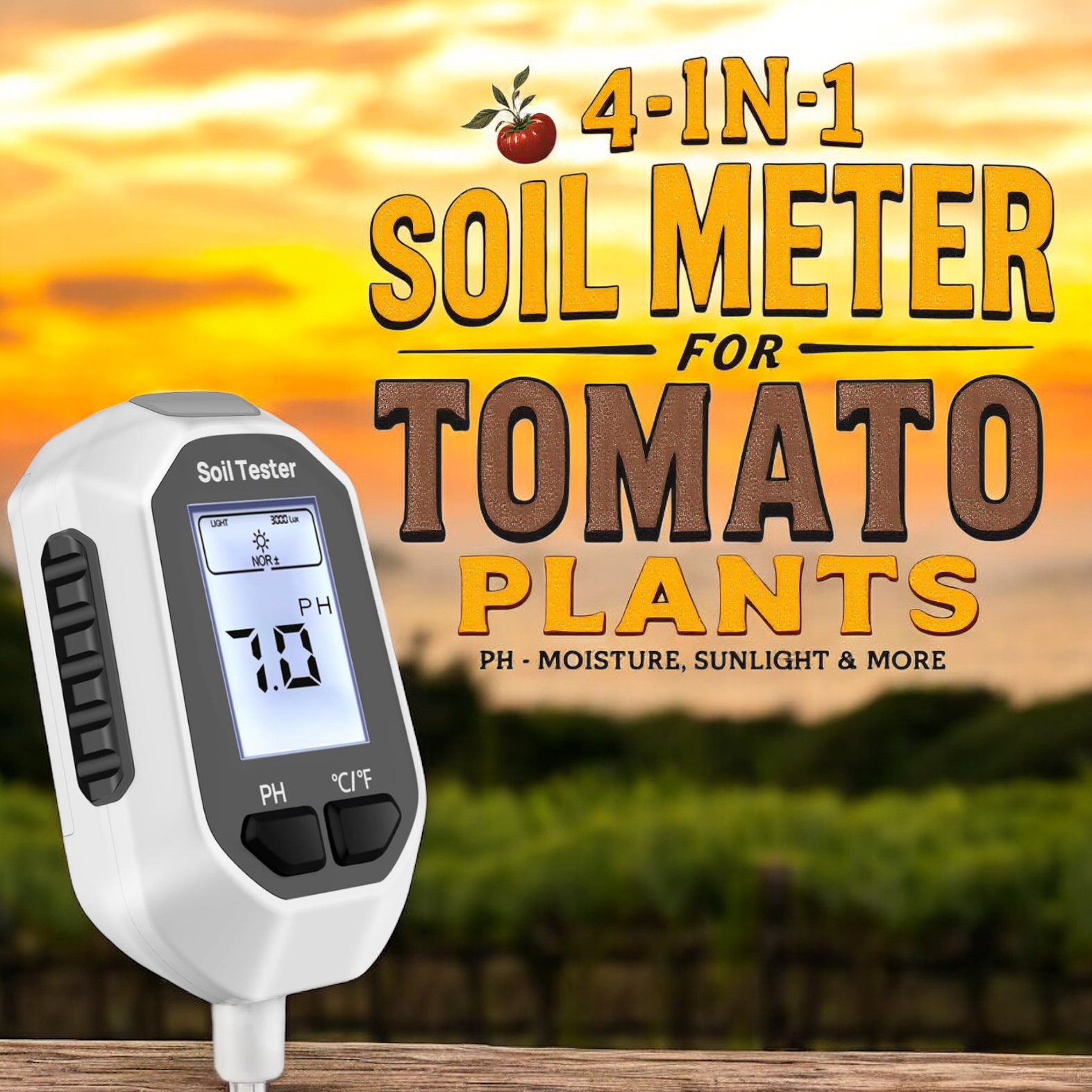
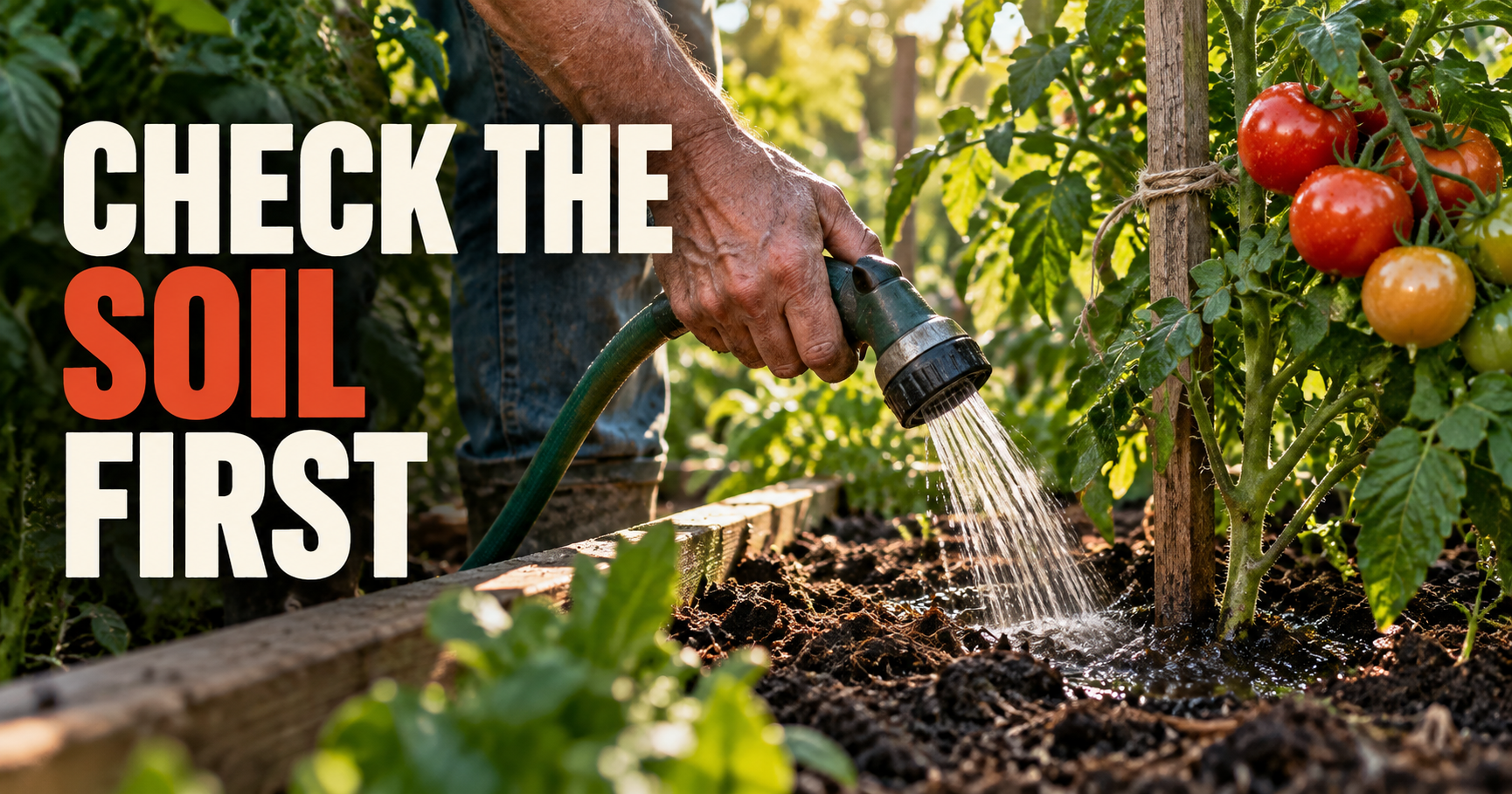
I aim for reasonably even moisture within the root zone. Mulch helps by slowing evaporation and keeping the soil from changing as quickly. A 4-in-1 soil moisture meter can provide another way to monitor moisture as conditions change around the roots.
Does Overwatering Make Tomatoes Hollow?
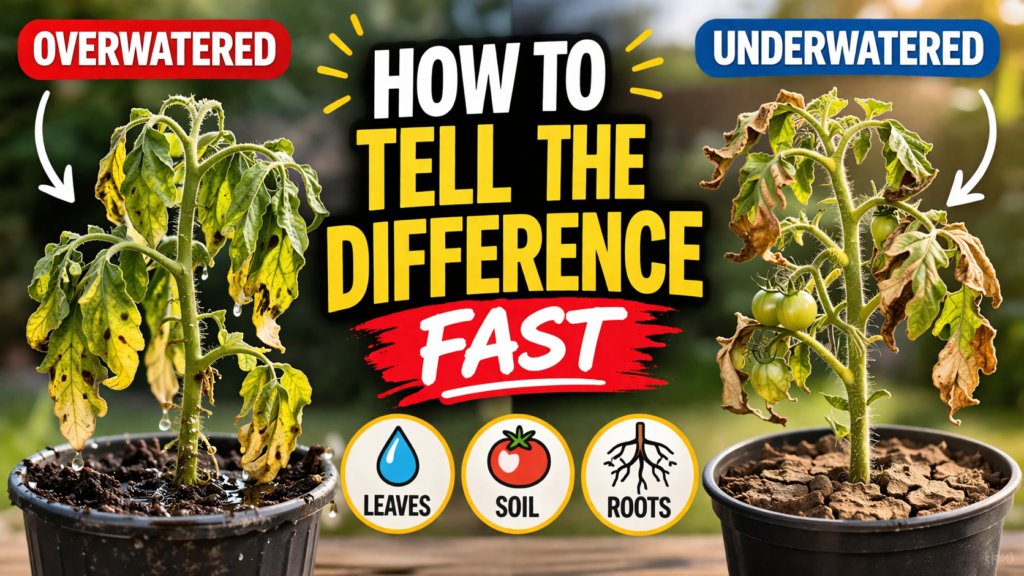
Overwatering is not the direct cause of every hollow tomato, but it can damage roots and upset nutrient uptake.
Signs of excessive moisture may include:
- Persistently wet soil
- Yellowing lower leaves
- Wilting despite wet ground
- Root decline
- Edema or blister-like leaf damage
- Slow plant growth
If the soil is staying wet for too long, my guide to recognizing overwatered tomatoes can help determine what needs to change.
Root Stress Can Produce Poorly Filled Fruit
Roots supply everything the developing tomato needs.
When they are damaged, restricted, or unhealthy, fruit quality can suffer even when the foliage still looks acceptable.
Common sources of root stress include:
- Compacted soil
- Root-bound containers
- Fertilizer burn
- Drought
- Waterlogging
- Root disease
- Nematodes
- Transplant damage
- Deep cultivation
- Soil that becomes extremely hot
I avoid digging close to established tomato plants. Their roots can extend well beyond the stem and are easily damaged by a hoe or shovel.
Why Container Tomatoes May Be Hollow
Container plants experience faster changes in moisture, temperature, and nutrient concentration than tomatoes growing in the ground.
A small pot may become extremely hot and dry during the day. Heavy watering in the evening creates a sudden swing.
Roots can also fill the container, leaving little soil to store moisture or nutrients.
I use a large enough container for the variety and choose a growing medium that drains without drying immediately. The best soil mixture for container tomatoes helps create a steadier root environment.
Are Some Tomato Varieties Naturally Hollow?
Yes. Variety has a major effect on internal structure.
Paste tomatoes naturally contain less gel and fewer watery seed cavities than many slicing tomatoes. They feel denser and drier, which is useful for sauce.
Stuffing tomatoes are intentionally bred with hollow centers and thick walls. Their internal structure resembles a bell pepper and makes them easy to fill.
Some large tomatoes also have irregular seed cavities even when perfectly healthy.
Before diagnosing a problem, I check the variety description. A hollow tomato is not defective when it was bred to grow that way.
Paste Tomatoes Versus Puffy Tomatoes
Paste tomatoes contain dense flesh and relatively small seed cavities.
Puffy tomatoes contain empty spaces where internal tissue and gel should have developed.
A Roma tomato may be meaty and low in juice but still feel solid. A puffy slicing tomato feels light and may have thin walls around large air pockets.
The difference becomes clear when several tomatoes of the same variety are compared. Normal paste fruit should be fairly consistent, while puffiness may affect only fruit that formed during stressful weather.
Did Something Eat the Inside of My Tomato?
Usually not.
Caterpillars and other pests leave entry holes, chewed flesh, droppings, rot, or the insect itself. A naturally hollow tomato has clean empty cavities without feeding debris.
If an insect entered through the stem or side, the damage will look rough and irregular rather than like normally formed chambers.
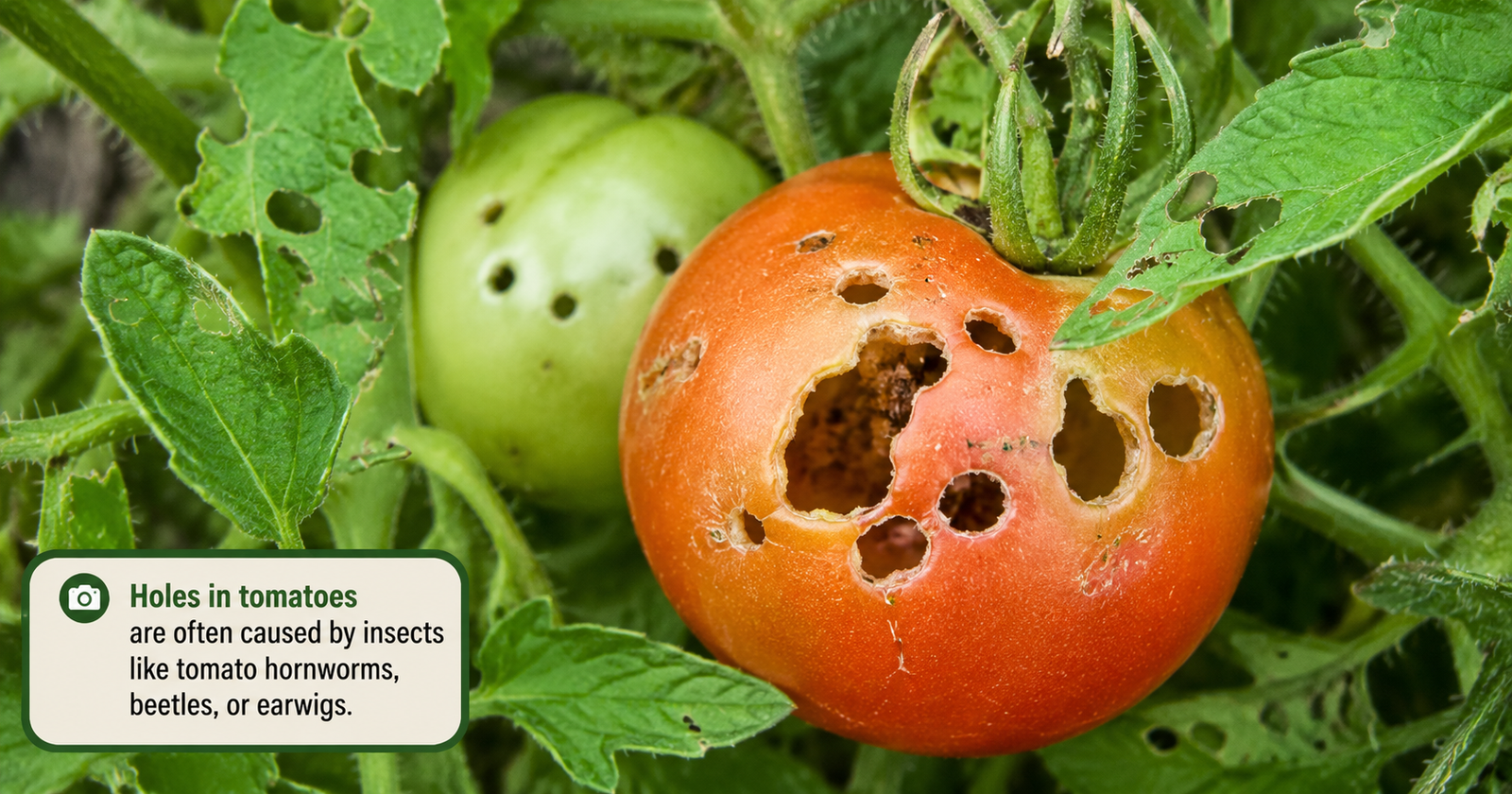
When a tomato has an open hole, use the clues in what is eating holes in tomatoes to check for fruitworms, hornworms, slugs, rodents, and birds.
Hollow Tomatoes Versus Catfacing
Catfacing affects the tomato’s external shape. The blossom end becomes folded, scarred, puckered, or deeply lobed.
Hollow fruit may look normal or only slightly angular outside.
Both conditions can begin during flower development, and cold weather can contribute to both. They may even appear together.
The difference is where the abnormality is most obvious. Catfacing distorts the outer fruit, while puffiness leaves empty internal cavities.
Hollow Tomatoes Versus White Hard Cores
A hollow tomato lacks internal tissue.
A tomato with a white hard core has too much firm, poorly ripened tissue in the center or shoulders.
Puffiness is most closely connected with incomplete pollination and poor seed set. Hard white cores are more closely associated with heat, uneven ripening, potassium uptake, variety, and piercing insects.
Cutting the fruit makes the distinction easy:
- Empty spaces point toward puffiness.
- Solid pale tissue points toward a white-core problem.
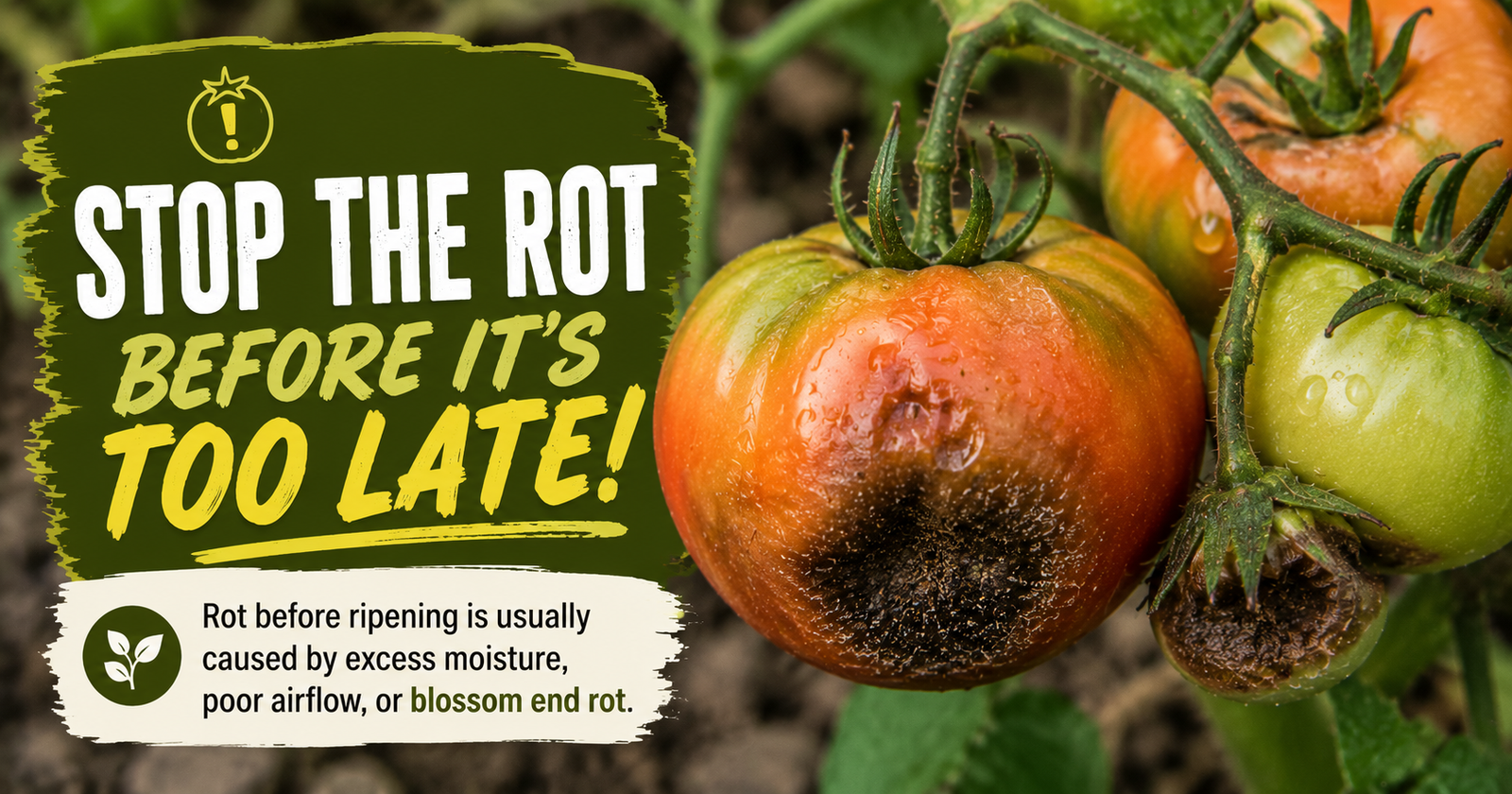
Hollow Tomatoes Versus Blossom End Rot
Blossom end rot creates a tan, brown, or black patch at the bottom of the fruit.
It develops when calcium does not reach the growing tomato consistently, often because of moisture or root stress.
A hollow tomato may have no external blemish at all.
Both conditions can occur on the same plant because they share some underlying stresses, including irregular watering and unhealthy roots.
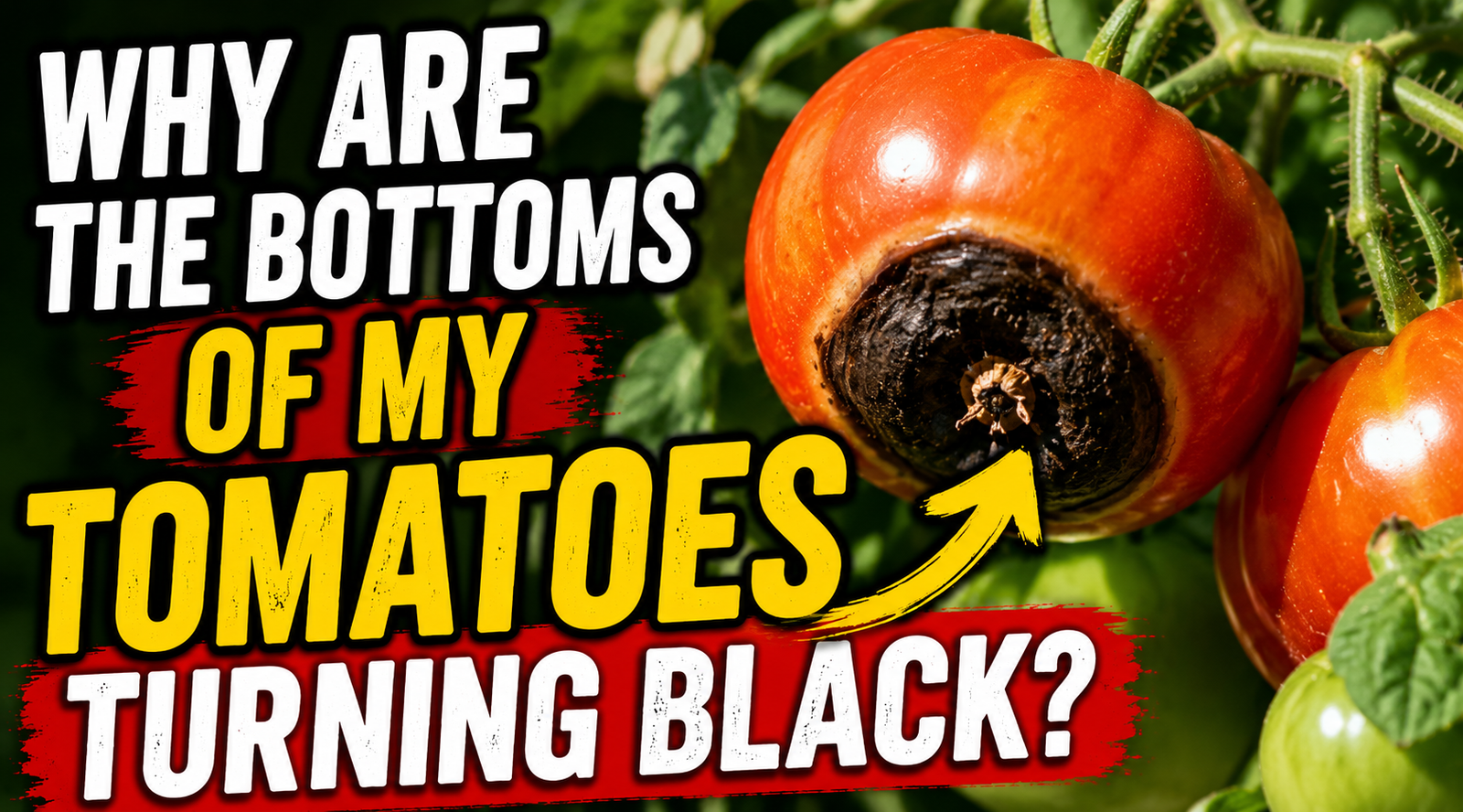
If the bottom is black and leathery, the guide explaining why tomato bottoms turn black provides the more relevant diagnosis.
Hollow Tomatoes Versus Uneven Ripening
Puffy tomatoes may remain pale or develop uneven color, but internal emptiness is the defining symptom.
Uneven ripening produces blotchy skin, hard shoulders, or areas that remain green, yellow, or white.
Both can be triggered by extreme temperatures. A heat wave may disrupt pollination first and then interfere with ripening weeks later.
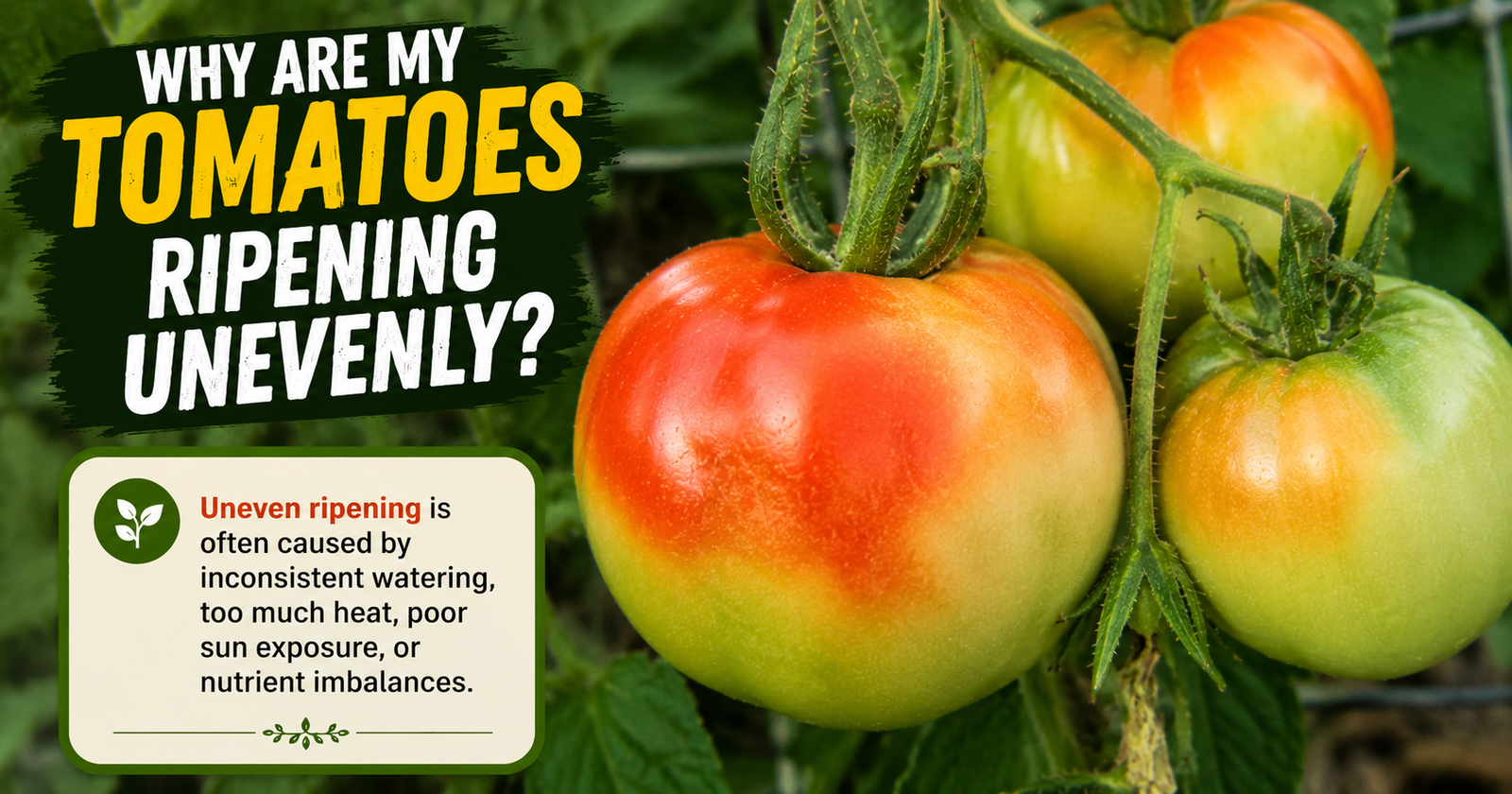
My guide to why tomatoes ripen unevenly covers the color and shoulder problems separately.
Can You Eat Hollow Tomatoes?
Yes. A hollow tomato is generally safe to eat when it is fresh, firm, and free from mold, insects, or decay.
The texture may be drier, and the flavor can be weaker because the fruit contains less gel and fewer fully developed internal tissues.
I cut it open, inspect every cavity, and use the sound flesh.
The hollow space itself is not dangerous. It simply means the fruit did not fill normally.
When I Throw a Hollow Tomato Away
I discard the tomato if the empty cavities contain signs of spoilage or pests.
Warning signs include:
- Fuzzy mold
- Slimy tissue
- A sour or fermented smell
- Brown or black internal rot
- Caterpillars or maggots
- Insect droppings
- Animal bites
- Leaking flesh
- Extensive softness
- An unknown open entry hole
A clean hollow chamber is different from a tunnel made by a feeding pest.
What Can I Do With Hollow Tomatoes?
Hollow tomatoes may not be the best choice for a juicy sandwich, but they still have several uses.
Stuff Them
The empty center makes the tomato naturally suited for fillings. Remove the remaining seeds and add rice, meat, cheese, vegetables, or another preferred filling.
Chop Them for Cooking
Sound flesh can be added to soups, chili, casseroles, and roasted dishes.
Add Them to Salsa
The drier texture may actually help when you want salsa that is not overly watery.
Use Them in Sauce
They can be cooked into sauce, although fruit with weak flavor may need to be combined with richer tomatoes.
Dehydrate Them
Lower moisture can shorten drying time, provided the fruit is fresh and healthy.
Can Hollow Tomatoes Be Canned?
Sound hollow tomatoes may be used in home canning, but their unusual internal structure does not change the safety rules.
I inspect every cavity and remove all questionable tissue. Moldy, rotten, insect-damaged, fermented, or animal-damaged tomatoes should not be used.
I follow a current tested recipe exactly, including acidification and processing directions.
When flavor and color are weak, I combine the usable flesh with better-quality tomatoes rather than making it the main part of the batch.
Will Hollow Tomatoes Fill In Later?
No. Once a tomato develops empty internal cavities, those spaces will not fill later.
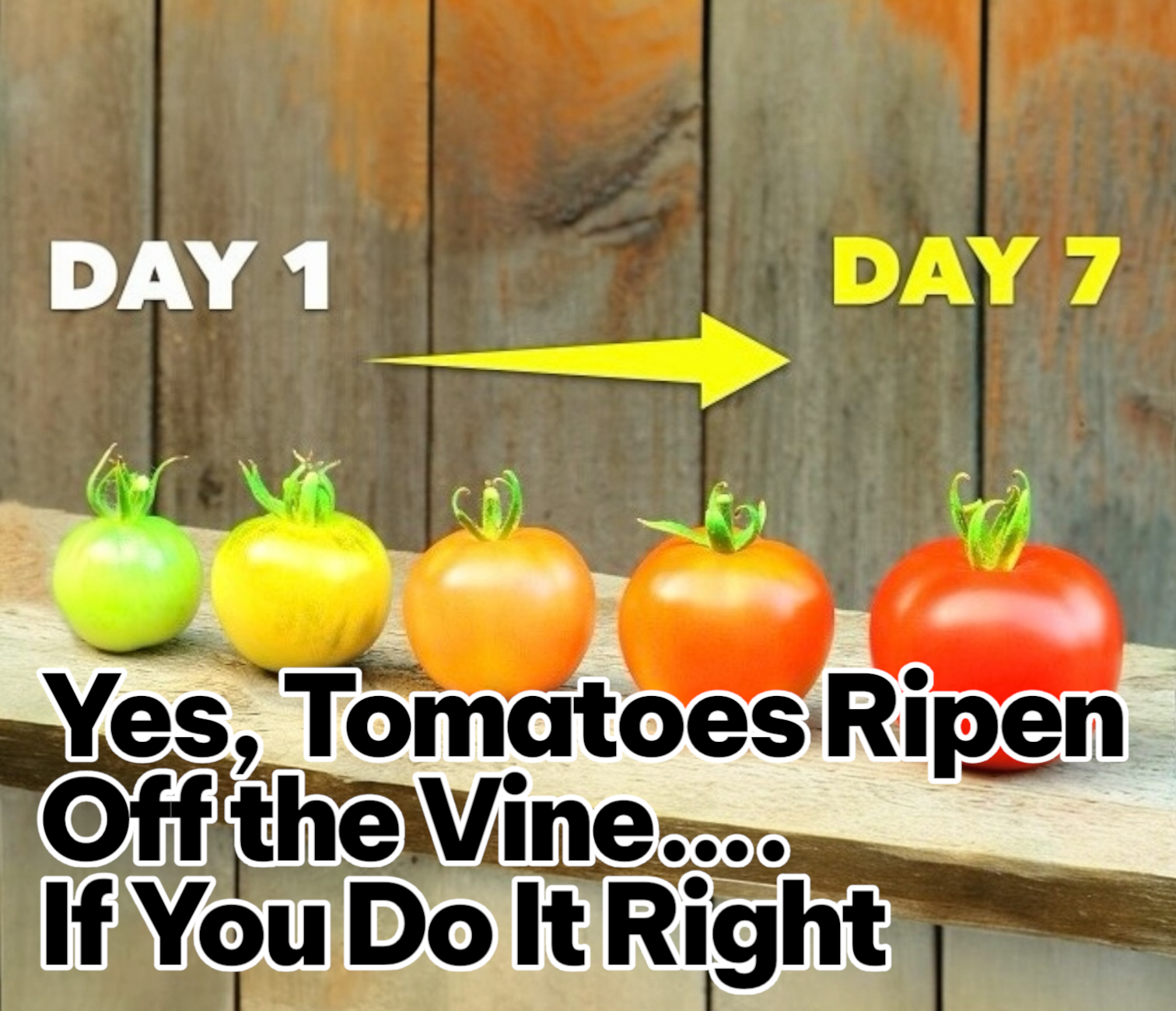
The fruit may continue getting larger and changing color, but its basic internal structure is already established.
The goal is to improve conditions for flowers and fruit that develop afterward.
If weather caused poor pollination, later tomatoes may be completely normal once temperatures and humidity become more favorable.
Should I Remove Hollow Tomatoes From the Plant?
You usually cannot tell with certainty that a tomato is hollow until it is harvested.
Fruit that feels unusually light, flat-sided, or soft in odd places may be puffy, but those signs are not always reliable.
I leave healthy-looking fruit until it reaches a mature harvest stage. If it is fresh after cutting, I use it.
There is no reason to remove the entire plant because one tomato was hollow.
How I Prevent More Hollow Tomatoes
I focus on pollination, root health, and steady growth.
Help Flowers Move
Gently tap flower clusters or stakes during dry daytime conditions, particularly in greenhouses and protected areas.
Improve Airflow
Space plants properly and ventilate protected growing spaces.
Protect Flowers From Temperature Extremes
Plant after nights become suitable and ventilate greenhouses before they overheat.
Water Consistently
Avoid repeated severe wilting followed by flooding.
Use Mulch
Mulch moderates root-zone moisture and temperature.
Avoid Excess Nitrogen
More leaf growth does not guarantee better fruit.
Test Soil Before Fertilizing
Correct confirmed problems without creating new nutrient imbalances.
Use Large Containers
Adequate soil volume gives roots a steadier supply of water and nutrients.
Encourage Pollinators
Avoid unnecessary broad-spectrum insecticides and include flowering plants that support beneficial insects.
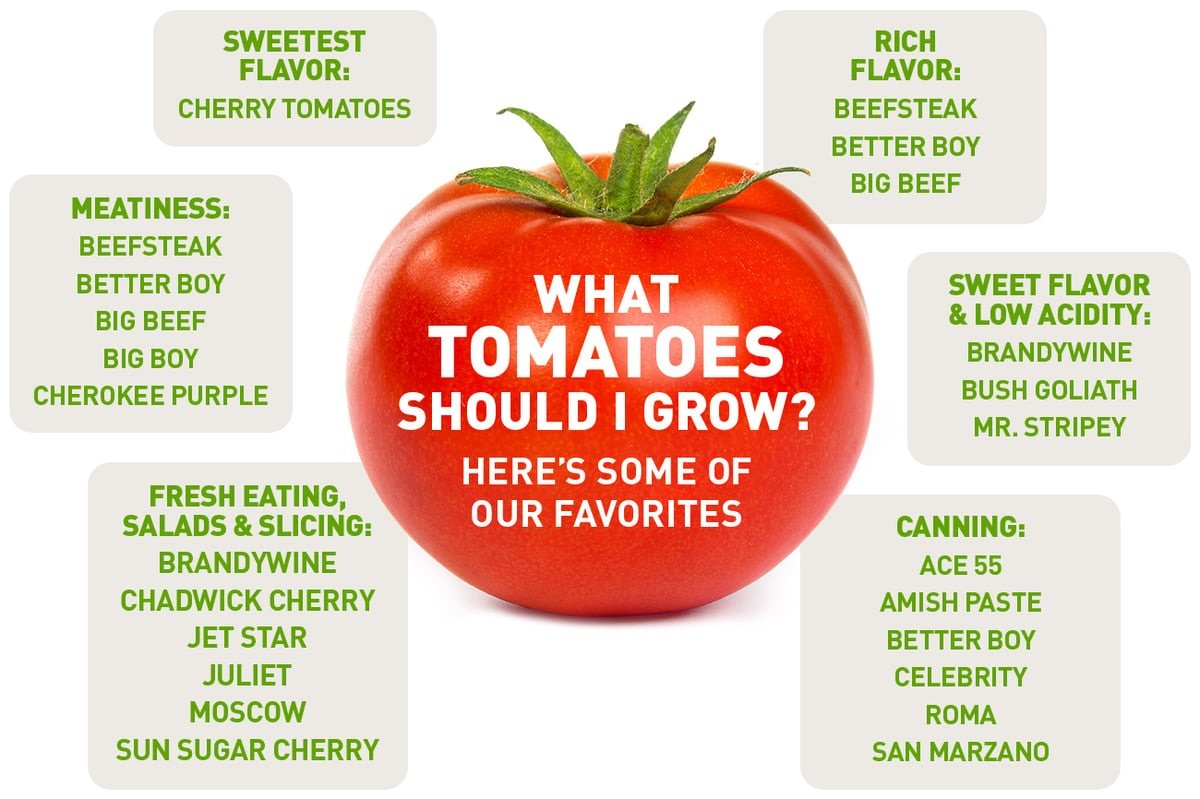
Choose Suitable Varieties
Select tomatoes known to perform well in your local heat and humidity.
My Quick Hollow Tomato Diagnosis
When I slice open a tomato and find empty space, I check these clues:
- Very few seeds point toward incomplete pollination.
- Early-season fruit suggests cold-weather flower stress.
- Mid-summer fruit suggests high heat.
- Greenhouse fruit may need better airflow and flower vibration.
- A dark green leafy plant may have too much nitrogen.
- Several clean empty cavities suggest puffiness.
- A rough tunnel with droppings suggests a fruitworm.
- Firm white tissue is a different white-core disorder.
- Thick walls with clean hollow centers may be normal for a stuffing variety.
- Mold or decay means the tomato should be discarded.
Frequently Asked Questions
What causes a tomato to be hollow inside?
Incomplete pollination is the main cause. Temperature extremes, humidity, uneven watering, excess nitrogen, root stress, and variety genetics can contribute.
Is a hollow tomato safe to eat?
Yes, when it is fresh and free from mold, insects, animal damage, or decay. The flavor and texture may be weaker than normal.
Why does my tomato have very few seeds?
Poor pollination can prevent many seeds from developing. The surrounding gel and internal tissue may remain underdeveloped as well.
Why do my tomatoes feel light for their size?
Puffy tomatoes contain empty internal cavities and less gel, making them feel unusually light.
Can hot weather cause hollow tomatoes?
Yes. Extreme heat can reduce pollen viability and lead to incomplete seed set.
Can cold nights make tomatoes hollow?
Yes. Cool temperatures during flower development and pollination can interfere with fertilization.
Do I need bees for tomatoes to fill properly?
Tomatoes can self-pollinate, but flowers still need movement. Wind, buzz-pollinating bees, or gentle manual vibration helps release pollen.
Does too much nitrogen cause hollow tomatoes?
It can contribute by encouraging excessive foliage and unbalanced fruit development.
Will adding fertilizer fix puffy tomatoes?
Not when weather or pollination is the real cause. Test the soil and examine the entire plant before adding nutrients.
Are Roma tomatoes supposed to be hollow?
Roma tomatoes naturally contain less gel, but they should still have dense flesh. Large clean air pockets indicate puffiness unless the variety was specifically bred for stuffing.
Can a hollow tomato continue ripening?
Yes, but the empty spaces will remain. Ripening changes its color and softness, not its internal structure.
Will later tomatoes be normal?
Often, yes. Fruit that forms after temperatures and pollination conditions improve may develop normally.
Written by Daniel Harper, an experienced home gardener who shares straightforward advice for growing healthier plants and making sense of unusual fruit through Tomato Growing Tips.